Justyna M. – Criminal Justice
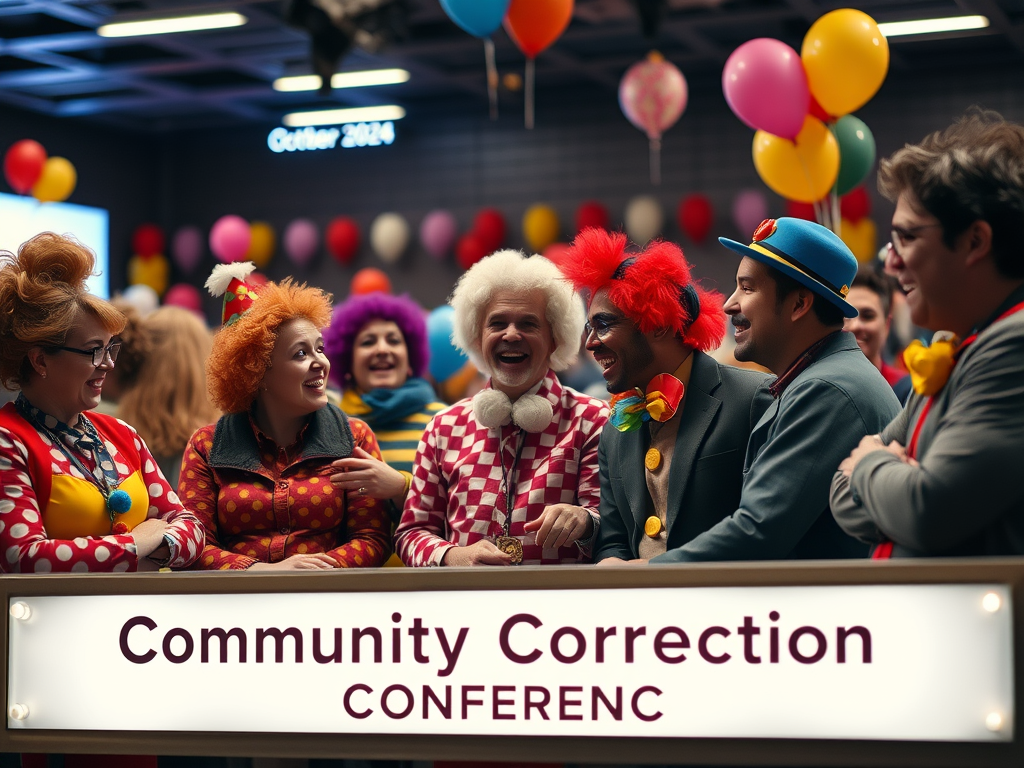
I was recently invited to attend what’s called a “Community Corrections Conference,” happening here in Colorado at the end of October 2024, under the Division of Criminal Justice. It’s a local conference, focused only on state-level issues, not federal, and although the invitation came through my professional role, I decided to decline. The truth is, after giving it some thought, I realized I have little in common with the people who attend these conferences. Sure, I work alongside them in the world of corrections, but I don’t have to sit through their breakfasts or listen to hours of inconsistent rhetoric. The prospect of being fed their supposed “solutions” and “initiatives,” only to leave feeling frustrated and brainwashed by their rehearsed, empty promises, didn’t sit well with me. I’ve worked in corrections for long enough to see through the façade.
The Denver City Council on Monday unanimously rejected a measure to purchase a halfway house for $26.2 million. The item, a purchase agreement with Denver 44th Avenue LLC for the property at 570 W. 44th Ave., was delayed by Councilmember Amanda Sawyer one week ago. During the meeting, Sawyer asked members of Denver’s real estate department why the city would not purchase a property lacking a supporting appraisal.
The Division of Criminal Justice. According to their website, they provide assistance to state and local agencies, analyze policies, conduct research, manage programs, and administer grants. Their mission? To “improve community safety, quality of services to victims, and the effectiveness of services to offenders.” It sounds polished, doesn’t it? But when you scratch beneath the surface, what does it really mean? How often do we hear the word “safety” thrown around in community corrections, like a buzzword every five minutes? The safety of our community, safety of the offenders—everything comes back to “safety.” But is it really about safety?
After years of working in community corrections, both at the state and federal levels, I can tell you this: I got into the field to find out what’s causing the disconnection. What’s going wrong in these so-called “halfway houses,” “trap houses,” or “warehouses” that are meant to serve as stepping stones for individuals reentering society? The answer I discovered is grim. Sometimes, I advise people that if you’re approaching the end of your sentence in a federal or state prison and you have the option to either serve your time in prison or transition to a halfway house—just stay in prison. Why? Because most people who go into community corrections fail. That’s not hyperbole; it’s the truth.
Perhaps 10% of individuals will succeed in finishing their time in these facilities, but why so few? I’ll tell you why.
First, the very system that claims to help reintegrate offenders into society is broken. The majority of these community correction facilities are underfunded, mismanaged, and are little more than glorified holding tanks where real rehabilitation is rare. People are set up for failure. They enter these places with minimal support, and the odds are stacked against them. Whether it’s the lack of access to employment, healthcare, or even basic necessities like stable housing, the system places the burden on the individual to succeed, yet does little to provide the resources needed to make that success attainable.
Secondly, these facilities are often operated by individuals who have little to no understanding of the populations they serve. They parrot the talking points of safety and rehabilitation, but their actions rarely match their words. Community corrections has become more about appearances—ticking the right boxes, meeting quotas, and looking good on paper—than about actually helping people transition back into society successfully.
Lastly, the stigma of being in a halfway house or residential reentry facility follows people like a shadow. Employers, landlords, and even communities look at these individuals with suspicion. It’s no wonder so many end up back in the very system they were trying to escape. The cycle continues, and the system profits from it.
So no, I don’t need to sit in a room full of people talking about safety, or hear how they’re “improving” things when I know firsthand what really goes on. I don’t need to be brainwashed by rhetoric that glosses over the glaring issues in community corrections.
I’m on the ground every day, witnessing the real challenges and failures that no conference can sugarcoat. Instead of wasting my time with bureaucratic nonsense, I’ll continue to work for the people who need real help—without the breakfast meetings, without the endless jargon, and without the illusions of a system that claims to care but often falls short.

Community corrections, as we know it, is long overdue for CHANGE. Organizations like ICCS, GEO Group, CoreCivic, and others that manage halfway houses and residential reentry centers often operate with a mindset that prioritizes power, control, and authority over rehabilitation and compassion. If these organizations are to truly help those coming out of prison reintegrate into society, they need to completely reverse their approach—starting with how they treat the individuals in their care.
A couple of weeks ago, I had an eye-opening conversation with a seasoned supervisor from a local probation department. This old-school, no-nonsense supervisor told me something that has stuck with me since: “What we have to avoid is constantly saying ‘power, power, power.’ At the end of the day, we are all the same. Some people are less fortunate, some more. Some will end up in the system—that’s why we’re here, to be bigger people, and serve as a moral compass.” Hearing this gave me a tiny glimmer of hope. There are still people working in this field who believe in change, who see the individuals in the system as human beings deserving of dignity, not as numbers or potential recidivists to be kept in line. That small shift in thinking—away from control and towards guidance—could make all the difference.
The organizations that dominate the community corrections landscape, like ICCS, GEO Group, and CoreCivic, need to fundamentally change their culture. Their approach to those coming out of prison too often revolves around power dynamics. Instead of treating individuals as people trying to rebuild their lives, they treat them as liabilities or burdens—problems to be managed, rather than lives to be uplifted. This approach dehumanizes the very people they are supposed to help. It’s no secret that many individuals coming out of prison already feel isolated, abandoned, and defeated by the system. The last thing they need is to enter an environment where they are treated as potential failures before they even have the chance to succeed. What’s needed is a shift towards empathy, understanding, and a recognition that many of these individuals are coming from difficult backgrounds and need support—not surveillance.
One of the most critical aspects of community corrections reform is the use of POWER. Far too often, power is wielded against the individuals in halfway houses or reentry centers. People are punished for the smallest infractions, micromanaged to the point of suffocation, and placed in environments where failure is more likely than success. The question we should be asking is: why is power such a dominant force in these settings? Instead of constantly asserting control, organizations need to practice restraint. They should focus on using power to guide individuals towards positive outcomes rather than creating a climate of fear and submission. At the end of the day, we are dealing with human beings, many of whom have already experienced a lifetime of marginalization, trauma, and hardship. The goal should be to uplift them, not to beat them down with unnecessary displays of authority.
This brings me back to the supervisor’s words. What’s really needed in community corrections is a MORAL COMPASS. We need leaders who understand that the people they work with are human beings, deserving of kindness and guidance. Not everyone has had the same opportunities in life, and for some, ending up in the system was almost inevitable given the circumstances. Those who work in this field have the power to make a difference—not through control, but through compassion.
This doesn’t mean leniency without responsibility. It means providing direction and helping individuals learn to navigate life outside of prison. It means understanding the struggles that people face and recognizing that they need more than just a roof over their heads—they need real support to avoid falling back into old patterns.
Having worked at places like Independence House South on Federal —a private community corrections facility and federal halfway house—I’ve seen firsthand the struggles of those who come through these doors. These facilities often focus on rules, restrictions, and protocols, leaving little room for understanding the real challenges that people face on the outside. What I learned from the men and women who passed through these programs wasn’t something I could have ever been taught in a classroom. I learned the importance of kindness, patience, and understanding. Many of these individuals are coming from broken systems, fractured families, and lives filled with instability. They don’t need to be reminded of their failures; they need to be reminded of their humanity. I’ve spent almost a year working within the system, and I’ve come to realize that the people in these facilities have more to teach than the organizations running them. Their struggles, their resilience, and their hope are what drive meaningful change. And yet, too often, their voices are drowned out by a system focused on control and compliance.
Most people have never heard of a halfway house or community corrections—until they or someone they love ends up there. It’s a hidden corner of the criminal justice system that can affect anyone. You might think this is something that only happens to others, but let me tell you, you could easily find yourself in this gray area. Maybe you’re on pre-trial, or you’ve been sentenced for a probation revocation, or it’s your first offense. Instead of going to prison or jail, you could be sent to community corrections—supposedly to transition back into society. But is that really what happens? I want you to understand what it’s really like, because this system is disorganized, chaotic, and, frankly, dehumanizing.
Imagine this: you’ve just spent 20 or 30 years in prison. You’re now 50 or 60 years old, and the world outside has changed completely. When you went in, there were no iPhones. Now, there are electric cars, Teslas, and technology you can barely recognize. The anxiety of stepping back into this new world is overwhelming. I’ve seen people so stressed by the idea of going to the store for the first time in 30 years that they freeze in panic. The sound, the smells, the speed at which people move—it’s all so foreign. They stand there in Walmart, paralyzed by fear, confused by something as simple as the scent of deodorant or the hustle of everyday life. I know this because I’ve been there with them. I’ve seen it. I’ve asked them, “Are you okay? Do you need help?” Their fear is palpable, and it’s heartbreaking.
Now, imagine that the person responsible for helping you through this process—a case manager at the halfway house—is a 20-year-old with no experience, no training, and no understanding of what reentry means. Maybe they’re still in school, or maybe this is just a job to them. They’ve never been inside a prison, never lived the life you’ve lived, and have no idea what it feels like to be released into a world that has completely changed. These are the people who are supposed to supervise and guide you. Instead, they often wield their power over you, turning your struggle into their power trip.
This is the reality for many people in halfway houses and community corrections. Case managers are often untrained, unskilled, and uninterested in truly helping people reintegrate into society. They are more concerned with paperwork, checking boxes, and punishing individuals for minor infractions. Sending someone back to prison for breaking curfew or missing a meeting isn’t just routine—it’s rewarded. Case managers who do this get a high-five from their supervisors. Why? Because their job isn’t to help people succeed; it’s to manage their cases and maintain “public safety.” And if that means slapping an ankle monitor on someone and treating them like an animal, then so be it.
Are there good case managers in community corrections? Sure, but they are few and far between. And when they try to help, they are quickly reminded that they are not there to support reentry—they’re there to control it. I’ve seen good people called into the office and told to stop going the extra mile because “that’s not what we do here.” Their job is not to support, not to mentor, not to assist. It’s to manage and punish.
Which brings me to a question we all need to ask: Are these places where we treat people with dignity and respect, or are they inhumane warehouses where no one should ever end up?
For many, it’s clear that community corrections is the latter. And yet, these institutions receive massive amounts of funding. Take Independence House North, for example—a halfway house in Denver that is notorious for its poor conditions and mismanagement. This year, the City and County of Denver approved an additional nearly $5 million in funding for this facility, bringing their total budget for the next two years to almost $9 million. And here’s the kicker: the person who owns this halfway house is the father of State Senator Robert Rodriguez, who represents the Denver district. Coincidence? Or just an easy way to make money?
Think about it. Millions of dollars are flowing into these facilities, yet the people inside them are living in chaos, surrounded by dirty, disorganized, and often unsafe conditions. Instead of helping individuals transition back into society, community corrections facilities like Independence House North seem to be more interested in turning a profit than offering real support. This is not how reentry should work. People coming out of prison deserve better. They deserve proper guidance, training, and support from people who actually care about their success. Community corrections could be a place of hope, a stepping stone to a new life, but right now, it’s often just another trap—one that sets people up to fail.
If you’ve never heard of halfway houses or community corrections before, I hope this article opens your eyes. Because the truth is, this system could touch anyone. And when it does, the last thing you want is for you or your loved one to end up in the chaos and inhumanity of a broken system. We need to demand better, not just for those in the system, but for society as a whole. Everyone deserves a second chance. Right now, community corrections isn’t offering that—it’s just offering more of the same old story.
When we think of halfway houses, community corrections, or reentry programs, we imagine a place where people are given a second chance—a structured environment where individuals are supported as they transition from prison back into society. But what happens when the very people in charge of providing that support are untrained, unregulated, and sometimes even harmful?
Right now, there is no legal statute, no requirement that says case managers working in these facilities need any specific training, experience, or education. Anyone can walk into a job in community corrections and start managing the lives of vulnerable individuals who are trying to reintegrate into society. I’ve seen case managers with criminal records of their own—some with DUIs—and you might think this would make them more empathetic to those they supervise. But, surprisingly, it often has the opposite effect. Instead of understanding, they double down on punitive measures, referring to residents as “criminals,” a term I absolutely loathe.
Let’s be clear: no one is born a criminal. No one is inherently a sex offender, a murderer, or any other label society throws on them. These terms strip away the humanity of the individuals they describe, turning them into one-dimensional caricatures. But when you walk into a halfway house, you will often hear case managers refer to the residents by their crimes, rather than their names. It’s a constant reminder of their past, a way to control and diminish them. I’ve had to correct this language every day in my work, reminding both staff and residents that a person is not their crime. They are a human being first.
The lack of training in this field is glaring. Many case managers don’t understand basic communication skills, let alone how to engage with people who have just spent years, sometimes decades, in prison. Reentry isn’t just about getting a job or finding housing—it’s about learning to live again. It’s about navigating a world that has changed drastically, and doing so while carrying the heavy burden of a criminal record.But many case managers have no interest in helping with that transition. Instead, it’s a power game. I’ve seen them use their authority to make life as difficult as possible for the residents they are supposed to be supporting. They don’t know how to interview residents, they don’t know how to understand the daily struggles these people face. It’s their way or the highway. If you don’t conform, if you don’t drink the proverbial Kool-Aid, they’ll make sure you fail. I’ve even seen them limit residents’ access to emergency medical care, giving them a measly two-hour pass to travel to a hospital that’s miles away—an impossible task.

It’s a constant battle for residents. Case managers nag, control, and remind them daily of their “place” in the system. Yet, not everyone will fail in community corrections. There are people who, despite all the challenges, make it through. But for those who slip up, even in the smallest way, case managers seem more interested in sending them back to prison than helping them succeed. If someone wants to go back to prison because they’re overwhelmed, these case managers will make it easy. They will go out of their way to ensure that every technical violation is documented, every small misstep is punished, all to show they are “doing their job.”
And then there’s the issue of confidentiality. Imagine walking into a community corrections facility as a registered sex offender, trying to keep your charges private, still living with the trauma of prison life. Now imagine your case manager publicly announcing your status to the other residents. I’ve seen this happen, and it is beyond unethical—it’s dangerous. People coming out of prison are vulnerable, and when their most sensitive information is shared, it puts them at risk of harm. In my experience, I’ve always made sure that the residents I worked with—whether they had committed sex offenses or any other crime—knew that their private conversations with me stayed private. But not every case manager offers that same protection. It’s a glaring violation of their duty, and it happens far too often.
The Hollow Promises of Community Corrections: Why the Annual Conference is a Moronic Exercise in Futility
Before we dive into the absurdity of the upcoming community corrections conference, let me give you some context. Community corrections, halfway houses, and reentry programs are touted as the cornerstones of successful reintegration for those leaving prison. But what the public doesn’t often realize is that these institutions are riddled with contradictions, inefficiencies, and, frankly, outright exploitation.
To understand the absurdity of the conference, you have to first understand what community corrections really are. These programs are supposed to help individuals transition from prison back into society, yet they often do the opposite. It’s all about control, power, and—most importantly—money. And yes, it’s your tax dollars fueling this dysfunctional system. The Federal Bureau of Prisons, for example, pays $124 per day for each resident in a halfway house, and for parolees or those under public law, it’s $64 per day. It’s a business—an incredibly lucrative one for those who own and operate these facilities. And the less successful the residents are, the more money these facilities make. It’s a vicious cycle of failure designed to keep people stuck in the system.
Now let’s talk about the conference. Registration alone was $225 if you signed up early, and $300 if you missed the early deadline. For what? To hear the same old rhetoric about change, diversity, and leadership principles? They’re serving up the same tired presentations year after year, with nothing new to offer except maybe a fancy breakfast I won’t even eat.
In my opinion, if this conference was truly about improving community corrections, it should be free and open to everyone—case managers, community workers, and regular citizens alike. The public has a right to understand where their tax dollars are going and how these programs affect their communities. But no, instead, it’s an exclusive event, pricing out anyone who might actually benefit from learning about reentry and community safety.
What’s worse is that the topics covered are so irrelevant to the actual struggles of community corrections workers and residents. They’re talking about leadership, data science, and life-saving awards, as if those things make any difference on the ground. Let’s stick with the life-saving awards for a minute. When I worked as a case manager, I witnessed overdoses at least three times a week. I carried Narcan and gloves everywhere because spice, fentanyl, or some drug mixture was always making the rounds. How many people did I see on the brink of death, ready to “go to the other side of the rainbow”? And you know what I was told by my supervisor? “It’s not your job. If they want to do drugs, let them die. It’s their choice.” Is that the “leadership” these conferences are celebrating? Because I don’t see any awards for humanity or compassion being handed out.
One of the speakers at this year’s conference is a man I’ve never met, Darrell Hammond, who claims to be a doctor and talks about leadership as if he’s some kind of guru. Honestly, he looks clownish, but that’s just my opinion. He claims he’ll teach us how to apply leadership principles to strengthen our culture and better serve our communities. Sounds good on paper, right? But in reality, these high-minded principles mean nothing in the face of the daily grind of community corrections. He should probably run for office, because this type of rhetoric would be a great fit for the Democrats—but it sure as hell won’t make a difference in the trenches of reentry work.
And then there’s a presentation on using data to inform policy and reduce racial disparities. Oh, that sounds wonderful! Except here’s the problem: 90% of case managers can’t even read the Pre-Sentence Investigation (PSI) documents that come with residents. They don’t understand the stipulations or conditions placed on these individuals, and yet they’re expected to apply data-driven policies? It’s laughable. The disconnect between what they’re preaching at this conference and the reality on the ground couldn’t be starker.
Another highlight of the conference is a talk on “Building Resilience Through the Science of Stress.” Sure, this job is stressful. But if you love what you do, it’s also rewarding. You might be tired at the end of the day, but you’ll feel accomplished. Do I need a presentation to tell me that? No. And then there’s “drug overdose, suicide, and homicide.” Why is this even a topic at a community corrections conference? These issues relate more to law enforcement and safety measures than reentry. If community corrections workers were properly trained to handle these crises—depression, drug addiction, and trauma—there might be fewer incidents to report. But most case managers are clueless when it comes to handling mental health or addiction issues. Their solution? Call an ambulance and send the resident back to prison.
There is one silver lining in this conference: a presentation by Cameron, a peer specialist I know personally. He’s lived the life of addiction and reentry, and he understands the struggles that residents face. He owns NAS, an excellent recovery solution company, and his peer coaching is remarkable. Cameron can pull someone out of the darkest hole and help them rebuild their life. This is someone worth listening to because he’s lived the reality—not just theorized about it from a PowerPoint presentation.
But, as for the rest of the conference, it’s a waste of time and money. These speakers will return to their comfortable offices, and case managers will go back to their jobs, doing the bare minimum to help residents succeed. No real change will come from this. It’s just another round of politics, Kool-Aid drinking, and patting each other on the back for a job poorly done.
The only real value in this conference should be in the data. We need to know the numbers: recidivism rates, success stories, failures, and technical violations. We need to understand what’s working and what’s not. But as long as the system is more interested in making money than in making change, nothing will improve. And that’s why, in my opinion, this conference—and the community corrections system as a whole—is just one big, moronic exercise in futility.
A Broken System: Punishment Over Support
“Another Place to Warehouse People”: The State Where Halfway Houses Are a Revolving Door to Prison Colorado’s halfway houses were intended to reduce recidivism, but insiders describe a system plagued by a lack of training and support, costs that can burden residents with debt and overly harsh rules that have sent many back in prison”.by Moe Clark, photography by Eli Imadali
Colorado Halfway Houses Are a Revolving Door to Prison — ProPublica
“They expect us to change, grow, learn, and become honest, responsible members of society. But the reality is, we aren’t given a fair opportunity to achieve that.”
CoreCivic declined to make a spokesperson available for an interview and did not respond to emailed questions. In a written statement, a representative said, “The staff and leadership teams at our Colorado residential reentry centers strictly follow the policies and standards established by the Colorado Division of Criminal Justice. We’re committed to ensuring that individuals in our care are better prepared for success, wherever life may lead. We take pride in our long-standing track record of delivering high-quality, meaningful residential reentry programs.”
When Colorado launched its community corrections system in 1974, the aim was to reduce prison overcrowding and rehabilitate people in the justice system by offering addiction treatment, job training, and other services. Officials saw it as smart fiscal and criminal justice policy: halfway houses are less expensive than prisons, and more comprehensive services would reduce recidivism, meaning fewer people would return to incarceration.
Requiring individuals to repeat ineffective programs serves as a profit-making strategy for companies, according to Brndiar, a professor at Metropolitan State University of Denver.
“It’s a business,” Brndiar explained. “There’s a financial incentive to keep people trapped in this cycle repeatedly because, regardless, they’re making money.”
Although some programs offer financial assistance for fees, many participants are expected to repay the facility once they secure employment. In fiscal year 2021, 2,521 residents graduated while owing an average of $1,076, according to the state’s annual report.
At certain ICCS facilities, residents receive mental health and addiction treatment through Behavioral Treatment Services (BTS), a company connected to ICCS. Sometimes, residents must pay out-of-pocket for these services, according to Otten. Kelly Sengenberger, the CEO of ICCS’ parent company, Intervention Inc., is also a BTS board member and was listed as the owner in state records from 2017 to 2019. Both companies registered the same business address with the state.
Ruske, from the state’s oversight agency, informed ProPublica that this financial connection was not disclosed to the state. ICCS’ contract requires transparency about potential conflicts of interest. Neither Sengenberger nor BTS responded to inquiries. For the record Ruske has been with agency for years – maybe it’s time for a change.
Alycia Samuelson, who completed a three-year residential halfway house program at ICCS in 2014, shared her experience. Part of her treatment was supervised by interns who were unqualified to handle cases like hers, involving decades of substance abuse and trauma.
“All I ever knew was addiction,” Samuelson said. “My mom gave me my first line of cocaine when I was 13. I didn’t know basic skills to live a successful life.”
Samuelson eventually graduated from the program, securing her own apartment and living meth-free for the first time in her adult life. But less than a year later, she relapsed and failed a drug test. The facility re-enrolled her in the program and later sent her to prison. This is a technical violation. “Addiction is a relapsing disease,” Brndiar explained. “People relapse, and to respond with the harshest punishment only re-traumatizes them.” The National Institute on Drug Abuse confirms that recovery from addiction is a long-term process often requiring multiple rounds of treatment. Relapses, much like with other chronic diseases, signal the need for additional care.
After being released from prison, Samuelson found herself homeless again, using drugs, and entering another halfway house in 2018. She said she was suicidal within six months of the program. In a short span, her husband left her, her son was diagnosed with colon cancer, and a friend overdosed and died in the facility. Samuelson said staff ignored her distress, prompting her to flee. “I told them I felt like I was going to take my life, and I expected them to call an ambulance, but they didn’t,” Samuelson, now 47, recounted from her home in Denver. “I literally ran away to save myself.”
A 2020 law reduced the charge for escaping a halfway house to a misdemeanor instead of a felony for nonviolent offenders, so Samuelson wasn’t sent back to prison. In 2021, 910 halfway house stays—24%—ended with the person running away, a significant rise from 2012, when the rate was 12%, state data shows.
A 2018 report by the Colorado Division of Criminal Justice’s Office of Research and Statistics found that individuals with mental health diagnoses were much more likely to fail in community corrections, with only 48% graduating between 2014 and 2016 compared to 61% of those without such a diagnosis. However, the diagnosis had little impact on whether they committed a new crime in the future.
“If all they have are other individuals involved in the criminal justice system and underpaid, underqualified staff providing treatment, they won’t get the help they need,” Brndiar concluded.
As the upcoming community corrections conference in Colorado approaches, one cannot help but wonder: Will anything meaningful come of it, or will it just be another self-serving event, disconnected from the real issues? The $300 per-person entry fee raises questions. Where is this money going? And more importantly, why aren’t the most critical issues being addressed—like the fact that community corrections staff are underpaid, underqualified, and overworked?
In the world of community corrections, the people who are supposed to help rehabilitate and support those transitioning out of prison are often paid a mere $22 to $24 per hour. Many case managers in these roles are not adequately trained or equipped to handle the complexities of mental health issues, addiction, or trauma. The solution is simple but costly: If we want qualified, dedicated people in these positions, we need to pay them double what they’re currently earning. Why? Because this isn’t just a job—it’s a mission for those who truly care about reducing recidivism and helping people rebuild their lives. The reality is that the people who are paid more—who are willing to take on this work full-time with passion—are the ones who can make a difference. But are Colorado’s community correction facilities ready to invest in them? So far, the answer appears to be no.
At its core, the community corrections system is designed to help people transition back into society. But what happens when someone relapses? Instead of offering support and treatment, they are often sent straight back to prison. This punitive approach does nothing to address the root of the problem. Addiction, especially drug addiction, is like an abusive marriage—it takes multiple attempts to break free. The idea that someone should be severely punished for a relapse is not only outdated, but it’s also traumatizing.As someone who works closely with those in recovery, I often tell my clients that addiction is a lifelong battle. Like a bad marriage, it takes time and effort to escape its grip. These people need compassion and resources, not further trauma in the form of prison time.
You’d think this would be a topic of discussion at the upcoming community corrections conference happening at the end of October 2024, but sadly, that’s not the case. I looked at the agenda, and it’s clear that the focus is inward, not on the people who actually need help. Instead of addressing these systemic issues, the conference appears to be nothing more than an echo chamber where the same people will gather, repeat themselves, and pat each other on the back for another year of the same. It’s a self-centered, narcissistic cycle that will likely continue until something forces change.
So, who is at fault for this broken system? Is it the counties that oversee community corrections? Is it the leadership that’s too focused on profits and self-preservation? Why is no one bringing up these important issues—like the underpaid, overworked, and underqualified staff? Each county has representatives for community corrections, yet these concerns never seem to make it to the table. If Colorado is truly serious about lowering recidivism, stopping the cycle of sending people back to prison, and providing the help they need when they relapse, then the system needs a radical overhaul. And it begins with the people on the front lines—those case managers who need more than a paycheck; they need proper training, support, and compensation. Without that, we’re just setting people up to fail. Is Colorado’s community corrections system ready to take things to the next level? Can they move beyond the superficial conversations and actually focus on the changes needed to support recovery and reduce prison populations? It seems the answers lie in whether or not those in charge are willing to look beyond their own interests and invest in the future of the people they claim to serve.
Maybe that should be the subject of the next conference. But until then, it seems like we’re stuck with the same tired discussions, waiting for real change to arrive.
Conclusion: A Call for Change
In conclusion, there’s nothing inherently wrong with holding a community corrections conference, but let’s be realistic and address the true issues—starting with the problems surrounding staff. From underpayment and lack of qualifications to the deeper, darker issue of sexual harassment and assaults by staff against residents, especially women, these matters are often swept under the rug. I speak from my own experience working in community corrections—these abuses are not just happening in prisons but in halfway houses too, targeting a vulnerable population. Yet, once again, I see nothing about these issues on the conference agenda.
If this conference truly seeks to promote progress, then maybe it’s time for a new approach. How about inviting those who’ve experienced both the positive and negative outcomes of community corrections, instead of the same voices spouting the same narratives year after year? Instead of charging $300 to listen to emotional repetition, let’s invest in real change.
As for me, I’ll be there, but I won’t be attending. I’ll stand outside with my sign reading: “Shame on you. You are worse than criminals. You are the criminals.” If anyone wants to join me, they are welcome. If not, I’ll stand alone, handing out flyers that expose the incompetence, arrogance, and lack of integrity within the system. These people won’t be thinking about this emotional throw-up during the conference—they’ll be thinking about the message on my sign. And once it’s in their heads, it’ll stay there.
In my opinion, we need regulations in place for who can and cannot work in halfway houses and community corrections. There needs to be a statute, a legal requirement that ensures case managers are trained, experienced, and motivated to do this work for the right reasons. The current system is about power and money. But if we regulated who works in these facilities, we could weed out the bad apples and ensure that the people who are hired actually understand how to support reentry.
Community corrections is supposed to be about reintegration. It should be a place where individuals are treated with dignity and respect, where case managers are there to help—not to punish. But without proper regulation, it’s a system that often does more harm than good. We need change, and we need it now.
The future of community corrections depends on a fundamental shift in how we approach reentry. Organizations like ICCS, GEO Group, CoreCivic, and others must reevaluate their priorities. The focus should be on empowering individuals, not controlling them. It should be on understanding their struggles, not punishing them for their missteps. And it should be on providing real opportunities for growth and reintegration, not just ticking boxes on a bureaucratic checklist.
If we can start to change the mentality in community corrections—if we can start to view people as human beings rather than problems to be managed—then maybe, just maybe, we can begin to build a system that works for everyone. Because at the end of the day, that’s what we’re here for: to serve as a moral compass, to guide people in the right direction, and to ensure that no one is left behind
Community corrections, as it stands, is a system in dire need of real reform. Attending conferences to listen to repetitive, shallow solutions won’t change the realities on the ground. The mission for those of us in this field should be to push for real change, support the people within the system, and stop pretending that safety is achieved by words alone.
This conference, part of which is already sold out, is a joke—a slap in the face to the community and those on supervision. Shame on you, Katie Ruske – OCC Manager.
References.
- Denver’s halfway houses are supposed to get people back on their feet. Do they? Moe Clark
- Denver Post
- My Living Experience
 Justice Unlocked.
Leave a comment