Wrongfully Convicted.
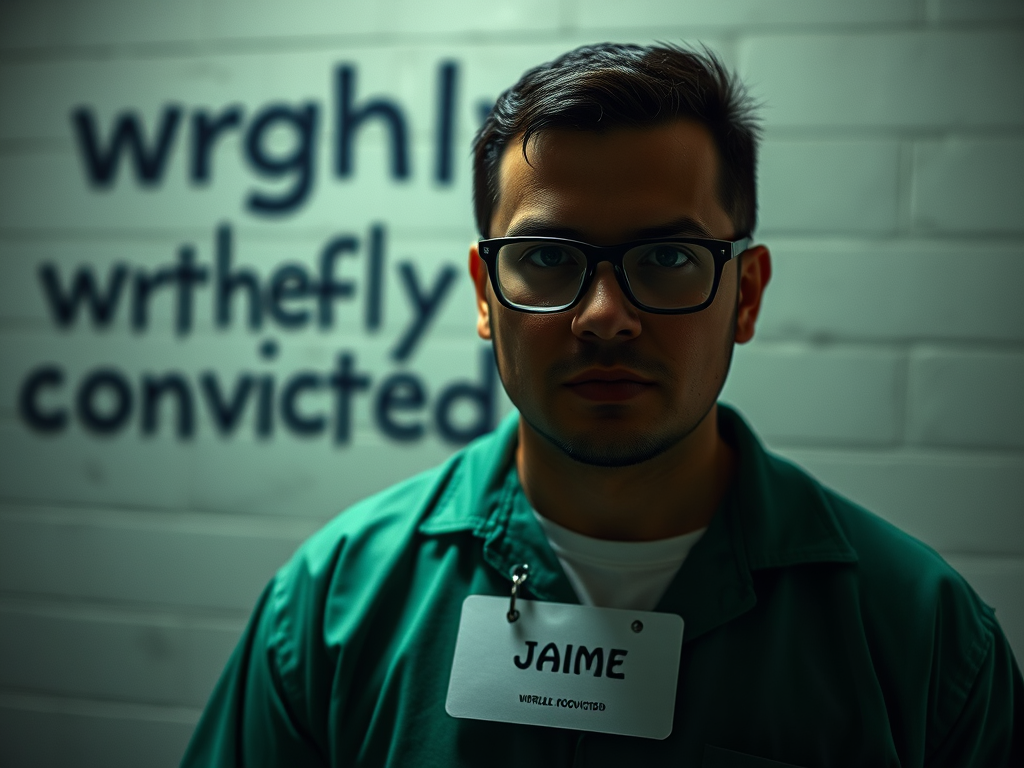
Disclaimer: This article discusses a real story involving an alleged victim and an alleged accuser. It is published with the intention of informing and raising awareness about the complexities of such narratives. The content does not intend to defame or slander any individuals, and there are no legal consequences associated with the publication of this story regarding defamation or character slander.
As I mentioned in a previous publication regarding Jaime Duran’s case, from over 18 years, the only voices the public heard were those of his alleged victim, Doris Rivera Black, his defense attorneys who failed him, and the prosecutor, Jeff Lindsey, who is now running for Chief Deputy in Fremont County. Everyone has spoken about this case except for Jaime Duran himself. Now, it is time for his side of the story to be told, in his own words.
Throughout this ordeal, Rivera Black has been vocal about her version of events through platforms like YouTube and podcasts. But there’s a pattern in her appearances that I can’t ignore. As I watch her interviews, something feels off. She appears overly composed—her makeup always on point, her hair perfectly styled, sometimes even changing color between appearances. There’s an odd disconnect between her emotional expressions and the weight of the accusations she’s made. There’s no deep sense of fear or trauma in her demeanor, no real indication of someone who has survived such horrific events. Instead, what I sense is a certain satisfaction—a belief that she has “won” by putting Jaime behind bars for what may be the rest of his life.
The lack of emotional depth is concerning to me, not only as a former attorney but as someone with strong instincts about human behavior. During an online exchange with someone familiar with Doris Rivera Black, a question was posed to me that struck a chord: “Is Jaime looking for a reduction in his sentence? Is he getting out?”. I won’t address the specifics of Jaime’s future at this moment, but what stands out is how much certain individuals seem to know about Jaime Duran. Apparently, she and Doris met through a support group. What strikes me is how much she enjoys discussing her story, her book, and her version of events. But I can’t help but wonder: Is there a real story behind all of this, or is it just a carefully constructed fantasy filled with fabrications?
In my conversation with Jaime Duran, it became evident that his voice had been silenced for too long. It’s important to remember that in many high-profile cases, the loudest voices are not always the most truthful. There are inconsistencies in Rivera Black’s story that raise red flags. As someone who has worked with countless victims of domestic violence and abuse, I know the pain and trauma such victims endure, and I struggle to find those same signs in Rivera Black.
There’s a bigger question at play here—one I leave to you, the readers, to contemplate: Is Doris Rivera Black a real victim of domestic violence, kidnapping, and sexual assault? Or is she trapped in her own web of lies and fantasy? The truth, I believe, will eventually come to light, as it always does.
To the real victims of these horrific crimes, I ask you to weigh in. You know what it means to survive such experiences, and your insights are invaluable. Does Rivera Black’s story resonate with you? Does it ring true to the reality of the pain, fear, and trauma that so many survivors endure?
Jaime Duran has been silent for nearly two decades. It’s time to question the narrative that has been constructed around him and to reconsider whether justice was truly served in this case.

In April 2024, Doris Rivera Black captivated viewers during an interview on The Good Life with Professor G. Her story of survival as a domestic violence victim, emotional abuse, and manipulation resonated with many. Yet, some question whether her appearance was a genuine cry for awareness or an attempt to gain attention in the absence of platforms like The Oprah Winfrey Show, which once provided such individuals with an audience. Doris’s narrative is certainly compelling. In her book, Clothed in Strength, and her interview, she shared details of a traumatic life marked by abuse from trusted individuals, culminating in an emotionally abusive relationship with her ex-husband. She spoke candidly about how early experiences of sexual abuse by a family member led to a lifetime of self-doubt, low self-worth, and vulnerability to controlling relationships.
Her second marriage, the focal point of her story, revealed a pattern of emotional manipulation by her husband, James. Initially, his charm and attentiveness masked a darker reality. As their relationship progressed, his control over her life grew insidious, characterized by constant jealousy, accusations, and disruptions. In her retelling, Doris explained how James would call her incessantly while she was at work as a police officer, accuse her of cheating, and emotionally blackmail her with tears and threats of self-harm. As a trained law enforcement officer, Doris herself grappled with the realization that she was a victim of domestic violence. The abuse was psychological and emotional, not physical—something she hadn’t been trained to recognize or process.
Given the emotional intensity of her story and the platform on which she shared it, questions arise. Is Doris a true victim of abuse, or is she simply seeking the spotlight? Her candidness, particularly about her failures to recognize the abuse, adds depth to her narrative and credibility to her role as an advocate. Her experiences highlight a form of abuse that is often misunderstood, raising awareness of the many shades of domestic violence. While some skeptics may wonder if Doris’s appearance on The Good Life was a bid for attention, it is undeniable that her story serves an important purpose.
In a world where personal narratives can inspire change and bring awareness to critical issues, it is crucial that those stories are rooted in truth. Fabricating or exaggerating experiences not only damages the credibility of the storyteller but also undermines the real struggles of genuine victims.
As for James, he remains a private figure, choosing to stay out of the spotlight as the truth about his relationship with Doris comes to light. In the end, Doris’s deception didn’t just hurt the public—it hurt the very people she claimed to love.
As society continues to navigate the fine line between raising awareness and protecting the integrity of survivor stories, it is crucial to advocate for honesty and authenticity. Media platforms and publishers have a responsibility to verify the credibility of personal accounts to ensure that the narratives shared are truthful and respectful of the experiences of real victims.
For those seeking to support victims of domestic violence, the focus should remain on creating safe spaces for genuine stories to be told and heard. Organizations and individuals alike must prioritize the authenticity of narratives to foster a community built on trust and understanding.
While Doris story initially served as an inspiration to many, the allegations of fabrication have sparked a necessary conversation about the ethics of sharing personal trauma. It serves as a reminder that while the quest for fame is understandable, it should never come at the expense of truth and the genuine suffering of others. As we continue to combat domestic violence, ensuring the authenticity of survivor stories is paramount in maintaining the integrity and effectiveness of awareness efforts.

The Jaime Duran Case: Unraveling the Complexities of Allegations
The case of Jaime Duran has captured public attention, raising significant questions about the nature of allegations, the truth behind victim narratives, and the complexities involved in personal relationships. At the heart of this case lies a web of claims made by Duran’s estranged or ex-wife, who has alleged that she was a victim of sexual assault as a child. Duran, however, presents a contrasting narrative that challenges the veracity of these allegations.
I read her book and the PSI, and I’m confused by her account. Can you help me get some of my questions answered and clarify the record?
When I asked Jaime about his estranged or ex-wife, the alleged victim, claiming she was a victim of sexual assault as a child, he said he could have sworn she mentioned it was her grandfather who molested her when she was young. He also stated that the alleged perpetrator was never a close family friend. I believe this might be in the transcript or her book, but saying it was a close friend seems to be a lie that started unraveling because she can’t seem to remember the original story. It makes you wonder if it really happened or if it was fabricated to generate sympathy for Doris. I’m not trying to diminish the seriousness of what happened to her as a child—it’s horrific—but the inconsistencies in her stories raise questions.
For instance, her first husband, Angel Rodriguez, claimed she told him she was still a virgin when they first had sex. To this day, he insists that she hadn’t been with anyone else before him, even though I’ve been told she was with another boy long before Angel. Regarding their marriage, Angel mentioned they didn’t decide to end it until after she began a relationship with me. By that time, we were already being intimate almost daily. I even helped her move her things out of her apartment, which was quite awkward, but I did it out of love and support.
“This reflects who I am: I truly cherish the women in my life, showing them love, appreciation, and respect. I didn’t get fired from my job; I left to avoid a situation that had led to a domestic violence charge with Monica. I may have been emotional after arguments, but that was simply because I wear my heart on my sleeve. There’s nothing wrong with that—it shows I’m human. It seems like she takes pleasure in that vulnerability”.
When I worked at that place, I received severance pay due to a reduction in workforce. If I had done something illegal, I’m sure the consequences would have been different. The fact that I received severance pay suggests she doesn’t know the full truth, and there are inconsistencies in her narrative.
I was very supportive of her ambitions as my wife. I would bring her sandwiches, donuts, and other food items—not out of malice, but out of love and respect, wanting her to succeed. I even took her to obstacle courses and taught her techniques to help her finish without assistance. I spent years in the military, and I was there to calm her down. She did not qualify on the pistol range after I encouraged her to do well, giving her an ultimatum by academy about passing after lunch to remain a deputy. I wanted her to succeed; it was the guy’s other deputies questioning my presence who were likely trying to get close to her, not the ones respecting her husband who was supporting her goals. I would call her at work, not because I was doing something wrong, but to check on her. I wanted to make sure she was eating and that she was okay. Working in a jail can be tough, and I worried about her safety. It puzzled me when she would say they were going out to eat after work, yet she never returned with food, only with some other guy.
The accusations of me putting knives to my throat or threatening to kill myself by train tracks are false. I sometimes needed to leave the house to think and cool off—just like any normal person. I needed space for my mental health, especially with the constant abuse from her and her family.
The inconsistencies in the narrative presented by Duran’s ex-wife raise critical questions about the nature of truth in allegations of sexual assault. While it is essential to take such claims seriously and support victims, it is equally important to examine the context and details surrounding these stories. Duran’s insistence on the contradictions in her accounts and his emphasis on his supportive role in her life suggest a deeper complexity that cannot be overlooked. Duran acknowledges the gravity of sexual assault, stating that he does not intend to diminish the impact it has on victims. However, he argues that the discrepancies in his ex-wife’s accounts warrant scrutiny, particularly when they appear to shift over time. This notion highlights the delicate balance between advocating for victims and ensuring that accusations are grounded in truth.
The Jaime Duran case illustrates the intricate dynamics that can arise from personal relationships, particularly when allegations of abuse come into play. While it is crucial to provide a platform for victims to share their experiences, it is equally vital to ensure that narratives are coherent and consistent. As this case continues to unfold, it serves as a reminder of the complexities surrounding allegations of sexual assault and the importance of approaching such matters with care, empathy, and a commitment to truth.
What did you mean by saying you would burn the house down?
I told her that if she didn’t get everyone out of the house, I would just burn it down, leaving nobody with anything. My intention was not to hurt anyone; it was about material possessions. I ended up facing a domestic violence charge because I was furious after she accused me of cheating. In reality, she was the one who cheated and even admitted in person and in her book that she had a real affair? My stepdaughter claimed to have seen me at the movies with another woman, stating I was wearing a bright yellow shirt. However, my schedule matched Doris’s: I worked an hour before she did and finished an hour before her shift ended, with the same days off. During that time, I was busy putting the kids to bed, making lunches, and preparing a late meal for Doris when she got home from work.
Now, after 20 years, I’m beginning to question whether she manipulated her two daughters to get what she wanted. Did she groom them to the point where they believed something that never happened? I have never hit or harmed a woman in my life. My mother raised me to be respectful, and I grew up watching her endure a lot, which made me very protective of her and all women.
While she was working, she would start conversations with the lieutenant and others at the El Paso County Sheriff’s Department, who supported the false claims she was making about me. They believed I was doing things that never happened. One night, she mentioned being with Isaac Patterson, who worked at the El Paso County Sheriff’s Department. Both had flown to New Mexico to pick up an inmate for extradition back to El Paso County, and they arrived late that evening. Interestingly, she never mentioned that this was the same night she rushed to the shower when she got home. While I was picking up her clothes from the floor, I noticed a significant amount of discharge on her panties. It’s difficult to trust someone when you see evidence that suggests they are lying. I hadn’t been intimate with her for a few days, and when I confronted her about it, she denied everything. Deep down, I knew something was off; she avoided eye contact and was distant. I sensed that she had been with another man, someone she had previously kissed, which she even admitted to. Why isn’t this mentioned in her book? It all seems strange.
What do you recall about that night when everything took place?
That night, when everything happened, I wasn’t aware of the trash can that may have blown into our neighbor’s driveway. In Colorado Springs, the open areas are always very windy. Afterward, we walked away from the house to the street where I parked my car at the top of the hill, which was her idea because she called me to see her.
Let me clarify: if I were truly sexually assaulting her, then why would she be in the back seat, rubbing herself to reach orgasm? She admitted to doing it, claiming it was only because she was scared, but that doesn’t add up. She changed positions from being on top of me to lying on her back, touching herself. I know this sounds crazy to write down, but I’m confused about how this can be considered nonconsensual. I did not force her to do anything sexual or against her will—this was her idea. This is who she really was; the real Doris behind her mysterious persona.
I want to highlight something crucial: as noted in the police report, the witness was asked about Doris’s demeanor after the incident, and he stated that there was nothing unusual about it. They even had video footage of the entire event, but they claimed they didn’t have the technology to view it from the convenience store itself. I’m referring to when we stopped to grab drinks at the gas station. If I can get someone to testify about what happened or if we could access that video, it would help clarify the truth. We’re talking about the sheriff’s department, which is supposed to uphold justice. The El Paso County District Attorney’s office seemed to downplay and dismiss all my evidence, making my story appear less credible than the lies told by one of their own—Doris. She was part of their circle. My defense attorney didn’t do anything to challenge this either, and now he’s a District Judge, which is disheartening. Let’s be honest: El Paso County has a history of corruption, and it seems to be worsening. I find myself in prison alongside others who were sentenced by the same people who sentenced me, and it feels like a connected web of injustice.
After reviewing the police report, the PSI, and her book, I found it quite strange that the alleged victim knew the exact location of the supposed crime. Don’t you think this suggests that it may have been premeditated and carefully planned?
Pueblo is a major city, and it has certainly grown over the years, almost merging with Colorado Springs all the way back to the borders of El Paso County. It’s interesting to note that the alleged crime supposedly occurred there. If they want to claim that the crime happened in Pueblo, they should acknowledge that Colorado Springs has no restrictions there, and that Pueblo has police, firefighters, and other first responders, along with numerous directional signs. She knew the exact location where we had sex, but not the specific spot where she claimed I pointed a gun at her, which never existed. She alleged that I had a gun, but there were no gunshot residue traces on my hands. The only person who owned a gun was her, as we bought it together as a gift for her. I don’t own weapons and have no desire to do so; I carried enough guns during my military service and don’t want one in my civilian life, especially with children at home. I’ve always been hesitant about that.
I think your memory is starting to return after nearly two decades. During the trial, you mentioned that your mind felt foggy, but now, after reflecting and reading everything, it seems like all the pieces of the puzzle are finally coming together to form a complete picture.
I never had a chance to tell my story, and I’ve always analyzed everything that happened. As the fog begins to clear after two decades, more crazy thoughts are surfacing. It seems all she ever wanted was material things—her greed was ever-present. She wanted a nice life and projected an image of being a sheriff’s deputy, but her demands from me felt strange. She wanted threesomes and relationships with other people, almost making it seem like I was part of some swinger’s club. She even enjoyed going to sex toy shops. I tried to be a supportive husband and partner, but I started to feel like this was heading in a dangerous direction. At any moment, she could turn my name in.
Being a sheriff’s deputy, she had constant access to jail records and the system. I had already disclosed my past to her, including my previous domestic violence charge with my ex-girlfriend, Monica. What’s really strange is that when investigators did their background check, I still had those charges on my record, which should have disqualified her from being around guns, especially in our household. She should have known better, yet she never disclosed this to her superiors. I’m sure she knew the rules about what to report to her higher-ups. In El Paso County, the sheriff’s department is known to be corrupt. They probably told her not to worry about it, that it was all good. But when the case came up and she wanted me out of the house, they used my past against me. I truly hope she eventually reflects on whether all this was worth it. Now I’m sitting in prison for a crime I didn’t commit. The only real crime I committed was being naive because, as they say, love is blind.
Conclusion
In conclusion, the case of Jaime Duran remains a stark reminder of the deep-seated injustices within our criminal justice system. Despite being wrongfully convicted and subjected to manipulation and corruption, Jaime exemplifies resilience and positivity as he serves his time in prison. He works diligently, supports his fellow inmates, and maintains a demeanor that makes one question how he ended up incarcerated in the first place. The reality of prison life strips away pretense; genuine character is revealed in that environment, and Jaime’s conduct speaks volumes about his integrity.
In contrast, Doris, the alleged victim, appears to thrive in the spotlight, leveraging her experiences for fame and financial gain. Her concerns during the investigation seemed focused on material possessions, such as her Tahoe, which she could not access due to its status as part of the crime scene. This raises pressing questions about the true motives behind her claims and who the real victim is in this convoluted narrative of deception and corruption.
The juxtaposition of Jaime’s situation against other controversial cases, such as the Menendez brothers, highlights a troubling disparity in how justice is served. While the Menendez brothers, who committed murder, are reevaluated due to their claims of prolonged abuse, Jaime, who has not harmed anyone, faces a lifetime in prison for a crime that lacks credible evidence. This begs the question: where is the fairness in our legal system?
As we reflect on Jaime Duran’s plight, it becomes clear that we must demand accountability from our judicial authorities. The clock is ticking for truth and justice to prevail, and we can only hope that it is not too late for Jaime to reclaim his life. It is essential for society to awaken to these injustices and advocate for a legal system that truly upholds the principles of fairness and truth.

“What I Want to Say” by Jaime Duran
Let me start by saying this: marriage should be a fortress against temptation. It is a bond, a sacred connection, and a training in divine oneness. It means not only not cheating, but also being a true team—both of us committed to working on our marriage together. But when I caught you cheating, everything changed. We were no longer a team.
What hurt the most was not just the affair, but the betrayal in its entirety. You and Isaac shared more than just a kiss—especially after that out-of-town trip where you were alone with him. After the affair came to light, you began telling your friends and coworkers things about me—things that never happened. You painted me as someone I’m not, and those lies became a weapon that your chain of command at the El Paso County Sheriff’s Office used against me. You were given an ultimatum: your career or your marriage to me. And you made your choice.
I want to make one thing clear: I never forced you to do anything. I placed you on a pedestal with all my love, honor, and respect. Yes, I’m not a perfect man, but I tried. I tried my best to make you happy. You were the first woman I never cheated on for all the years we were together. And yet, despite my loyalty, you still chose infidelity. I truly believe that your affair with Isaac was not a one-time thing. It’s hard to accept, but I’m sure that your behavior continued with other married men during your time at the Sheriff’s Office.
Am I upset? Absolutely. But what I really want to know is this: Why? Why did you do it? Was it because of the intimacy you shared with Isaac, or was there another man in your life? Why not just let me go? Why did you continue to give me false hope, making me believe we could still be together? You seduced me, and you preyed on my weakness—my deep love for you. You knew that I would do anything for our marriage. Maybe you thought lying was the only way out, but those lies have spiraled out of control, affecting both of us in ways we could never have imagined.
To all those who are wrongfully convicted or trapped in a web of lies, I leave you with this: the truth eventually comes out. Lies may cover up the truth for a while, but the truth always finds a way. And when it does, it will set you free.
This is what I want to say, and I hope that one day you will understand the depth of the damage caused—not just to me for to entire community.
Disclaimer: This article discusses a real story involving an alleged victim and an accuser. It is published with the intention of informing and raising awareness about the complexities of such narratives. The content does not intend to defame or slander any individuals, and there are no legal consequences associated with the publication of this story regarding defamation or character slander.
 Justice Unlocked.
Leave a comment