Justyna M. in Criminal Justice
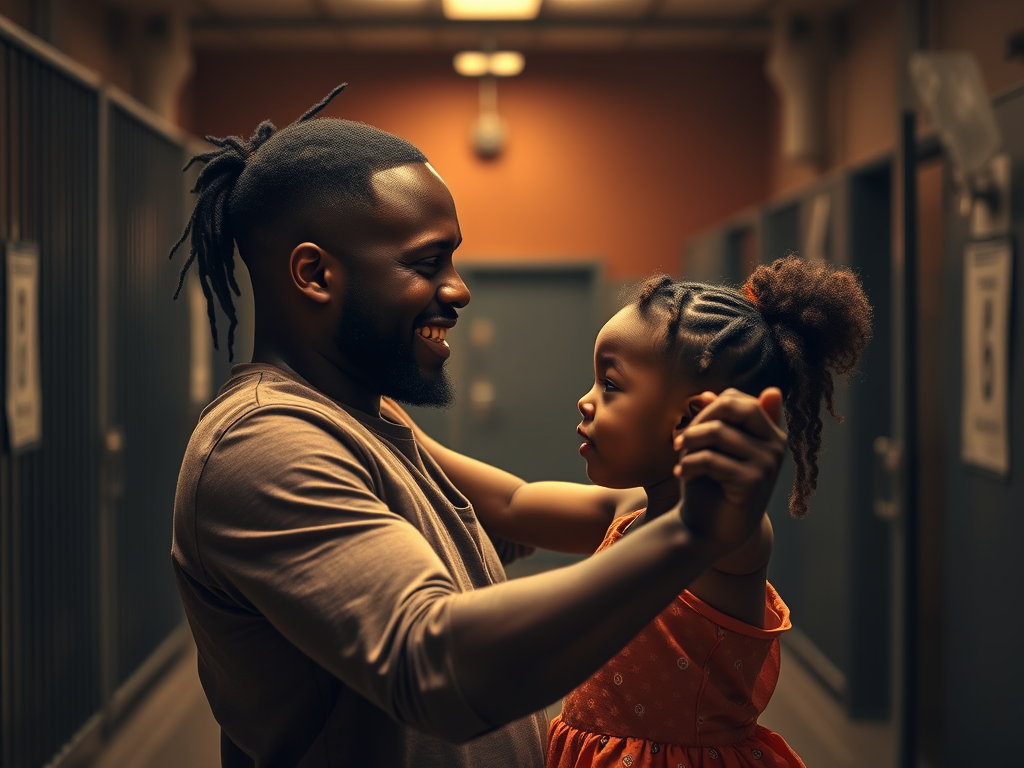
“The number of children who are separated from their parents due to incarceration is significant, though exact figures can vary. According to the Sentencing Project and other research organizations, more than 5 million children in the United States have had at least one parent incarcerated at some point in their lives. This statistic reflects a broader issue where children are separated from their parents due to incarceration, often leading to long-term emotional, psychological, and social impacts.
The Bureau of Justice Statistics notes that one in 28 children in the U.S. has a parent in prison or jail on any given day, which translates to about 2.7 million children. This number represents the direct impact of parental incarceration on children, with many facing the challenge of growing up without their parents being present, often for extended periods.
The consequences of having a parent incarcerated can be profound, affecting children’s mental health, educational outcomes, and their likelihood of facing future involvement with the justice system themselves. The effects are especially stark in marginalized communities where systemic issues like poverty, lack of access to quality education, and higher rates of incarceration intersect.”
Writing this article has been one of the most challenging tasks I’ve undertaken, perhaps because the topic feels deeply personal. Although I don’t have children of my own, I’ve spent years working with men and women behind bars who have left their children on the outside. These mothers, fathers, and grandparents have children they ache to support, but they find themselves separated by steel doors and court sentences. For them, and for the families they leave behind, the consequences go far beyond the prison walls. Society often sees only one “victim” in a criminal case, but the reality is that there are often many, especially the children who grow up with empty chairs at birthdays, missed holidays, and stolen moments that can’t be replaced.
People say that prison isn’t a place for children, and they’re right. Prisons are not spaces designed to nurture young minds or foster connections. But what other options do these families have? A hurried phone call every few weeks, lasting only 15 or 20 minutes, is hardly enough time for a young child to grasp their parent’s voice, let alone keep up a meaningful relationship. The cost of these calls often makes them a rare luxury, and when they do happen, they pass by in a blur. And for many families, this fragmented contact is their only connection—a lifeline that’s both essential and painfully insufficient.
The greatest victims in all of this are the children, too young to understand and too vulnerable to cope. I recall a friend’s young son, only three years old, asking his mother one night at the dinner table, “Did Daddy die?” We both looked at each other, speechless. She wanted to tell him the truth but was at a loss for how to explain prison to a child so young. She ended up saying that Daddy had gone on a long trip, trying to ease the boy’s fear without lying. But the weight of that conversation lingered, for we knew that as he grew up, questions would only multiply.
This question of how to explain parental incarceration to children, and how they process the absence, is one with no perfect answer. No amount of therapy or counseling can shield a child from the painful truth they’ll eventually face—that their parent is “away” because they’ve been removed by society. It leaves a scar that can’t be easily healed and often brings anger, confusion, and guilt into their young lives.
In the world we live in today, many children experience realities that others could never imagine. It’s easy to look at the picturesque, carefully curated social media posts showing happy families at Christmas dinners, dressed in matching clothes, smiling perfectly for the camera. But how real is that? Is it a reflection of life, or simply a carefully crafted image for the world to see? For countless children, the reality is much different—especially for those who have fathers behind bars.
Watching documentaries about the lives of those affected by the justice system can be an eye-opening experience. For the young girls in these stories, it’s hard to grasp the depth of the world around them. Can you imagine being a four-year-old, a 10-year-old, or a 12-year-old, trying to make sense of a world where your father is in prison? Trying to understand a broken system that feels beyond your control, a system that might eventually lead you to the same place? For these children, there is no perfect holiday photo, no idealized life. Instead, there’s a sense of loss, confusion, and often an overwhelming sense of being abandoned. These are not just statistics or faceless figures we read about in the news. These are real girls, with real feelings, real futures, and real pain. They are children who, at some point, will have to face the harsh reality of growing up without their fathers. It’s not something we always think about when we hear about crime, gangs, or incarceration. We often forget that the consequences of these systems ripple outward, affecting families in ways that are almost too difficult to comprehend.
For many of these children, the idea of a “normal” family life—a life where both parents are present through childhood, through the formative years, and even into adulthood—is a privilege they may never know. Instead, they must try to make sense of a world that isn’t built for them. They wonder why their fathers aren’t around, why they don’t have the same experiences as others. How did this happen? Why are they left behind?
In a society where poverty and violence are often tied together, the choices that many families face are not simple ones. Parents, especially in low-income communities, often find themselves making impossible decisions. Do they put food on the table for their children, or do they make dangerous choices to provide? Unfortunately, some parents, particularly fathers, may feel that joining a gang or committing crimes is the only way to survive, to ensure their children have something—anything. It’s not about wanting to be bad people; it’s about trying to give their kids what they can, even when the system is stacked against them.
However, despite the chaotic and often dangerous circumstances, there remains something uniquely special about the bond between a daughter and her father. For girls with fathers in prison, this bond is often the source of both deep love and painful separation. Fathers in prison speak of their daughters in a way that is almost poetic—these girls are often still seen as their little girls, even when they’re 20 years old. In their minds, they remain the little girl in a pink tutu, playing in the dirt, laughing with friends. Those memories, no matter how fleeting, are a source of strength for fathers behind bars. For these men, the thought of their daughters keeps them going.
But the reality sets in quickly. One moment, you might be holding on to memories of a carefree childhood. The next, the phone rings. It’s a call from the prison, a reminder that the world you thought you knew is not the world you’re living in now. The phone call shatters the illusion of safety and happiness, bringing the stark truth into focus.
This cycle is one that too many children and families face, and it’s not one we often talk about. The social media posts, the perfect holiday pictures, they mask a much darker reality. Behind the smiles and the perfect images, there are families struggling to survive, children growing up without their fathers, and parents making impossible choices. It’s a broken system that continues to fail those who need it the most.
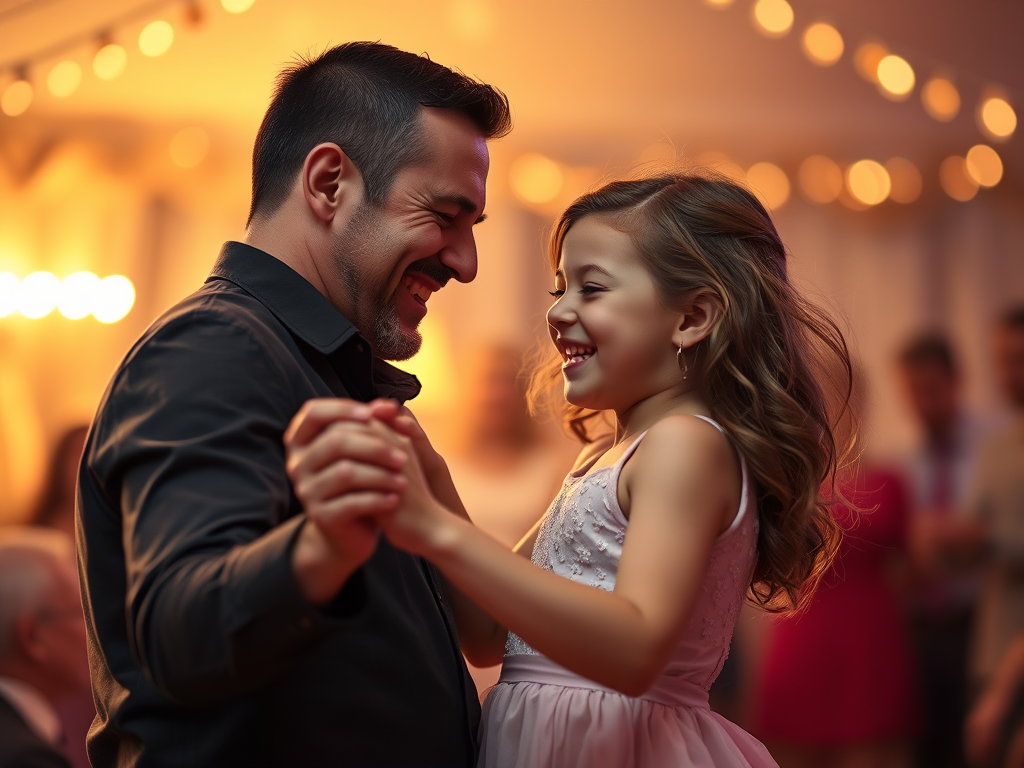
The Heartwarming Tradition of Father-Daughter Dance
A father-daughter dance is more than just a social event—it’s a cherished tradition that celebrates the unique bond between fathers and daughters. Typically organized for elementary or middle school-aged girls, these dances invite fathers, or father figures such as grandfathers, uncles, or mentors, to accompany their daughters for an evening of fun, connection, and lasting memories.
At the heart of the father-daughter dance is the celebration of a special relationship. Fathers and daughters often have a unique connection, built on love, trust, and support. The dance offers a rare opportunity to strengthen that bond while creating a memorable experience. For young girls, this event often marks one of the first opportunities to enjoy a formal social gathering with a parent. It provides a space for them to feel celebrated and cherished, whether they are in kindergarten or nearing their teen years.
While most commonly seen in elementary and middle schools, father-daughter dances can be an inclusive event for all families. Although the invitation is typically extended to fathers, the event is designed to welcome other male figures in the child’s life who play a role in their upbringing—whether it be grandfathers, older brothers, or mentors. This inclusivity ensures that every girl has someone to share in the festivities, regardless of her family situation.
For many girls, the father-daughter dance is an opportunity to dress up in a way that feels both special and empowering. Whether it’s in a lovely dress, a stylish outfit, or a favorite costume, the excitement of getting ready for the dance is a big part of the fun. Fathers and daughters arrive looking their best, often with smiles that reflect the joy of the evening ahead.
The atmosphere is typically light-hearted and festive, with vibrant decorations, lively music, and sometimes even themed activities. The music at these events often spans a variety of genres, ensuring that there’s something for everyone to enjoy. From slow dances that allow for heartfelt moments to faster, more playful tunes, the rhythm of the night is designed to keep spirits high and create an atmosphere where both fathers and daughters can bond and have fun together.
For the girls, it’s also a valuable social experience. It provides them with a chance to interact with peers in a fun and supportive environment, with the comfort of having a trusted adult by their side. The dance often helps instill confidence in the girls as they experience the joy of connecting with others while having their father’s support nearby.

A Tradition of Creating Lasting Memories
These dances are more than just an annual event—they are a time-honored tradition in many schools and communities. As the years go by, the memories made at these dances often become cherished milestones in a daughter’s life. Whether it’s the first dance with her father or a more frequent tradition as she grows older, each moment spent at these dances is a building block in the story of their relationship.
For fathers, it is a moment to reflect on the importance of their role in their daughter’s life. For daughters, it’s a time to feel special, loved, and supported. Together, the father-daughter dance is an occasion that reinforces the values of family, celebration, and love.
In a world where connections are often tested by the busyness of life, the father-daughter dance offers a much-needed opportunity to slow down, connect, and create memories that will last a lifetime. This simple yet powerful tradition is an expression of how small moments can leave a lasting impact, one dance at a time.
“Take one year to circle around sun you’ll keep going you’ll never stop 1,2,3,4,5,6,7 …. I see my dad …”
Daughters Left Behind: The Unseen Impact of Parental Incarceration on Children
Recently, I came across the documentary Daughters, which captures the experience of daughters growing up with incarcerated fathers. Watching this film felt like a revelation, yet a heartbreaking one. The documentary beautifully portrays the resilience, confusion, and yearning of young girls who must grow up without their fathers. They shoulder responsibilities beyond their years, helping their mothers and siblings, all while wrestling with the deep, unanswered questions about why their dad is not there. How do you build a relationship with someone you can only speak to through a grainy phone line or, if you’re lucky, behind a glass window? How does a child feel loved in a system that denies them access to one of the most important relationships of their lives?
In many ways, the system has failed these children. It treats parental incarceration as a necessary punishment but overlooks the collateral damage that spills over into innocent lives. We need to acknowledge the importance of these family bonds and do better. Every warden, director, and attorney general should watch this film and consider the countless children suffering silently because of policies that ignore their emotional needs.
In my experience, I’ve often seen the designated family areas in prisons, set up to allow some level of connection. These spaces are clinical and restrictive, hardly conducive to fostering genuine moments of love or understanding. Inmates may have made mistakes, but their children should not pay the price. They are innocent and deserve a chance to know their parents without stigma or shame.
The solution won’t come easily, but it’s long past time we started searching for one. We need to reimagine how families connect, to create spaces where children can feel safe to ask questions, to find moments of warmth, and to nurture the bonds that matter most. Because at the end of the day, love exists behind those prison walls, and those relationships deserve a chance to grow, for the sake of both the parents and the children they leave behind.
“What if we had the dance in the jail?” – the question that ignited the event “A Dance of Their Own.”
The girls wrote to a local Sheriff and asked if daughters could spend a special afternoon with their incarcerated fathers to enjoy “a dance of their own.” Former Sheriff C.T. Woody, at Richmond City Justice Center, said “yes,” and the very first Daddy Daughter Dance in jail was born.
Designed to take place within a correctional facility, participating fathers dress in semi-formal attire for a date with their daughters, with no physical barriers between them. They enjoy a meal, live comedy, games, a dance, and other activities aimed at father-daughter bonding.
To prepare for this meaningful event, fathers, mothers/guardians, and daughters participate in community healing circles led by trained facilitators. These sessions build up to a culminating celebration, aimed not just at enhancing the bond between fathers and daughters, but also at strengthening family relationships as a whole, reinforcing the family’s unity and resilience.”

Daughters Left Behind: A Moving Documentary on Father-Daughter Bonds and the Legacy of Incarceration
In Daughters, an eight-year documentary project now streaming on Netflix, co-directors Angela Patton and Natalie Rae capture a heart-wrenching and hopeful story of resilience and love. This powerful film immerses viewers in the lives of young girls who bear the weight of their fathers’ absence due to incarceration. Through intimate storytelling, Daughters reveals the profound effects of separation and the deep love these fathers and daughters share, creating a poignant narrative about the lasting impact of mass incarceration on family bonds and the resilience that emerges in its wake.
Since 2014, in-person visits for families of the incarcerated have been systematically restricted across the United States. Many families now rely on costly video calls to connect with their loved ones—a reality that puts additional strain on relationships and benefits the video-conferencing companies but often feels like a poor substitute for in-person connection. Recognizing this gap, Patton’s nonprofit, Girls for a Change, created the transformative “Date With Dad” program, designed to bridge the emotional and physical distance between incarcerated fathers and their daughters. This 12-week program, set in a D.C. jail, provides a rare opportunity for these fathers to reconnect with their daughters and acquire essential life skills for reintegration. The program culminates in an emotional father-daughter dance, symbolizing renewed hope and love that transcends physical barriers.
Patton and Rae capture this journey with stunning sensitivity, offering audiences a rare glimpse into both sides of these fractured relationships. Patton, who documented the fathers’ experiences in the jail, and Rae, who spent five years connecting with the girls and their mothers, together craft a portrait of resilience, love, and the desire for connection. The documentary shows the girls navigating adolescence without their fathers while carrying the mental, emotional, and financial toll of having an incarcerated parent. At its core, Daughters celebrates the love between fathers and daughters while highlighting the deep social and emotional costs of mass incarceration.
In an interview with CULTURED, Patton and Rae reflected on the journey and the powerful response the film has received. “It’s been overwhelming,” Rae shared. “We’ve received countless messages from women inspired to share their stories, often for the first time. It’s incredibly powerful.” Rae’s inspiration for the film began when she watched Patton’s TED Talk on organizing father-daughter dances in prisons. “It brought me back to my ‘why’,” Rae said. “I reached out to Angela, wondering if she’d considered turning her work into a documentary.” For Patton, the idea of a film was new, but Rae helped her see how it could amplify the voices of Black girls in a way that advocacy alone could not.
Building trust was essential to the project, as Patton and Rae shared with CULTURED. Opening up such intimate aspects of the girls’ lives to a broader audience was both challenging and rewarding. “These girls are used to being with people they know in familiar settings, and introducing a camera crew changed the dynamic,” Patton explained. “But the families trusted us, and I’m so grateful for their courage.” Rae also recalled a powerful moment with Santana, one of the girls featured in the film, whose openness guided a pivotal conversation on camera, revealing a depth and honesty that solidified the project’s direction.
Throughout Daughters, the young women display remarkable resilience, yet each carries the scars of growing up without a father. One of the most touching moments is the climactic dance at the end of the program, where fathers and daughters share a rare moment of joy, laughter, and connection. It’s a bittersweet memory for many of the girls. Raziah, one of the daughters, holds these moments close to her heart, despite the painful reality of her father’s absence. Watching the film later brought back those precious memories, preserving them as a reminder of the power of family connection, even in the face of difficult circumstances.

The Unseen Bond: The Father-Daughter Dance Behind Bars
It’s easy for society to quickly judge and label those who are incarcerated. The general sentiment is often “you commit a crime, you do the time,” and many forget that for some individuals, the choices they made were born out of circumstances that didn’t always leave room for alternatives. Many fathers who end up behind bars find themselves there not by an intentional desire to hurt, but often due to forces beyond their control: poverty, systemic failures, the pressure to survive, and sometimes, the desperation to provide for their families. Some were born into gangs or situations where committing crimes was a survival mechanism—one they didn’t know how to escape. When these fathers are incarcerated, they face consequences that ripple far beyond their own lives. It’s easy to forget the toll it takes on their children, particularly their daughters, who often miss the most critical figure in their lives. For many fathers, the hardest moment isn’t the time spent behind bars, but the haunting image of their daughters—the last memory they have before their worlds are turned upside down.
In a powerful documentary, we see the efforts made by fathers to reconnect with their daughters in a way that goes beyond the prison walls. These fathers, some who have never held their daughters in their arms, others who watched them grow up behind a glass window during visitation, are given a rare opportunity: a father-daughter dance. But this isn’t your typical school dance. It’s held behind prison walls, a poignant reminder that the bond between a father and daughter transcends even the harshest of circumstances.
The program, which is not easy to enter, is not just about a single night. It’s about building a relationship over time, allowing these fathers to not only connect with their daughters but to confront their past and their mistakes, acknowledging the pain they’ve caused. The program is a long-term commitment, emphasizing that these fathers must be willing to work on themselves and their relationships with their daughters, and that this one night is not a quick fix, but a step toward healing.
The girls can’t invite their fathers to the dance—so the dance is brought to them. It’s mesmerizing to watch, especially when you think of the magnitude of what this represents for these fathers and daughters. Fathers, many of whom never had the chance to raise their daughters, are given the rare privilege of being part of a beautiful moment. There’s something profoundly emotional about watching these men—often hardened by years of gang involvement, crimes, and prison life—spend hours carefully choosing their suits and ties, knowing this could be the only chance they get to show their daughters they care.
On the other side, the girls eagerly pick out their dresses, choosing sparkly pinks, purples, and beautiful gowns—clothing they may never have had the chance to wear if it weren’t for this program. They carefully do their hair, their makeup, picking out shoes with the hope that this night will be magical, even if for just a few moments. It’s a fleeting moment of grace in a life that can often feel anything but graceful.
The fathers sit nervously in the long, sterile prison hallways, dressed in perfectly fitted suits, waiting for their daughters to approach. For some of these fathers, it’s the first time they’ve seen their daughters in years—some haven’t seen them since they were babies. The distance between them feels impossible, as though these years of separation have stretched time into an unbridgeable gap. Yet, when the moment comes and the girls walk toward their fathers, it’s undeniable: the bond between a father and a daughter can never be erased, no matter the years apart.
When these fathers see their daughters, it’s a moment of overwhelming emotion. There are tears, joy, and a flood of memories. Even if it’s just for five minutes—five minutes where the barriers of prison walls and the years of separation fall away—it’s enough to make a tremendous change in their lives. It’s a reminder of what they lost, but also what they can still gain. In that brief, emotional embrace, the bond between father and daughter is reignited, and for some, it’s the first step in rebuilding a relationship that was broken.
They are fathers who love their children, even if they haven’t been able to prove it in the traditional ways. For the daughters, this dance is a chance to feel loved, cherished, and valued by the person they have often longed for the most—whether they fully understand the complexity of their fathers’ situations or not. The father-daughter dance behind prison walls is more than just a one-night event; it is a symbol of hope, of second chances, and of the undeniable connection that remains between fathers and their children, no matter the circumstances. In a world that often feels divided by judgments and labels, these moments of pure, unfiltered emotion remind us that love and connection can never be fully broken—even behind bars.
The Temporary Dance: A Glimpse of Love in a World of Separation
It’s often said that nothing lasts forever—even diamonds, once thought to be unbreakable, eventually wear down. The same can be said for moments of fleeting beauty, moments that shine brightly only to fade with the passage of time. The father-daughter dance behind prison walls is one such moment—a brief, powerful experience that, for a few precious hours, gives fathers and daughters a taste of what they are missing. But as with everything, the dance must end, and with it, so too must the moment of connection.
The preparation for the dance is a labor of love. The fathers, some of whom have not seen their daughters in years, spend time choosing their suits, carefully picking out ties, and getting ready for what will be a night to remember. Meanwhile, the daughters prepare as well, picking out dresses—sparkling pinks, purples, and beautiful gowns—getting their hair done and making sure every detail is just right. This night, though brief, offers them a chance to feel beautiful, special, and loved. For the fathers, it’s an opportunity to show their daughters that they still care, that they haven’t forgotten them, and that despite being behind bars, their love is unwavering.
But as the night draws to a close, the reality sets in. Like curfew, like the time when it’s simply “time to go to bed,” the dance must end. The fathers, dressed in their finest suits, return to their cells, the orange uniforms waiting to replace their carefully chosen outfits. The beautiful ties are put away, and they return to the reality of being an inmate, a prisoner, a man behind bars. For the daughters, the magic of the evening lingers, but soon, they return to their lives without their fathers. They hold on to the memories, the love, the warmth of a dance that felt like a dream—a dream that, in the morning, may feel like it never really happened. But for a few hours, it was their reality, and it was powerful beyond words.
And then, the phone call comes. “This is a prepaid phone call…” The fathers, back in their cells, have to learn to live with the aftermath of that brief connection. How do they cope with the emotion of seeing their daughters, of dancing with them, of holding their hands for just a few precious minutes? How do they go back to the routine of prison life when their hearts are full of longing for their children?
In some ways, the aftermath of the dance is even harder than the event itself. It’s the emotional toll that weighs on these fathers—knowing they can’t be there for their daughters when they need them the most. But the program that brought them together serves a larger purpose than just a dance. It provides these fathers with the strength and motivation to fight for their freedom. The bond they have with their daughters, if only for a brief time, serves as a reminder of what they stand to lose and what they’re fighting for: a life with their children outside the walls of a prison.
It is this family bond that can encourage these men to keep pushing forward, to keep fighting for their rights and their future. In a system that often breaks people, where the harsh reality of incarceration can strip individuals of their humanity, the connection with family—especially their daughters—offers a lifeline, a reason to fight. When these fathers return to their cells, the thoughts of their daughters are never far behind. They know that beyond the prison walls, their children are waiting for them, hoping for them to come home. That hope, that connection, becomes the driving force behind their desire to break free from the system.
But for the children, particularly the young daughters, the reality is different. Imagine being a child, a 5-year-old, a 10-year-old, or a 12-year-old, and experiencing the painful reality of separation from your father. After the dance, when the excitement and joy fade, you return to your life without him. The calls, the visits, the letters—these become the only ways to feel connected. And as time passes, the feeling of loss becomes deeper, especially when you realize that your father may never be able to walk you down the aisle, may never be able to help you with your homework, or simply be there for you as you grow up.
For these children, it’s not just about missing their fathers; it’s about the absence of a presence that should have been there. And for the fathers, it’s the knowledge that no matter how much they want to be there for their children, they can’t be. They can’t run after them as they leave the prison gates, and they can’t make up for the lost years. It’s the hardest reality of all—the separation of families. The emotional toll it takes on both fathers and children is something that can never be fully understood until you live it.

In conclusion, the separation of families through incarceration is an issue that reaches far beyond the walls of a prison. The emotional toll on children, especially daughters, is profound, and the systems in place fail to recognize the depth of this struggle. These children need more than just a fleeting phone call or brief moment of connection—they need consistent, meaningful opportunities to bond with their incarcerated parents. By recognizing the humanity of those behind bars, and acknowledging the lasting impact of their absence on their children, we can begin to reshape how we approach incarceration and its effects on families.
The importance of family connections, as demonstrated in programs like the father-daughter dance, cannot be overstated. These programs offer a glimpse of the possibilities when families are given a chance to connect and heal. Yet, these moments should not be the exception but the rule. It’s time for us as a society to look beyond the labels of “criminal” and “inmate” and see the fathers, mothers, sons, and daughters who are still very much a part of the fabric of our communities.
The fight for reform must extend beyond the prison system to include the children and families affected. These children deserve a future where they are not defined by the mistakes of their parents or the system that imprisons them. They deserve to have a relationship with their parents, one that extends beyond prison walls and into the future. Until we can ensure that families are no longer the collateral damage of the criminal justice system, we will continue to perpetuate cycles of pain, separation, and loss.
The power of family and connection is undeniable. As we reflect on the importance of these relationships, let us ask ourselves: How can we ensure that every child, regardless of their circumstances, has the opportunity to experience the love, support, and connection they deserve? This is the challenge before us—a challenge that requires us to rethink, reshape, and rebuild the systems that impact families across the nation.

 Justice Unlocked.
Leave a comment