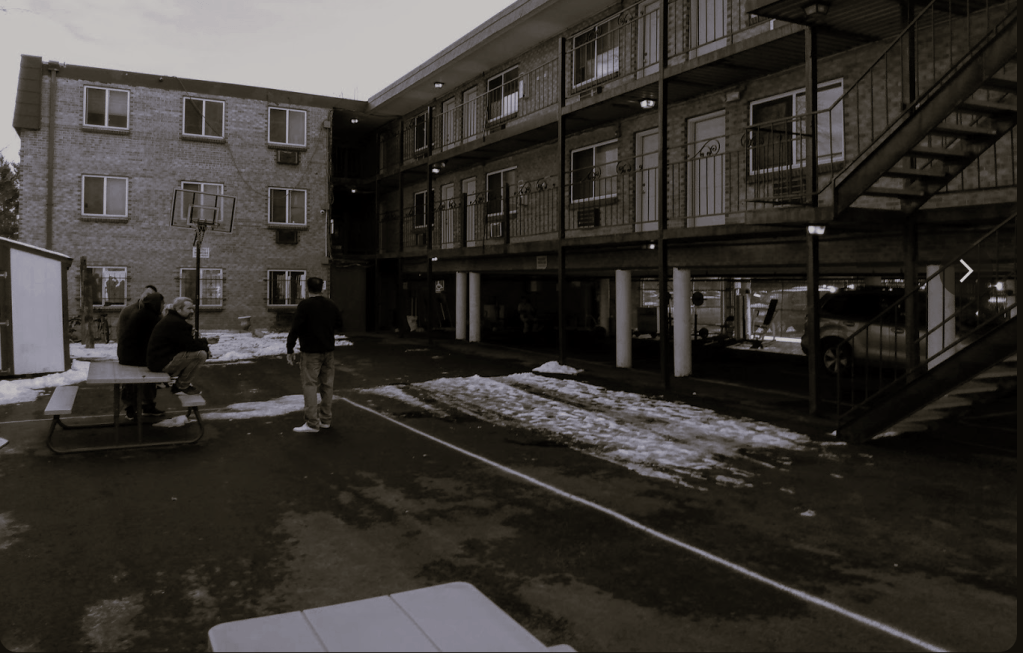
This article is dedicated to the countless individuals who have suffered under the poor management and corruption at Independence House South Federal, the only federal community correction facility in Colorado. It is also dedicated to those who have been failed by those in charge—Senator Robert Rodriguez, still actively involved in Colorado’s capital, and Matthew Brandt, the current director who has no business holding this position and should have been removed long ago. I dedicate this publication to those who endure mental health struggles and a lack of proper support in this broken system. To the residents who have been mistreated, marginalized, and silenced—this is your voice. This is my stand for you. Independence House is not a place of rehabilitation; it is a trap, a drug house that has lost its purpose. This house must either be shut down or taken over by new leadership, ushering in a new era of accountability, care, and reform. The time for change is now.
In Colorado, Independence House South Federal —a residential reentry center located on South Federal Boulevard in Denver, Colorado —is one of the state’s primary community corrections facilities serving federal clients. It’s owned by the father of Democratic State Senator Robert Rodriguez, who plays a significant role in shaping state policies around criminal justice reform, including community corrections. But what happens when a legislator overseeing reform has personal ties to the facilities affected by these policies?
As someone who previously worked in one of these facilities, I can speak to the complex, often troubling dynamics that take place behind closed doors. My experience brought me face-to-face with Senator Rodriguez himself, who presented himself quite differently at the facility than he does in the Capitol. During the summer recess, he would visit, often incognito—dressed down with a beard, a hat, and sometimes glasses, seemingly to avoid recognition. But for those of us working within the system, his position of power in the legislature was unmistakable.
Senator Robert Rodriguez, who serves on the corrections committee, played a central role in drafting and passing legislation last year that raised concerns about potential conflicts of interest. Rodriguez reportedly identifies himself as an IT staffer for both Independence House South and Federal Independence House, granting him full access to resident data across both facilities. This access includes information on incoming, outgoing, and current residents, which he could potentially use to influence recidivism statistics to align with certain goals or benefit financially from these metrics. I’ve witnessed him accessing and adjusting the system, as well as viewing both current and archived resident files. It’s unclear where these old records end up, as they supposedly go to a remote archive location with minimal security and confidentiality measures. This creates a serious risk of data breaches, with sensitive personal information easily compromised.
For anyone uncertain about how corruption can unfold, this scenario is a clear example. Misuse of access and manipulation of data feed a cycle that enables hidden gains and power dynamics within Colorado. What’s even more troubling is that Rodriguez has largely remained shielded from public scrutiny within the Capitol. However, as many incarcerated individuals would say, “You can run, but you cannot hide.” It’s time to uncover the reality behind Robert Rodriguez and his influential family’s role in Denver County and Colorado as a whole—or, perhaps, it’s time to question whether their influence is as formidable as they believe.

The major issue here is the conflict of interest: Senator Rodriguez is involved in Colorado’s criminal justice reform, a field that intersects directly with the operations of facilities like Independence House, which his family owns. This dual role raises questions about transparency and ethics. Should a legislator with personal and family stakes in a reentry facility be allowed to shape policies affecting that very facility? Many would argue not.
Independence House has a monopoly as Colorado’s only federal community corrections center. With no other competition in the state, it operates with significant freedom in handling its clients, often lacking the accountability that might come with competition. Furthermore, there are concerns that the oversight and audit processes are compromised by familiarity and complacency rather than objective scrutiny. For example, the same auditor has been reviewing Independence House for years, reportedly giving unchallenged approval and even imparting training that is, by most accounts, incomprehensible and unhelpful without a legal background. During my time at Independence House, I witnessed concerning issues, including reports of sexual assault, drug use, and even alleged prostitution. When I brought these problems to light, they seemed to disappear into thin air. Senator Rodriguez, who had previously been involved in hearings and legislative conversations around community corrections, suddenly became unreachable when I raised these issues. Emails and calls were met with silence, and his presence in related hearings seemed to vanish.
I am writing this article not out of disdain for my previous job, but because I genuinely care about the people—the residents—who walked through the doors every day. These residents came either directly from the Bureau of Prisons (BOP) or through federal probation or state parole, each with a unique story and struggles they faced as they worked to rejoin society. My connection to them ran deep; I wanted to know their stories, understand their obstacles, and support them in any way possible. But this desire to help clashed with a mentality ingrained in the facility that prioritized profit over people, punishment over rehabilitation.
The philosophy at Independence House was deeply disheartening. I was told plainly that I wasn’t there to help residents succeed—I was there to manage cases. Helping people wasn’t encouraged; in fact, the attitude was that if they couldn’t succeed on their own, they didn’t deserve to be there. The overarching message was that failure equated to a return to prison, which did nothing but contribute to a revolving door of recidivism. This cycle seemed intentional, even systemic, driven by financial incentives that increased the facility’s profitability as long as recidivism rates remained high. It became clear that real change would require a complete overhaul, starting with replacing the entire staff and rethinking the core mission of the program.
Despite my efforts to address these problems—endlessly emailing management, raising concerns, and advocating for a healthier, more supportive environment for residents—nothing changed. Instead of improvement, I witnessed colleagues who embodied the facility’s backward mentality being promoted. For example, a staff member known for their indifference was rewarded with an assistant director position, reflecting the overall attitude of those running the place. I felt increasingly embarrassed by the behind-the-scenes reality and disheartened by the lack of genuine commitment to residents’ success.
It’s no secret that Independence House holds a monopoly as Colorado’s only federal halfway house. Without competition, it has little incentive to provide high-quality support or invest in programs that would genuinely help residents turn their lives around. If another halfway house opened in the state, this monopoly would be broken, leading to a healthy competition that could push facilities to deliver real results. They would be motivated to treat residents with respect, provide proper reentry programs, and support people through the difficult process of rejoining society. But as it stands, they maintain a virtual monopoly, allowing them to treat residents as statistics in a system fueled by recidivism.
Consider this: in 2024, Denver city and county allocated an additional $4 million to Independence House North, a state community corrections facility. Over the next two years, this location alone stands to make over $9 million. But with a recidivism rate nearing 80%, it’s clear that real change is not a priority. High recidivism rates mean higher profits, and blaming residents for their failure only perpetuates a cycle that keeps beds filled, funds flowing, and fingers pointed at individuals instead of the system.
It’s a vicious cycle where the failure of residents becomes the facility’s success. By blaming residents’ setbacks on their supposed lack of willpower or new infractions, the facility avoids accountability and instead keeps churning out reasons to justify continued funding. This corruption benefits from the lack of public oversight and accountability. In fact, when the funding increase for Independence House North was proposed, only seven members of the city council voted on it—and they all voted in favor. However, this hearing wasn’t publicized, leaving the community in the dark about the decision. Had I known about it, I would have fought against this funding allocation, doing everything in my power to ensure taxpayer money didn’t go to a facility perpetuating a broken system.
This lack of transparency ultimately falls on city leaders, including Mayor Johnston, whose ineffective leadership has allowed these funding increases without regard for the systemic problems in these facilities. As long as our leaders fail to hold these programs accountable, they are complicit in perpetuating this harmful cycle, and it is the residents who pay the price.
Federal halfway houses serve a crucial role in the criminal justice system, but the operations and profit structures behind them are often not well understood. In Colorado, facilities like Independence House South (operated by RRK Enterprises, Inc.) manage various types of residents under federal jurisdiction, bringing in significant revenue for services aimed at rehabilitation and reintegration. Here’s a closer look at the types of residents these facilities handle and how each type contributes to the facility’s profits.
The Four Types of Residents in Federal Halfway Houses
Federal halfway houses cater to four primary categories of residents, each with unique funding structures and levels of oversight:
- Direct Bureau of Prisons (BOP) Placement: These are residents who transition directly from federal prison facilities to halfway houses as part of their reentry process. The Federal Bureau of Prisons (BOP) pays about $124 per resident per day for these placements, making them one of the more consistent sources of revenue.
- Public Law Residents: This category consists of individuals placed in halfway houses through federal probation, often referred to as “state parole.” These residents bring in about $64.30 per day, a reduced rate compared to BOP placements.
- Pretrial Services Residents: These placements are the most lucrative for halfway houses. Individuals awaiting trial or sentencing are placed here, and fees are often income-based, allowing facilities to charge significantly higher rates. This makes pretrial services a substantial revenue generator, as residents in this category tend to stay until their legal proceedings conclude.
- Home Confinement: In this scenario, individuals reside at their homes or designated locations rather than in a halfway house, but they remain under monitoring. This category is also funded at $64.30 per day. Home confinement can generate easy revenue, as it requires minimal supervision, and any violation can quickly return an individual to a more restrictive (and profitable) setting.

Revenue Streams and the Financial Model of RRK Enterprises, Inc.
RRK Enterprises, Inc., which operates under the name Independence House, has capitalized on its role as a federal contractor. According to IRS data and financial statements, this company generated nearly $46.3 million in revenue from 2003 to 2024. This income stems from managing people in both residential reentry centers and non-residential environments, with funds often tied to recidivism rates and technical violations that can lead to returns to incarceration.
RRK Enterprises has held several federal contracts through indefinite delivery contracts with the BOP, ensuring steady business and long-term revenue. These contracts include:
- Residential Reentry and Home Confinement Services: A contract through 2024, valued at up to $105 million, allowing for the operation of residential facilities and home confinement services to support BOP’s community reintegration mission.
- Substance Abuse and Mental Health Services: Another contract running until 2029, valued at $2.4 million, focusing on providing treatment services for federal offenders.
These contracts provide fixed revenue streams with performance periods that span years, securing RRK Enterprises’ operations well into the next decade.
RRK holds a contract with the Bureau of Prisons and Residential Reentry Centers until November 2030. Perhaps it’s time to consider a change?
A Monopoly Without Competition
In Colorado, Independence House operates as the sole federal reentry provider, meaning it has no competitors. This lack of competition allows them to control pricing and service quality with minimal oversight or pressure to improve outcomes, such as recidivism rates. High recidivism can actually benefit the facility financially, as more individuals returning to incarceration means a higher turnover and, consequently, higher revenues from consistent occupancy.
Some of you might be wondering whether community corrections or halfway houses should exist, and whether we need residential reentry programs. The answer is a resounding yes. We absolutely need these facilities for individuals coming out of long-term incarceration, and even those coming from shorter sentences. Many of them have nowhere to go and require a healthy, positive transition back into society. However, Independence House South Federal is far from that. It’s a place steeped in negativity—more like a drug house or a trap house than a place of redemption. There’s nothing here for someone trying to turn their life around. If you’re expecting success from this place, you’re deeply mistaken. In fact, I sometimes tell people that if they have six months left on their sentence in federal prison, it’s better to just finish your time there, because this house is not a stepping stone to success. It’s a recipe for disaster. The environment is built on power, control, and fear, not positive outcomes. The staff there are some of the least competent and most disrespectful people, and I honestly don’t know how they ended up in those roles. We have young, inexperienced people running the show, and then there are others who are just counting down the days until they can leave. They’re led by people who clearly lack professionalism—like an overweight man who can’t spell “inmate” or “ward,” or a woman who wears a wig to work in search of a boyfriend, or someone in human resources who forgets to wear a bra, making everyone uncomfortable. And don’t get me started on the director… I’ll save that for another time.
Chapter 1: Exposing the Truth Behind the Trap House – The Hidden Reality
I am writing this in three separate chapters, as I want to make sure the truth comes across clearly without any confusion. This is for all those who have lived through the nightmare, those who have faced unimaginable obstacles, and those who succeeded despite being handed the worst circumstances. Some of you were wrongfully sent back to prison with no reason at all, some didn’t survive the battles they faced, and some are no longer here because no one recognized the addiction that took hold of them.
However, there are those who made it through, who overcame the darkness, who fought their demons and stayed sober. These are the people I cherish, who inspire me, and I am so proud of their strength. They found a way to rise above the horror of what I call the “trap house,” a place that was supposed to help, but instead led many into deeper struggles. Despite this, they overcame the odds, and they are the perfect examples of what true success looks like.

But I’m not here to sugarcoat anything, and I won’t pretend that the people who run these so-called “community corrections” programs have good intentions. I’m here to expose the truth, and in doing so, I’ll shed light on the individuals who use their power and positions to manipulate and control others. One of those people is Matthew Brandt, a man who goes by many names – “Director Sam,” “Magic Mike,” “Magician.”
In my opinion, none of these titles matter because none of them accurately represent who he is. Matthew Brandt is not a magician, he is a predator. He’s someone who believes that he holds power over people’s lives, their freedom, and their futures. He uses his position to manipulate, intimidate, and control everyone around him. He has a power trip that’s all about maintaining control, and anyone who doesn’t fit into his idea of compliance is subjected to his cruelty.
“Magician Matthew Brandt, a.k.a the nerd in a suit, is funny, charming and just a bit neurotic. He served as president of the Mile High Magicians Society twice and currently co-stars in the Sleightly Impossible Magic Show, now in its eighth season. In addition to his 15-year career as a magician Matthew is also a prestigious, gold-level member of the Starbucks Rewards program, carries a coupon for one-free drink at Sipping N’ Painting in his wallet and has an irrational fear of goats. Although Brandt rarely discusses the incident, he once had to be removed from the diving platform at Casa Bonita. His tricks will definitely be a treat!”
But let me be clear about something: Matthew Brandt is not a professional. Far from it. He thinks that showing up intoxicated to work is acceptable, and he presents himself as an expert in corrections when, in reality, his understanding of the job is as shallow as his inflated ego. He treats everyone beneath him with disrespect, and I’ve witnessed it firsthand. I’ve worked alongside this man, and I’ve had to endure his attempts to harass and control me. He has no hesitation in throwing his weight around, but what he doesn’t realize is that I have the receipts. I’ve recorded every conversation. I’ve documented every instance of his unprofessionalism, and as someone with a law degree and experience as an attorney, I know the importance of keeping evidence. Matthew Brandt doesn’t know who he’s dealing with. He tried to intimidate me with his power and his position, but I’m not intimidated. When he questioned my background and ran extensive checks on me, I was ready for him. His attempts to undermine me were not only unprofessional but completely transparent.
And speaking of his so-called “integrity,” let’s not forget about the other people involved in this mess, like his former case manager, who goes by the name “SexyLatina4One” on TikTok. Yes, you heard that right. Look her up. She’s one of his biggest supporters, and she has a following that backs up Brandt’s every move. It’s embarrassing, to say the least. The integrity of this entire operation is in question, and I’m here to make sure the truth is known.
In the next chapter, I’ll dive deeper into the toxic environment at this halfway house and share more about how Matthew Brandt’s lack of professionalism and narcissistic behavior affect everyone around him. But for now, know this: The truth is coming, and it’s time for those who have been victimized by these individuals to have their voices heard.
The Hostile Encounter: Exposing the Tactics of Matthew Brandt
On September 7th, 2023, Justyna was called into Matthew Brandt’s office after a hearing involving resident, a case in which Justyna served as residents’ representative. What was supposed to be a professional discussion soon escalated into a 37-minute barrage of hostile, unprofessional, and intimidating behavior from Brandt. The meeting, which began with no basic courtesy, quickly turned into a personal attack. Brandt’s tone was not just aggressive; it was designed to intimidate and manipulate. This is the account of that meeting, based on firsthand records, including audio evidence of the exchange.
The Unprovoked Hostility
Upon Madenska’s arrival at Brandt’s office, she was not greeted with a simple “good afternoon” or any formal acknowledgment. Instead, Brandt immediately confronted her with a hostile question: “What would you like to say?” The atmosphere was charged with aggression, and what followed was a verbal assault meant to undermine her credibility, her professionalism, and her career.
The discussion was anything but professional. Brandt raised his voice, repeatedly attempting to dominate the conversation and intimidate Madenska with his aggression. The 37 minutes of interaction felt more like a battle for dominance than a meaningful conversation about community corrections or resident affairs. Here are some of the key moments from this disturbing exchange:
Key Points from the Meeting
- Brandt’s Attack on Madenska’ s Integrity: Brandt aggressively questioned why Madenska was supporting resident, whom he claimed was a liar with a tendency to manipulate others. “Why would you cause all your time with us because of her? You read her file, right? She flat out lies. She has borderline personality disorder—she flat out lies!” Brandt’s insistence on labeling resident in such negative terms was part of his attempt to discredit Justyna’s actions.
- Personal Attacks and Threats to Career: Brandt went on to question Justyna’s very presence in the community corrections program. “Why are you here? Why are you working here?” he demanded, following up with questions about her resume, essentially interrogating her background and qualifications. He even had his staff perform a “dirty background check” on Justyna, as though to dig for dirt where none existed. Brandt’s behavior was not only unprofessional but an attempt to weaken Justyna’s position and intimidate her into submission.
- Brandt’s Assertion of Control: At one point, Brandt stated, “I’ve worked in community corrections since 2007, I’ve been the director since 2017, and five of them are not because I do bad—I do great! I got transferred because this facility had serious issues. That’s why I’m here to fix the problematic programs.” In these words, Brandt made it clear that he believed himself to be untouchable, positioning himself as the sole authority on the program’s success or failure.
- Intimidation and Threats: Throughout the conversation, Brandt repeatedly made threats, hinting at the possibility of Justyna losing her position if she did not comply with his expectations. “If I want to get rid of you, I would get rid of you,” he said. “I would not suffer an employee who is not on my team.” This wasn’t a conversation about professional expectations or improvement; it was a warning: fall in line or face the consequences.
- Inappropriate Remarks: In a bizarre and unprofessional moment, Brandt mentioned that Justyna had sent an email to Rose and said, “I know what conversation you had with Rose! Email you sent to Rose.” This was another attempt to intimidate her by implying that he had control over all communication within the facility, further asserting his authority over every aspect of Justyna’s professional life.
- Mismanagement of Program Resources: Brandt also revealed a deep misunderstanding of the program’s actual needs, criticizing Madenska for focusing on tasks he deemed unnecessary. “It’s 1.3 hours per resident; that’s how much time you should spend. Your job is not finding treatment, a job, or housing for reentry,” he stated. This claim ignored the real needs of the residents and demonstrated Brandt’s lack of understanding of what effective community corrections should look like. It also underscored the failure of the facility to provide essential services, such as computer access, skills training, and transitional classes.
- Pressure to Conform or Resign: In a final attempt to force compliance, Brandt told Justyna, “You are on the team; be part of it. Do what we need you to do, or give me your resignation, because I will not suffer another weekend like this.” The message was clear: either fall in line with his vision or leave. There was no room for professional dissent or open dialogue.
Chapter 2.
That night, I made a deal with the devil. I made an agreement with one of the most reprehensible individuals on this planet—someone who should never be part of the criminal justice system, someone who has no place in criminal justice reform or community corrections. This person, Matthew Brandt, aka “Mr. Magician,” the so-called director of the federal halfway house community corrections in Colorado, belongs behind bars as a predator, not in a position of power. That evening, I entered a dark pact with him: he promised not to send my resident back to prison, even though she didn’t belong there. Deep down, he knew she had done nothing wrong. They had dragged her into mental distress, pushing her to the brink of suicide. She was constantly pulled into unnecessary drama, and I’m still not sure why she was targeted. Perhaps they saw her as an easy mark. But the fact that I had been fiercely protective of her meant little to them.I told him, bluntly, that if he didn’t leave her alone, I would walk away from my job. But there was one condition: he had to stop harassing her, stop writing her up, and make things right. I told him she deserved to finish her time there and leave as a person with dignity, not a broken soul.
Did I regret making that deal? No. Because if I hadn’t, she would have ended up back in prison, and I couldn’t live with that. Today, she’s thriving—she has an amazing job, stability, and is doing well. Sometimes, protecting those who are vulnerable means taking a stand, even if it means walking through darkness for a moment.
Now, I’m here, giving her a voice and exposing the truth. It’s time for the professional magician, Matthew Brandt, and his minions—especially the director of security at that facility—to be held accountable for the damage they’ve caused. The truth will be told, no matter how hard they try to silence it.
A Toxic Work Environment
Matthew Brandt’s behavior during this meeting is indicative of the toxic environment that many employees and residents within this facility have been subjected to. His actions were not only unprofessional but also unethical, aiming to break down those who sought to challenge or improve the system. His management style—marked by intimidation, personal attacks, and threats—creates an atmosphere where workers and residents alike are left feeling powerless and unsafe.
For anyone who has witnessed or been affected by this type of toxic leadership, it’s clear that this is not an environment conducive to rehabilitation, growth, or positive change. Those in positions of power must be held accountable for their actions, and it’s time to expose the truth about how these facilities are being run.
In the next chapter, I will further delve into how Brandt’s actions have impacted both staff and residents and explore how these patterns of behavior harm the community corrections system as a whole. This is a story that needs to be told, and the truth will not be silenced.
The Hypocrisy of Matthew Brandt: A “Magician” in Community Corrections
One of Matthew Brandt’s most frequently repeated phrases is, “Don’t make your boss look stupid.” It’s a mantra he shouts during his weekly, monthly, and bi-weekly meetings, often while sitting at the head of the table, screaming and yelling in a way that reveals his inability to communicate in a professional, pro-social manner. The irony is, despite his attempts to assert power through these outbursts, he is, at his core, a coward. He is so terrified of the residents under his care that he refuses to walk into certain rooms without a backup. Instead of confronting issues head-on, Brandt locks doors and hides behind his staff when he feels threatened. This behavior alone begs the question: Why is someone so scared of the very people they are supposed to be leading?
Let’s take a moment to reflect on what should define someone in Brandt’s position—someone who holds the title of director of a federal halfway house. Integrity, respect, professionalism, accountability—these are essential traits for anyone working in criminal justice reform or community corrections. A competent director should embody these values, remain sober and drug-free, be punctual, approachable, presentable, and compassionate. They should be well-versed in the criminal justice system and its evolving laws, possess training in pro-social services, motivational interviewing, and trauma-informed responses. But does Matthew Brandt live up to these expectations?
The truth is, Brandt is far from the ideal leader he should be. His behavior is the epitome of unprofessionalism—he is a narcissist, a power-tripper, and someone who abuses their position without any regard for the well-being of others. His lack of integrity and kindness is evident in every interaction he has. Worse, his behavior has been nothing short of alarming. There have been numerous instances where he was seen intoxicated on the job—either drunk or high—and leaving his car in the parking lot on Fridays, only to return late at night under the influence. On several occasions, I worked late and witnessed these disturbing actions. It’s shocking that someone like this has not been held accountable, especially given the responsibilities tied to his position.
In a system that claims to foster reentry and rehabilitation, how is it possible that such a person still holds power? The Federal Bureau of Prisons (BOP) has strict job descriptions and policies regarding staff conduct, and they would not tolerate this level of irresponsibility and unprofessionalism. Yet, somehow, Matthew Brandt remains in his position, continuing to manage a facility that purports to serve as a stepping stone for individuals reentering society.
There is also the matter of the Rodriguez family, which oversees this community correction facility. With a reported income of $46.2 million since 2003, they have been profiting from the very individuals they claim to help. However, under their supervision, there is little integrity or positive influence. When you consider that a director like Brandt is in charge, it becomes clear that the system needs to be held accountable. Those exiting prison deserve better than being under the guidance of someone so utterly unsuited for the role. In fact, I believe those who have been incarcerated should be the ones overseeing the employees in such facilities, holding them to the same standards they expect from the residents they manage.
Furthermore, the situation at the halfway house is deeply troubling when it comes to the treatment of female residents. The facility houses both men and women in close quarters, with only a few designated rooms for the women. This lack of separation is a significant concern. Female residents have expressed discomfort and fear when required to visit Brandt’s office alone. Some are even afraid of being asked for sexual favors in exchange for avoiding prison time. There have been reports of sexual misconduct and coercion, with female residents forced into compromising situations just to stay out of prison. They were often coerced into sexual acts, with promises of leniency or special treatment in exchange. Many of these women were subjected to this abuse while under the influence of drugs, creating an environment where they were trapped. I have letters from victims who are now safely away from this toxic environment and are ready to expose the truth.
It’s worth noting that Senator Robert Rodriguez, a legislator responsible for criminal justice reform, is fully aware of what has been happening behind those doors. As a politician, he has a responsibility to ensure that the systems in place are just and ethical, yet he continues to support Brandt and his actions. This is a blatant failure on his part, as the very individuals he claims to protect are suffering at the hands of a man who should never have been allowed near the criminal justice system in the first place. This is not just an issue of one individual abusing their power—this is about a systemic failure in the community corrections system. It’s about the lives of those who are trying to rebuild, trying to reintegrate into society, and yet, they are met with abuse, neglect, and exploitation instead of the support they need.
It’s time for a change. It’s time to expose the truth, hold those accountable, and ensure that no one like Matthew Brandt is ever allowed to control the lives of vulnerable individuals again.
The Illusion of Integrity: The Hidden Reality Behind the Independence House Mission
The Independence House mission statement proclaims, “The safety of the public at large is paramount. Independence House is committed to taking the time and effort to best ensure this trusted responsibility.” It sounds impressive, doesn’t it? On paper, it paints a picture of professionalism, responsibility, and commitment to reentry. But, as many will find, the reality often differs dramatically from what is presented to the public.

One of the most troubling aspects of Independence House is the hidden dysfunction within its staff and operations. One particular case stands out: Serenity, who started as a security guard and ascended the ranks to become a case manager. To most, her rise would be seen as an opportunity for growth, but for many of the residents, it’s a symbol of everything that is wrong with the way things are run. The process by which Serenity became a case manager raises serious questions about the integrity of the institution. There were constant rumors surrounding her ascension, rumors about the ways she interacted with the residents, and concerns about her lack of professional respect. Residents reported that she often spoke derogatorily about them, calling them “stupid” or belittling their struggles with addiction. It’s one thing to be a strict and firm case manager, but when you begin to degrade and dehumanize the very individuals you’re supposed to help, it crosses a line.
Serenity’s unprofessional behavior didn’t end with her words. She often flaunted a lack of appropriate dress in the workplace—dressing in a way that made others uncomfortable and undermined the environment of respect that should exist in a professional setting. Her attire, which many described as revealing, and her overall behavior suggested a disregard for the boundaries between professionalism and personal exposure. This kind of behavior is concerning, especially when one holds a position of power over vulnerable individuals who are trying to turn their lives around.
But it wasn’t just about inappropriate dress or disrespectful behavior. Serenity’s conduct reportedly went much deeper. There were accusations of inappropriate relationships and unprofessional conduct behind closed doors. The whispers about how she earned her position—using manipulative tactics with her superiors—revealed a much darker side to the organization that could not be ignored.
Her influence was felt not only in her words but in her actions. There was one particularly disturbing instance when she targeted a resident who was struggling with addiction and mental health issues. Instead of offering the support he needed, Serenity allegedly pushed him toward prison, citing his struggles and labeling him as someone unworthy of the support system designed to help him. This man, in his most vulnerable moments, turned to another source for help. He turned to someone who cared about his recovery. He sought the help of a person who reminded him that addiction and mental health do not define his worth.
Despite the challenges this individual faced, he fought to stay clean and sober, and he found a support system outside of the toxic influence of his case manager. He even survived a potentially fatal overdose and was revived with CPR on multiple occasions. Throughout his recovery, he received support and encouragement. Yet, Serenity continued to undermine him. She tried to manipulate the situation, turning against him when he needed help most. There is even recorded evidence of her telling the resident that he should “die or go back to prison.” Such words, from someone who is supposed to be a case manager, are not just unprofessional—they are dangerous.
After the truth came to light, and Serenity’s inappropriate behavior was exposed, her presence at Independence House was no longer tolerated. A proper email was sent, and within two weeks, she was gone. However, this raises further questions: How was someone with such a lack of integrity ever allowed to hold a position of power in the first place? How many others were negatively affected by her behavior before someone decided to act?
It’s particularly disheartening when you realize that people like Robert Rodriguez, a state senator in Colorado responsible for creating laws and overseeing criminal justice reform, have allowed such individuals to remain in positions where they impact the lives of others. It is taxpayers’ money that pays the salaries of people like Serenity, people who are supposed to be working to create a safer, more rehabilitative environment for those who have been incarcerated. But instead, these individuals are contributing to the very system they were meant to help reform.
As we move into an era where social media has made it easier to expose the truth, it is time to hold those in positions of power accountable. The public deserves to know what goes on behind closed doors, especially when vulnerable individuals are involved. Serenity’s story is just one of many that point to the deep flaws within community correctional facilities like Independence House. If we are to truly ensure that our communities are safe, it’s imperative that we stop tolerating unprofessionalism, abuse of power, and a complete disregard for the well-being of those who need help the most.

Sometimes, I wonder if it might be better for this house to be shut down altogether. I even suggest that the Bureau of Prisons consider purchasing the facility and running it as a federal correctional center under their control. After all, what could be worse than the current state of this place? The conditions here are intolerable, and it’s clear this needs to stop. Let’s not even start discussing how they handle escape charges, or how random people come in and drop off drugs. They have women staying overnight like prostitutes, and yet everyone pretends they don’t know what’s happening. The cameras are everywhere—how is it that no one sees what’s going on?
Who’s responsible for overseeing security, day and night? Who removes staff members involved in bribery and corruption? It’s clear that corruption runs rampant here, and not a single person in this facility is innocent. Do we really want people like “Magic Mike” or any other case managers with no integrity running this facility? We need leaders who set a positive example, who help those struggling with mental health and instability to make a real, lasting change in their lives—not bring them into a “trap house” or a drug den.
It’s also troubling that federal probation officers are still sending public law residents to these facilities, fully aware of what’s going on behind closed doors. How can they, knowing the dangers, still recommend sending residents to a place like this? Why do they continue to put people in even worse situations under pretrial services?
It’s time for accountability. The corruption, from the Rodriguez family to the federal judges and probation officers, must stop. Everyone involved is guilty—everyone has played a role in allowing this to continue. Perhaps it’s time for Senator Rodriguez to have a reality check during the first hearing and realize how deeply his conflict of interest runs. Clearly, he hasn’t taken seriously the concerns raised in the letters sent to him and his party. Thankfully, we now have a Republican president, and the change we desperately need may finally be within reach.
Independence House’s mission statement claims to be committed to the safety and rehabilitation of offenders, but the reality for many residents tells a very different story. It’s time to expose the truth and demand accountability from those in charge. Reform is long overdue. Federal halfway houses must be held to higher standards, prioritizing rehabilitation over profit-driven cycles of recidivism. These facilities must fulfill their mission—to help former offenders reintegrate as productive members of society, not treat them as numbers.
We need real transparency in financial practices, data security, and operations. The ethical dilemmas at Independence House, especially regarding Senator Rodriguez’s involvement, show just how important it is to separate personal and financial interests from public responsibilities. True rehabilitation cannot happen without oversight and accountability. It’s time to end the exploitation, create a system that gives people second chances, and ensure that those in power are held accountable. This is the only way to build a system that works for both individuals and the communities they return to.
“The true measure of any society can be found in how it treats its most vulnerable members.” – Mahatma Gandhi
Disclaimer: This article discusses a real story involving real people and real events. It is published with the intention of informing and raising awareness about the complexities of such narratives. The content does not intend to defame or slander any individuals, and there are no legal consequences associated with the publication of this story regarding defamation or character slander.
If you or someone you know has been impacted by inadequate services from any community corrections organization in Colorado, whether at the state or federal level, please reach out to me. I would like to give you a platform to share your story and highlight your experiences.


 Justice Unlocked.
Leave a comment