
On January 14, 2025, the second day of the SMART hearing was held—a significant event in Colorado’s legislative process. But what exactly is a SMART hearing, and why is it so important?
The “State Measurement for Accountable, Responsive, and Transparent Government Act” (SMART Government Act) mandates that executive agencies present detailed reports annually to joint legislative committees. These presentations occur during the first two weeks of the legislative session and are designed to ensure accountability and transparency in the use of state funds. Agencies submit information in advance, summarizing their goals, accomplishments, challenges, and budget requests, which are then scrutinized during the hearings.
The Importance of SMART Hearings
SMART hearings are unique because they bring together members from both the House and Senate. This joint committee format allows for bipartisan dialogue, creating a platform where Republicans, Democrats, and Independents can collaborate. The chairperson of the committee plays a pivotal role in ensuring these discussions are productive and unbiased.
The Role of the Chairperson
The chairperson oversees the committee’s agenda, facilitates hearings, and ensures ethical and fair decision-making. While this position carries great responsibility, it also requires neutrality and leadership. Ideally, the chairperson should rotate annually to avoid the risk of personal biases or overly familiar relationships with agencies requesting budgets or individuals providing testimony.
In Colorado, Senator Julie Gonzales, a Democrat and proud Latina, currently serves as the Judiciary Chair. While her cultural pride and inclusivity are admirable, there’s been criticism about how personal affiliations and identity politics might influence her decision-making. As a minority myself, I understand and value the celebration of one’s heritage. However, when serving in a public role, it’s essential to prioritize the responsibilities of leadership over personal identity.
Questions About Leadership
Over time, I have observed Senator Gonzales’ actions and have started to question whether her agenda truly aligns with the broader interests of the people she represents. Her leadership, while rooted in strong community connections, raises concerns about favoritism toward individuals or groups with personal or financial stakes in the legislative process.
As Judiciary Chair, Senator Gonzales holds a position that is vital not only for Colorado but also for the integrity of governance. This role demands ethical decision-making, impartiality, and a focus on balancing the interests of all stakeholders. The Chair must ensure that committee proceedings foster trust and accountability, representing the public interest without undue influence from personal relationships or affiliations.
Leadership in legislative committees must exemplify fairness and accountability. Public trust depends on this balance, especially when addressing issues as critical as the oversight of government agencies and the allocation of taxpayer dollars.
The SMART hearing is a crucial mechanism for holding agencies accountable and ensuring they operate transparently. But it is equally essential that those in leadership positions, like Senator Gonzales, adhere to the highest standards of impartiality and ethical conduct. As Coloradans, we must ask ourselves: Are our leaders serving the people or their own interests?
By prioritizing transparency and fairness, we can ensure that the SMART Government Act fulfills its mission of fostering accountable, responsive, and transparent governance.

Senator Julie Gonzales: A Question of Leadership and Integrity
In the intricate web of Colorado’s criminal justice system, Senator Julie Gonzales occupies a pivotal role as Chair of the Senate Judiciary Committee. Tasked with overseeing critical institutions, including Corrections, Judicial Discipline, and the State Public Defender, Gonzales wields significant influence over policies that shape the lives of Colorado’s residents. Yet, her ability to lead impartially and effectively warrants closer examination.
A Position of Influence
Senator Gonzales is responsible for entities vital to Colorado’s justice system, including:
- Alternate Defense Counsel
- Child Protection Ombudsman
- Corrections and Judicial Systems
- State Board of Parole
- Public Safety and Homeland Security
The Senate Judiciary Committee, under her leadership, oversees civil and criminal proceedings, juvenile justice, and legislative oversight of the Department of Corrections and Public Safety. Such a broad portfolio requires not only expertise but also an unwavering commitment to fairness and accountability.
The Question of Bias
A critical question looms over Senator Gonzales: is she a leader driven by unbiased decision-making or swayed by political ideologies? Skeptics argue that her affiliation with the Democratic Party could influence her decisions, especially given the perception that some Democratic policies are shaped by emotional, rather than pragmatic, considerations. While party alignment alone does not determine one’s effectiveness, it raises concerns about the potential for partisanship in her approach to justice.
The Budget and Public Participation
Senator Gonzales’s role in shaping the budget for entities like the Department of Corrections and Judicial Branch underscores the necessity of public oversight. The upcoming SMART hearings on the budget will test her commitment to transparency and inclusivity. If citizens fail to voice their concerns, decisions may be made that do not align with the broader public interest. It is imperative that Colorado residents engage in these discussions to ensure their voices are heard.
Integrity in Leadership
Leadership in criminal justice demands more than knowledge of statutes; it requires integrity and the courage to confront systemic issues without bias. Senator Gonzales’s stewardship of critical agencies, including the State Board of Parole and Judicial Discipline, places her at the heart of decisions that affect public safety and civil liberties. Her ability to balance these responsibilities while maintaining fairness will define her legacy.
The influence of Senator Gonzales in shaping Colorado’s criminal justice landscape cannot be understated. However, it is the responsibility of citizens to ensure their elected officials are held accountable. Public participation in hearings and discussions is essential to preventing unilateral decisions that may not reflect the will of the people.
In conclusion, while Senator Julie Gonzales holds her “finger on the pulse” of Colorado’s justice system, the question of her integrity remains open. It is up to the people to demand transparency and fairness in her leadership to safeguard the principles of justice for all.
A Question of Transparency: The December 14, 2025, SMART Hearing
The events of the Jenuary 14, 2025, SMART hearing for the Colorado Department of Corrections (DOC) left me questioning the integrity and transparency of the process. As someone who has always advocated for the voiceless—those behind the prison walls—what transpired during the hearing was both perplexing and troubling.
The Hearing Agenda
The SMART hearing was held in a seemingly unconventional venue: an old library. Public testimony was scheduled, and I carefully reviewed the agenda multiple times. My testimony, delivered in support of the DOC and their budget, emphasized the need to consider the welfare of incarcerated individuals who cannot advocate for themselves.
I believed my testimony was the final one, marking the conclusion of the hearing. However, just as we prepared to leave, an unexpected presentation was announced—something not listed on the official agenda.
A Shocking Turn of Events
The surprise presentation felt like a breach of protocol. It wasn’t a testimony limited to three minutes, as is customary, but a detailed presentation by two individuals. This last-minute addition seemed orchestrated rather than incidental, leaving many of us in the room feeling blindsided.
As chairperson, Senator Julie Gonzales wielded her authority to facilitate this unexpected segment. This was not an open dialogue; it was an exercise in unchecked influence. The hearing, intended to promote accountability and transparency, was hijacked by personal bias and a disregard for established procedures.
Testimony vs. Presentation
Public testimony allows individuals three minutes to present their perspective—a fleeting moment to condense critical issues into concise statements. For those advocating for meaningful change, these three minutes are a vital platform. To circumvent this process with an unannounced presentation undermines the voices of those who adhere to the rules.
Accountability and Fairness
The purpose of the SMART hearing is to ensure accountability, transparency, and an equitable allocation of resources. By deviating from the agenda and permitting this presentation, Senator Gonzales blurred the lines between leadership and partisanship. Decisions impacting the DOC and those incarcerated should be made with integrity, not through actions that leave stakeholders feeling like they’re in a “twilight zone.”
This experience underscores the urgent need for reform in how hearings are conducted. Agendas must be adhered to, and deviations must be justified transparently. Stakeholders must demand fairness, ensuring that hearings reflect the principles they are meant to uphold.
The events of January 14, 2025, should serve as a wake-up call. For the sake of those who cannot speak for themselves, we must hold our leaders accountable and insist on a justice system rooted in fairness, not favoritism.

Twilight zone
Senator Julie Gonzalez :And welcome to both miss ray and miss Siegel from the Cory wise Innocence Project as we welcome a bit of a different type of hearing you all often have the opportunity to hear from members of the public who share their perspectives about different policies and and uniquely legislation inside is an organization of people who are in the custody of the Department of Corrections who reached out invited me to a meeting and I found the and I believe they’ve also reached out to several of you on the judiciary committees if you’re new to the Judiciary Committee lookout for an invitation suit with that being said I found the information so worthwhile so as to invite them to share their perspectives as the folks who are also impacted by the policies the budget request and so on and so forth with that I’d like to turn it over to miss Siegel and miss ray in order to get us started here miss Miss Siegel thank you so much
Siegel: I’m Jeannie Siegel I’m the policy director at the Cory wise Innocence Project and I’m proud to be the home for legislation inside and we’re so grateful for this opportunity today thank you miss ray thank you
Ray: Mr. chair my name is Jamie ray and I am a legal fellow at the queries Innocence Project and I am also the lead facilitator of legislation inside we started this program or this program at the tail end of 2020 so the hydra COVID we somehow got it started in the Department of Corrections and we currently have around 35 representatives across 13 facilities from the state and they got these positions by being elected by their peers we meet for two hours once a week via Google meets as you can see we have a couple of representatives on the screen today we meet just like that for two hours we talk about policy we offer our advice and our real life lived experiences inside the department two different policy agendas and we also write our own legislation you will see a couple of these bills coming over your desk this session that come from this group I’m going to try to do the least amount of talking here possible as we have two representatives here today who won completed the report that you all have that was all written by the representatives inside as well as those your point that was all put together by them for this presentation so me and Jeannie will be available for any additional questions that the representatives can’t answer but we hope to provide you with just a different perspective today of the realities of the department.
A Question of Integrity: The December 14, 2025, SMART Hearing
During the SMART hearing on December 14, 2025, I found myself speechless when I witnessed something that felt like a scene from the twilight zone. Two incarcerated individuals appeared on Webex, rather than in person, as a result of their custody status. This was not what I expected. It wasn’t just the virtual nature of their appearance that caught me off guard; it was the complete lack of understanding from the committee about the implications of what was unfolding before them. Everyone seemed to be looking at each other, unsure of how to respond. Meanwhile, the Director of the Department of Corrections (DOC) maintained his calm, though I couldn’t help but wonder if he was fully aware of the presentation that was about to take place.
The discussion about the state of our prison system often revolves around the idea that prisons are not supposed to be places where individuals can enjoy luxuries—pina coladas under umbrellas while playing pickleball. This, of course, is not the reality for most. However, there is a dire need for change, particularly in regard to the medical neglect and the long waits for treatment. These issues are undeniable, and no one can question the urgency of addressing them.
But what struck me the most during this hearing was a statement by Ms. Siegel. While I respect her background, having worked with the Innocence Project, I couldn’t ignore the potential conflict of interest at play here. Siegel, along with Jamie Ray, was given the floor to make a presentation. But why were they allowed to speak? Why were they given this platform to present their agenda? I’ll tell you why—because there’s a deeper connection at work here.
Senator Julie Gonzales, as the chair of the committee, has a personal relationship with both Ms. Ray and Ms. Siegel, and with the Colorado Criminal Justice Reform Coalition. These individuals are all connected, and I can’t help but wonder how much their personal ties played into the decision to give them this stage. It’s not difficult to imagine them all meeting for drinks or lunches after hours, perhaps discussing issues like this one, where their interests align. But is this the way a senator should be conducting herself? Shouldn’t a senator be impartial when overseeing critical matters like these?
What transpired during that SMART hearing felt like a hijacking of the process. This hearing, which was meant to focus on accountability, transparency, and honesty, was derailed by personal connections and biases. Senator Gonzales’ role as chair should have been to facilitate fair discussion, not to use her position to push an agenda aligned with her personal relationships. This is a serious breach of trust and raises important questions about the integrity of the process. If we, as citizens, do not step forward and demand accountability from our leaders, we risk allowing the system to continue down a path of corruption and favoritism.
The purpose of these hearings is to bring transparency, not to let personal relationships dictate the outcome of public policy discussions. It’s time we hold our leaders accountable for their actions, ensuring that those in power, like Senator Gonzales, adhere to the principles of fairness and impartiality. The citizens of Colorado deserve better. We deserve a system where accountability is not just a buzzword, but a reality.
The Complexity of Advocacy in Prison Reform: A Devil’s Advocate Perspective
As an advocate and activist, it’s essential to approach issues with a balanced perspective, considering both sides of every argument. Without acknowledging different viewpoints, we risk becoming so entrenched in our own beliefs that we fail to see the broader picture. This brings me to a recent event in the world of prison reform that raises significant concerns—an incident involving the Colorado Department of Corrections (DOC), the Colorado Criminal Justice Reform Coalition (CCJRC), and two incarcerated individuals.

Jaime Ray – Kory Wise Innocence Project employee.
First, let me address the elephant in the room: the presentation by Senator Julie Gonzalez, CCJRC, and Ray and Siegel. From my standpoint, this event, which featured two inmates offering their opinions and critiques of the DOC, was unnecessary. It seems clear to me that this presentation wasn’t designed to advance meaningful change but rather to serve a specific agenda: securing funding. Senator Gonzalez’s decision to take this presentation to Sterling or another facility, without informing or involving other members of the committee, raised more questions than answers. Why blindside other representatives and senators who are supposed to be in the loop? This move didn’t feel like an honest attempt at advocacy but more like a tactical maneuver for financial gain.
This brings me to another issue: the involvement of inmates in this kind of presentation. While I understand the desire to provide a voice to those incarcerated, using inmates as the central figures in an effort to criticize the DOC is problematic, especially when those same inmates have a vested interest in future parole or sentence reductions. Two inmates, who will remain anonymous here, were placed at the forefront of this controversial presentation, in my opinion, without fully considering the implications for them or for other inmates.
Let’s be clear: the DOC, like any institution, is not without fault, and there is much to be said about its shortcomings. However, asking inmates to present these issues, when they themselves are still in the system and face the repercussions of their actions, is inherently risky. These individuals are vulnerable, and their involvement could potentially place them in precarious situations with no long-term benefit. There is no question that they are trying to make a difference, but the question remains—at what cost? The individuals behind the scenes, like Ray and Siegel, are not the ones who face the fallout of their actions. They simply walk away once the presentation is over, leaving behind potential consequences for those who are still in the system.
Furthermore, Ray and Siegel, in their roles as advocates, seem to have misunderstood what advocacy truly means. Activism is not about seeking attention or accolades but about making sustainable change. Instead of dragging inmates into a high-stakes political game, they should have presented the problems in a more concise, responsible manner—one that focused on the issue at hand without unnecessarily putting incarcerated individuals in a vulnerable position.
A key question that arises for me is the authenticity of Mr. Wood’s involvement. He claims to represent other inmates in this setting, but how can we be sure that his actions align with the desires and consent of the broader incarcerated population? Advocates like Wood should be transparent about their methods and ensure that the voices they claim to represent are willing participants. For all we know, many inmates would prefer to serve their sentences peacefully without getting involved in political debates or presentations. There is a chance that they are not interested in being part of movements like the Corey Wise Project or advocating against the DOC. We have to acknowledge that not all incarcerated individuals want their struggles to be broadcast in front of legislative bodies.
Another aspect that concerns me is the length and tone of the presentation. The session dragged on for almost an hour longer than the DOC’s own presentation, which in itself is an issue. The DOC’s presentation was informative, but the inmate-led session seemed more about pushing a narrative than addressing issues in a constructive way. This extended presentation added unnecessary drama to the situation, leading me to wonder if the purpose was to garner attention rather than create effective dialogue.
Finally, I have serious concerns about the consequences of this kind of public discourse. If something said during this presentation undermines the DOC’s agenda or impacts its budget, we need to ask who is accountable. Those who represent these inmates must recognize that there are real-world consequences for their actions—especially when they involve people still living within the system. The unfortunate truth is that these activists and advocates may escape unscathed, but the individuals they claim to represent could face retaliation or further marginalization.
The blame for this misstep doesn’t rest solely on the DOC but rather on those like Julie Gonzalez, CCJRC, Ray, and Siegel, who, while well-intentioned, have failed to fully consider the ramifications of their actions. Advocacy should be about making a real difference in the lives of incarcerated individuals—not playing a political game for personal gain or publicity.
In the end, the debate surrounding prison reform should focus on real solutions, not self-serving agendas. Inmates, their families, and the broader community deserve better than to be used as pawns in a political game. Until we can fully acknowledge and navigate the complexity of these issues—without taking shortcuts or making impulsive moves—true change will remain elusive.
“Legislation Inside” – presented by CDOC inmate Monir Wood. Examining the Implications of Inmate Testimonies in CDOC Reform Discussions
Recent events have reignited debates about the role inmates play in shaping public policy within the Colorado Department of Corrections (CDOC). The Colorado Criminal Justice Reform Coalition (CCJRC) recently featured an inmate in their presentation, raising concerns about confidentiality, security, and the appropriateness of inmates directly addressing the CDOC budget in public forums. While valid points were brought forward, the situation also highlights underlying tensions and potential risks involved in using incarcerated individuals for political advocacy.
Confidentiality and Security Concerns
Allowing inmates to testify or participate in public discussions presents inherent challenges. Confidentiality is a cornerstone of prison operations, ensuring the safety of individuals and the institution as a whole. Public exposure of inmates can inadvertently compromise facility security, potentially placing the testifying individual and other inmates at risk. Additionally, the perception of inmates engaging in political discourse can lead to manipulation and unrest within the prison system, as inmates may seek influence or favors in exchange for participation.
Inmate Participation and Political Motivations
The case of Inmate Wood, who reportedly sought to leverage his testimony for personal gain, underscores the complexity of such engagements. Allegations suggest that promises of power and control influenced his decision to testify, raising ethical concerns about the motivations behind such appearances. Testimonies that are perceived as politically motivated risk undermining the credibility of the reform movement, especially when inmates’ contributions appear to serve personal or organizational agendas rather than the broader goals of justice reform.
CDOC Budget Under Scrutiny
Chrissy Donner of CCJRC highlighted concerns about the increasing CDOC budget amidst a state budget crisis. The growing allocation to the CDOC raises questions about priorities, particularly when there are viable alternatives to incarceration that could reduce costs and improve outcomes. However, inmate testimonies critiquing budgetary allocations in public forums blur the lines of accountability and appropriateness. Discussions about fiscal policy should be rooted in expertise and data, not influenced by individuals whose position may lack the neutrality required for such deliberations.
Key Issues and Proposed Solutions
The CCJRC’s presentation outlined critical issues and actionable recommendations for improving the effectiveness and efficiency of the CDOC. These include:
- Enhanced Oversight: The General Assembly is urged to provide additional oversight on key policy initiatives, ensuring that inmate rehabilitation remains a priority and that taxpayer dollars are used efficiently.
- Adherence to Timelines and Measurable Outcomes: The CDOC must operate within reasonable timelines and deliver measurable results, especially in programs designed to reduce recidivism and improve reentry outcomes.
- Reevaluating Custody Classifications: Current custody classification policies hinder inmates’ ability to transition to lower-security levels, exacerbating capacity issues in medium-security facilities. Reforming these policies to reward behavior and compliance can alleviate pressure on the system and promote rehabilitation.
- Maximizing Community-Based Programs: Expanding community-based programming, such as honor camps and vocational training, offers a dual benefit of reducing capacity strains while equipping inmates with valuable skills for reintegration.
- Investing in Technology and Education: The DOC’s broadband investments hold promise for enhancing educational access, but their success hinges on policy frameworks that ensure these resources directly contribute to inmates’ rehabilitation.
The Role of Case Management and CTAP
Central to the reform discussion is the Colorado Transitional Accountability Plan (CTAP), a tool designed to address criminogenic needs and guide inmates toward successful reentry. Effective case management—grounded in CTAP’s principles—is pivotal in reducing recidivism and ensuring public safety. However, concerns about staffing shortages and the reallocation of case managers to security roles highlight systemic inefficiencies that must be addressed. Case managers play a crucial role in preparing inmates for reintegration, and their focus should remain on rehabilitative efforts rather than security tasks.
Broadband and Rehabilitation
Broadband technology has the potential to revolutionize educational and vocational training within the CDOC. However, the $9 million investment must yield tangible results in improving inmate access to resources that support reentry. Policymakers must ensure that technology is integrated into comprehensive strategies for rehabilitation, with clear metrics for success. Should every inmate always have unrestricted access to the internet? Additionally, Wood failed to provide statistics on how many inmates are currently enrolled in educational programs and require internet access.
Striking a Balance
While inmate perspectives can provide valuable insights into the challenges within the correctional system, their participation must be carefully managed to protect confidentiality, ensure institutional security, and maintain the integrity of the reform movement. Public discussions about the CDOC budget and policy should prioritize evidence-based approaches, minimizing the risks associated with politically motivated testimonies.
The ultimate goal remains clear: fostering a correctional system that prioritizes rehabilitation, reduces recidivism, and uses taxpayer dollars effectively. Achieving this requires collaboration, transparency, and a commitment to meaningful reform—without compromising the safety and security of those within the system.
The Misuse of Vulnerable Populations in the Politics of Prison Reform
As someone who advocates tirelessly for individuals convicted of sex offenses and placed within the Department of Corrections (DOC), I find it incredibly disheartening and troubling to witness how vulnerable populations are being used as political bargaining chips. Recent events, particularly involving individuals like Ray, Siegel, and inmate Wood, have raised serious concerns about the ethics and morality of using this population in disputes with the DOC.
Let me start by saying that the Corey Wise Project, an organization I have had significant experience with, has demonstrated no genuine interest in supporting sex offenders or addressing the issues they face. In fact, the project has consistently criticized and stigmatized individuals convicted of sex offenses. The stigma surrounding sex offenders is already overwhelming, and it’s harmful when advocacy groups perpetuate that narrative by categorizing them as untouchable or beyond redemption. This is an unfortunate and unproductive approach, particularly when considering the impact it has on the lives of these individuals, many of whom are trying to reintegrate into society.
Ray and Siegel, along with their connections to organizations like the Second Chance Center, have made it clear that sex offenders are not part of their mission. The Second Chance Center, known for its efforts in supporting individuals coming out of the DOC on parole, explicitly does not work with sex offenders. This exclusion is not just a policy but a statement of intent. When these same individuals, including Ray and Siegel, choose to involve sex offenders in their political agendas—especially as part of their efforts in response to an ongoing class-action lawsuit with the DOC—it raises serious ethical questions. Using this vulnerable population as a bargaining chip is not only inappropriate but also illegal in many respects. The tactics employed by these advocates betray a fundamental lack of integrity, especially considering their background as attorneys who should be upholding the law and ethical standards.
Now, let’s talk about the role of inmate Wood in this situation. While I do not necessarily disagree with his right to advocate for himself and others, I cannot ignore the reality that his actions have placed him in a difficult position. Wood has chosen to engage in a political game within the confines of the DOC, and while it is his choice, the consequences of such actions should not fall on the shoulders of other inmates. Wood’s decision to involve himself in this controversial matter is his own, but it risks creating a ripple effect that can hurt many others who are not involved in these politics. The potential fallout from his actions could have far-reaching consequences, and unfortunately, it is often the most vulnerable individuals—those who are trying to serve their time peacefully—who end up suffering.
The case of Jamie Ray is a stark reminder of the potential dangers of involving inmates in political battles. The Ashley Hamilton situation, which spiraled into a nightmare for the DOC, is a prime example of how a well-intentioned attempt to advocate can quickly devolve into chaos. After that incident DOC was forced to revise its policies and implement stricter protocols like revised AR-900. This situation became a cautionary tale, highlighting the risks of using inmates as pawns in political disputes.
At the end of the day, I believe that the way forward must be rooted in integrity and respect for the dignity of those incarcerated. Inmates, including sex offenders, should not be used as leverage in a fight for funding or political gain. They are people first and foremost, and they deserve a fair chance to rebuild their lives, free from the societal stigma that follows them even after they have served their time. To use them as a tool in a legal dispute, as has been done in this case, is both illegal and immoral.
We must hold individuals like Ray, Siegel, and Wood accountable for their actions and remind them that advocacy and activism are about real change, not playing political games. The integrity of the process and the well-being of the people involved should be the priority, not personal or financial gain. The use of inmates as bargaining chips in legal disputes is a violation of the very principles that advocacy and justice should stand for. Let this be a lesson in how not to approach prison reform and advocacy. The history of the DOC and its policies should not be repeated in this way—at the expense of those who have already suffered so much.

The New Voice in Colorado’s Legislative Process: Representative Rebecca Keltie
In a legislative landscape that often sees established figures dominate discussions, Representative Rebecca Keltie has made a significant impact as the “new kid on the block.” A Republican representing a fresh perspective, Keltie has raised important questions, challenged assumptions, and brought a critical eye to the priorities of the legislative body. Her recent comments during a legislative hearing demonstrate a refreshing level of inquiry and skepticism, offering a new voice in the conversation surrounding prison reform, taxpayer dollars, and social programs.
Keltie’s approach has been to ask tough questions that challenge the status quo. While many legislators may be hesitant to speak against well-established systems, she is unafraid to push for answers. During a recent hearing, Keltie voiced concerns about the substantial amount of taxpayer money being allocated to rehabilitation programs for incarcerated individuals. She questioned why such lavish programs were being funded for people who had committed crimes while other groups—veterans, K-12 students, and college students—were not receiving similar resources. “Why are we doing all of this for people who have been incarcerated, who have chosen to put themselves in jail for their actions?” she asked. This is a question that many taxpayers have likely asked themselves, and Keltie’s candid remarks underscore a growing frustration with how public funds are distributed.
At the heart of her concerns is the issue of fairness. Keltie highlighted the disparity between the money being spent on rehabilitation for prisoners and the lack of similar support for other important sectors. “We’re asking taxpayers to fund these programs, but your kids can’t afford to go to college, veterans can’t find jobs, and there’s no funding for those who haven’t committed crimes,” she pointed out. Her words reflect the broader debate about how public funds should be allocated, especially when resources are limited and priorities are competing.
Keltie’s position is not about being against rehabilitation for those incarcerated; she acknowledged that rehabilitation is necessary. However, she emphasized the need for a balanced approach. She asked where the victims of these crimes fit into the conversation, pointing out that their rights and voices are often overlooked when discussions about early releases and sentence reductions take place. Her concern is valid—while rehabilitation is important, the justice system must also prioritize the victims and ensure that they receive the justice they deserve.
What Keltie brings to the table is a much-needed perspective that challenges the one-sided approach that has sometimes dominated discussions in the legislature. Her willingness to voice these concerns, even as a newcomer, reflects the value of fresh voices in decision-making processes. New representatives like Keltie inject a renewed energy and offer a balance to the ongoing discussions about prison reform. Her criticism of the over-funded programs and the lack of accountability for the actions of those incarcerated serves as a wake-up call for those pushing for policies that may not be entirely in line with the broader needs of society.
In response to her concerns, others have tried to reassure Keltie, arguing that rehabilitation programs ultimately benefit society by reducing recidivism rates. They explain that rehabilitated individuals are less likely to reoffend, thus saving taxpayer money in the long run. While this argument is valid, Keltie is right to press for transparency and ensure that such programs are not excessively funded at the expense of other critical needs. This dialogue, sparked by her challenge, is crucial in refining policies that are fair and beneficial to all members of society—not just those behind bars.
Ultimately, Representative Rebecca Keltie’s remarks underscore an important reality in politics: when new voices enter the conversation, they often bring fresh perspectives that can reshape discussions for the better. Keltie’s questions are just the beginning of a larger conversation about how we prioritize taxpayer money, the needs of vulnerable populations, and the balance between rehabilitation and justice. As she continues to make her mark on the legislature, Keltie will undoubtedly remain a force for challenging the status quo, ensuring that all perspectives are heard, and advocating for a fairer, more balanced allocation of resources.
Conclusion
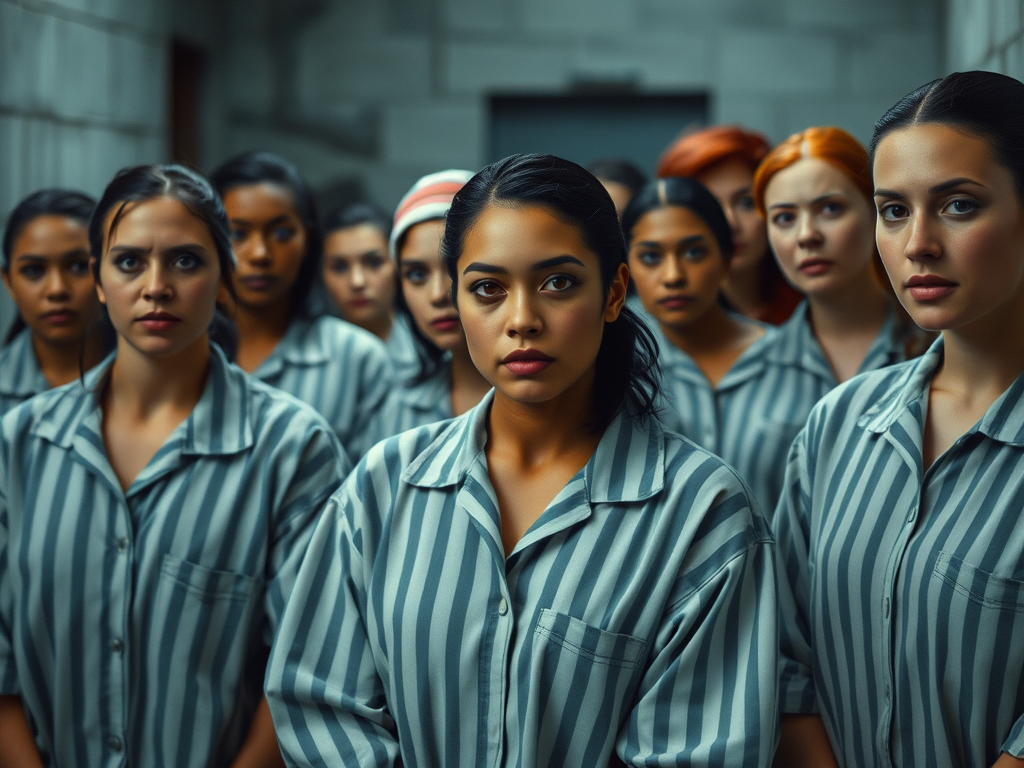
In conclusion, the testimony from the female inmate sheds light on the critical issues surrounding medical care and basic necessities in women’s correctional facilities. The lack of essential hygiene products, inadequate medical screenings, and staff shortages highlight systemic neglect that must be urgently addressed. Women in these facilities require specialized care, and it is unacceptable that even basic items like toilet paper are often inaccessible without purchase. I strongly agree that the Director of the Department of Corrections should prioritize these concerns, recognizing the unique needs of incarcerated women. Just as feminine hygiene products are now provided in schools, they must also be made readily available in every prison. Addressing these issues is not just about improving conditions—it is about restoring dignity and ensuring equity for women within the correctional system.
Disclaimer:
The content of this publication is based on personal observations, professional experiences, and publicly available information. All opinions expressed are solely those of the author and do not reflect the views of any affiliated institutions or organizations. This publication is intended for informational and educational purposes only and does not constitute legal advice. Any statements regarding individuals, agencies, or events are made in good faith and are supported by factual evidence or personal witness accounts. The author has taken reasonable steps to ensure accuracy, but makes no guarantees regarding completeness or future developments. Any resemblance to persons or situations beyond what is expressly stated is purely coincidental. If any party believes that any content is inaccurate or misrepresented, they are encouraged to contact the author for clarification or discussion.
 Justice Unlocked.
Leave a comment