
“Volunteers do not necessarily have the time; they just have the heart.” – Elizabeth Andrew
I have been doing CrossFit since 2010. Over the past 15 years, it has become a central part of my life. I used to compete at a high level, participating in internal and external competitions. But now, my focus has shifted CrossFit is my way of maintaining my health, keeping myself strong, and defying the aging process. I work out every day, not to win, but to sustain my lifestyle.
People often ask, “What is CrossFit?” The answer varies from person to person. For some, it’s a weight-loss tool; for others, it’s a pathway to strength and a steppingstone to the CrossFit Games. Some see it as a routine that keeps them disciplined and accountable. But what many don’t realize is that CrossFit also has a dark side.
CrossFit can be highly judgmental. This isn’t due to the workout itself, but rather the people within the community. I’ve seen firsthand how members of a box—what we call a CrossFit gym—can be aggressive, jealous, and territorial. Just like in a prison yard, there are those who prefer to keep to themselves and those who thrive in packs. Some individuals constantly need to be seen, to be validated by their entourage. These small cliques can make the gym environment more about social dynamics than personal growth.
But beyond this, there’s an undeniable positive side to CrossFit. I’ve heard countless stories of people overcoming addiction, battling mental health struggles, and finding strength in the darkest of times. For some, CrossFit is more than a workout—it’s a form of therapy. It provides structure, a challenge, and a reason to push forward. It has even helped those behind bars by giving them a sense of purpose, a daily challenge against their own limits. The barbell, the pull-up bar—these things become symbols of resilience.
CrossFit should be a community that uplifts rather than breaks down. Ideally, it would be a place where people come together at 9 a.m. to work out, give each other high-fives, and celebrate the small victories. It should be about shared success, not ego. But the reality is often different. Ego is everywhere. Judgment creeps in. And the true essence of CrossFit—the idea of self-improvement and support—can get lost in the noise.
Many of you have heard about how important CrossFit is inside prison walls. You’ve read articles, listened to numerous podcasts, and likely come across discussions on social media. It is true—CrossFit plays a significant role in prison life. While television serves as a form of passive entertainment, CrossFit and working out actively help inmates manage mental health issues such as PTSD and anxiety. When a person is physically exhausted, their body has little energy left to dwell on stress and anxiety, leading to a natural state of rest and recovery.
However, not all correctional facilities in Colorado offer CrossFit. Safety concerns, high custody levels, and other institutional factors often prevent its implementation. This is not necessarily due to the warden or DOC employees; rather, it is often a result of inmate behavior. When inmates fail to follow rules, engage in fights, or create disturbances, their privileges—such as yard time and workouts—are revoked. While this form of collective punishment may not be ideal, it is how the American correctional system operates. The concept is similar to childhood discipline—when a child misbehaves, they are sent to their room as punishment. In the prison system, lockdowns serve the same purpose.
I came across “CrossFit Redemption” a few years ago when I started working with the DOC. Unfortunately, due to my commitments across multiple projects and facilities, I have never had enough time to volunteer with the organization. While I have always wanted to get involved, my obligations have made it impossible to dedicate the necessary time. Over the years, I have heard both positive and negative things about CrossFit Redemption—not from those inside prison, but from individuals on the outside who run the program. Some believe that those involved in CrossFit Redemption begin to feel superior to others, forgetting where they came from, and distancing themselves from their past. Politics and ego sometimes overshadow the original purpose of the program, which should be about personal growth, discipline, and community support.
Exposing nonprofits
You probably wonder about the purpose of my article. Well, everyone knows that I expose dishonesty, corruption, and certain nonprofit organizations that claim to work with incarcerated individuals. While these organizations believe they are making a positive impact, the reality is often different. The more I investigate, the more alarming it becomes. It is no surprise that the Colorado Department of Corrections (DOC) is highly selective about who is allowed inside prison walls. They must be extremely cautious about approving volunteers for any organization.
Prison is not a luxury resort where one can casually enter and enjoy leisure activities. It is an institution designed to house individuals who have either been convicted of crimes or, in some cases, are serving time for offenses they did not commit. This creates a complex and often troubling reality.
As I have mentioned before, my work is rooted in advocacy and activism. I engage in legislative processes, contribute to policy changes, collaborate with the DOC, and work alongside treatment providers. I also assist wrongful conviction projects, support attorneys in overturning cases, and participate in internal DOC matters. My involvement extends to revising policies that I believe are flawed, and at times, I support the DOC when I agree with their stance. However, I am also critical when they fail to address key issues.
At the end of the day, the DOC operates within its established framework, and while I may disagree with certain aspects, I must adhere to its rules. However, I find myself entangled in a web of deceptive practices carried out by nonprofit organizations that claim to be making a positive impact on incarcerated individuals. Today, I am questioning the legitimacy of their actions and their true influence inside prison walls.
Redemption Road Fitness Foundation: A Journey of Strength and Redemption
At first glance, the Redemption Road Fitness Foundation (RRFF – RF2) may appear to be just another CrossFit program. To the casual observer, it might seem like a typical fitness organization, focused on physical endurance and athleticism. However, beneath the surface lies a profound mission—a movement rooted in redemption, resilience, and rehabilitation. This foundation is not just about lifting weights; it’s about lifting lives.
The inception of RRFF traces back to the Limon Correctional Facility in Colorado, just before the onset of the COVID-19 pandemic. It was founded on a bold idea: to bring the principles of fitness, discipline, and self-improvement into the prison system. Programs created before the pandemic faced an uphill battle, many unable to survive the challenges posed by lockdowns and restrictions. RRFF, however, endured.
At the heart of this foundation is a man serving a life sentence without parole. Though unable to participate in events outside prison walls, his vision and dedication have inspired countless individuals. He does not seek recognition or personal gain—his focus is entirely on the growth and betterment of others. Through his writings and communications, he has shared his philosophy of fitness not just as a physical endeavor, but as a transformative journey.
While CrossFit forms the foundation of RRFF’s training model, its true purpose goes far beyond exercise. The program is about instilling discipline, fostering community, and offering incarcerated individuals a sense of purpose. It teaches participants to challenge themselves physically and mentally, promoting a mindset of perseverance and accountability.
One of the most remarkable aspects of RRFF is its ability to transcend prison walls. Many individuals who trained under the program while incarcerated have carried its teachings with them upon release, continuing their fitness journeys and mentoring others. On the outside, CrossFit is often associated with competition, ego, and personal records. But inside the facilities where RRFF operates, it is about something much deeper—overcoming past mistakes, finding redemption, and creating a better future.
Like any movement born in adversity, RRFF has faced its challenges. The pandemic nearly derailed the program, forcing those involved to fight for its survival. Despite these struggles, the belief in the program’s mission kept it alive. Those who understood its true value refused to let it fade away.
Through the dedication of incarcerated individuals and the support of organizations on the outside, RRFF has not only survived but continues to grow. Its influence is expanding beyond Limon, with a vision to bring CrossFit-based rehabilitation to every correctional facility in Colorado and beyond.
RRFF is more than just a fitness program—it is a testament to the power of second chances. It embodies kindness, understanding, and a commitment to growth. Its founder’s vision is clear: to create an environment where ego is set aside, where people are challenged to push beyond their limits, and where redemption is found through the discipline of fitness.
Though he remains behind bars, his impact is felt far beyond the prison walls. His letters, filled with wisdom and encouragement, reveal a selfless desire to help others find their own paths to redemption. His dream is not about himself; it is about a movement that will outlive him, one that will continue to change lives long after he is gone.
Redemption Road Fitness Foundation is not just a program. It is a movement, a philosophy, and above all, a testament to the enduring power of redemption.
The Struggles of Redemption Road Fitness Foundation: A Harsh Reality Check
You might wonder why I am still publishing this article. At first glance, there seems to be nothing wrong with the Redemption Road Fitness Foundation. However, beneath the surface, there are significant issues that need to be addressed. Some people who come across this article may not be pleased with its content, but perhaps this will serve as a reality check—a reminder of where they came from and the true mission behind this program.
By definition, the individuals involved in RRFF are criminals. There is no question about that. Many of them entered prison with no interest in self-improvement. Their daily routines revolved around watching television in their cells and showing up for meals. But then, something shifted. They discovered that there was a better way—a way to rebuild themselves, to find redemption through discipline and dedication to fitness. They had to go to prison to uncover their potential, to essentially be reborn as new individuals. Their legal paperwork may have once defined them as lost causes, but they found a way to change that narrative.
The ideology behind RRFF and similar prison rehabilitation programs is to inspire growth, to offer a path toward something greater. It provides incarcerated individuals with the tools to create a positive impact, not just within prison walls but also upon release. The hope is that those who benefit from the program will carry forward its principles, passing on knowledge, discipline, and transformation to others. Programs like RRFF aim to help people who have lived in the shadows—those affected by mental illness, substance abuse, or poverty—find a new purpose.
But here’s the problem: when individuals leave prison, they also leave behind those who helped shape them—the mentors who trained them, the people who taught them discipline through CrossFit. There is an expectation that they will continue the movement outside, expanding and strengthening the program for future generations. Unfortunately, that is not what is happening.
The most heartbreaking aspect of this situation is what has happened to the individual who originally founded RRFF inside the Limon Correctional Facility. He developed the entire CrossFit redemption program from within prison walls—an incredible achievement given the restrictions he faced. His vision was clear, his mission was selfless, and his dedication was unwavering. His program had the potential to create lasting change for incarcerated men and women.
However, it is now being mismanaged and misused by those with hidden agendas. The focus has shifted from rehabilitation and redemption to ego and personal gain. Instead of prioritizing the incarcerated individuals who need the program the most, it is being exploited by those on the outside for their own benefit.
This is not what RRFF was meant to be. It was supposed to be about transformation, about offering a second chance, about ensuring that fitness and discipline could be a gateway to personal redemption. If the program is to survive, it must return to its original purpose. The voices of those inside prison walls—the very people who helped build RRFF—must be heard. Their vision must be honored, not overshadowed by external interests.
There is still hope for RRFF, but only if those involved recognize what is at stake. It is time for a reset, a return to ground zero, a rekindling of the original mission. If those who benefited from the program truly believe in its purpose, they must step up and ensure that it remains a beacon of hope for those still behind bars. Redemption is not just about personal growth—it is about lifting others up and making sure the light of this program does not fade.
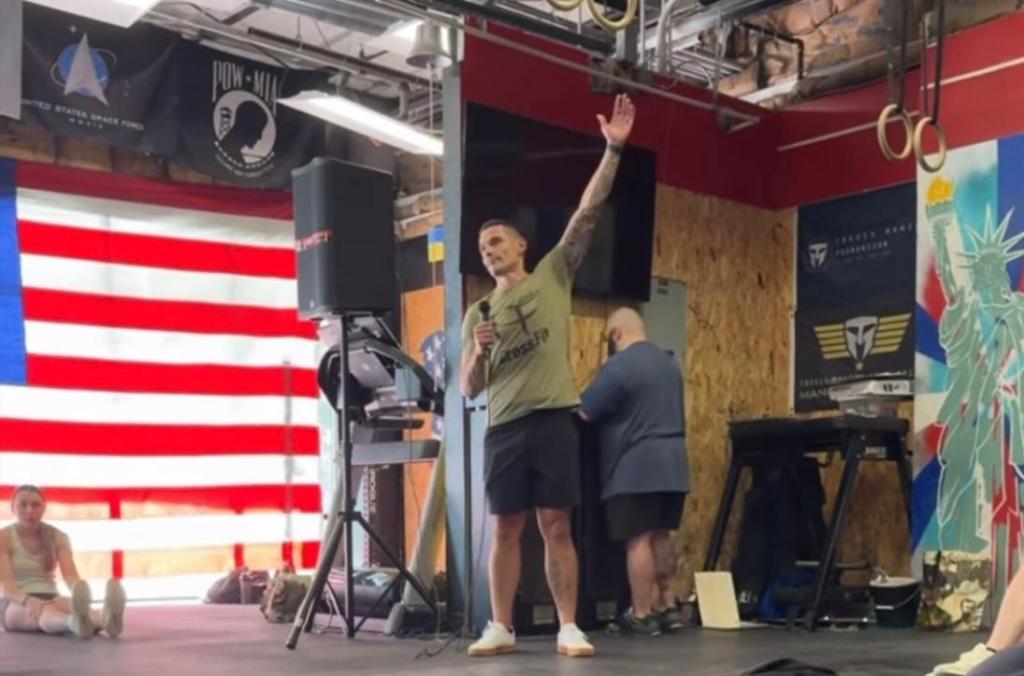
The Illusion of Reform: Nicholas Wells and the Mockery of Clemency
“Good morning Justyna, this is Nick Wells. I am the President of RF2.” That was the opening line of an email I recently received. Right off the bat, Nicholas Wells needed to announce himself with grandiosity, his ego inflating his title like a balloon ready to pop. Without that declaration, he might fade into obscurity—just another former inmate with a questionable past, desperately clinging to relevance.
So who is Nicholas Wells? If his name sounds familiar, it should. Wells, now free and flaunting his so-called achievements, was convicted for a crime spree spanning 11 days in 2008. Between July 26 and August 5, he stole four vehicles and broke into 21 others across Douglas and Arapahoe counties. His actions extended to burglarizing detached garages in multiple homes, even stealing a firearm belonging to a peace officer. After a one-week trial and a day of jury deliberation, he was found guilty of multiple counts, including first- and second-degree burglary, aggravated motor vehicle theft, identity theft, and unauthorized use of a financial transaction device. He was sentenced to 48 years in prison as a habitual offender.
But here we are in 2024, and Nicholas Wells is walking free. How? Enter Governor Jared Polis and the questionable clemency system. In an executive order, Polis commuted Wells’ sentence, making him eligible for parole on January 15, 2022. The justification? His supposed reform through CrossFit and advocacy work. Yes, you read that correctly—CrossFit. Somehow, working out and claiming involvement in legislative processes that no one in the advocacy field can verify was enough to erase decades of criminal behavior.
Wells, of course, claims to have walked into the Colorado Capitol and testified on multiple bills. A bold claim, considering I have spent the last decade actively testifying on legislation and have never encountered him. It is highly questionable whether his supposed advocacy efforts played any real role in policymaking. The reality? This is yet another example of the flaws in Colorado’s clemency process, which lacks transparency and prioritizes connections over true rehabilitation.
Polis has repeatedly been criticized for his lack of transparency in clemency decisions. Even members of his own party have expressed concerns. Last year, a bill aimed at bringing transparency to the process was vetoed by Polis, who justified his decision by stating that clemency remains a governor’s prerogative. This stance leaves the system open to political maneuvering rather than fairness and justice.
And what about those truly deserving of clemency? Take the case of Shawn Mullinex, who was sentenced to an astronomical 304 years for his crimes. Unlike Wells, Mullinex had one victim, made peace with the victim’s family, and remains in touch with the victim’s son. Yet, because his case was tried outside the Denver metro area, he was made an example of. Meanwhile, Wells, with his 30 victims, walks free, running amok with his newfound self-importance.
Wells’ release and subsequent self-aggrandizing behavior are not about redemption or reform. They are about ego. His emails exude an air of self-importance, as if the world should bow to his transformation. But true change is demonstrated through actions, not titles. Wells remains the same individual—just with a shinier, well-crafted illusion of reform.
The Nicholas Wells saga is yet another glaring reminder that our justice system is flawed. Clemency should be reserved for those who have genuinely changed, not for those who simply learn how to play the system. And as long as governors like Polis continue to make decisions in secrecy, justice will remain a privilege rather than a right.

Volunteering: A Path to Understanding and Redemption Behind Prison Walls
Volunteering is an act that transcends simple charity. It is the act of offering one’s time, skills, or resources to help others or support a cause without expecting anything in return. Whether it’s through nonprofit organizations, environmental initiatives, or providing professional expertise pro bono, the heart of volunteering lies in the desire to make a positive impact in the lives of those in need.
One of the most powerful ways to volunteer is within the prison system. I strongly believe that every individual should experience what it’s like to volunteer in a prison setting. Not as a visitor, but as someone who is actively engaging with incarcerated men and women, understanding their stories and circumstances. The reality is, many of the people behind prison walls didn’t end up there by choice or through a desire for a life of crime. More often than not, they’re products of trauma, poverty, and adverse childhood experiences. They come from families who often refuse to acknowledge their existence, let alone provide support.
Imagine being a child of eight years old, homeless on the streets, or five years old with a mother addicted to substances. Imagine waking up one day to find yourself facing charges for a crime you had nothing to do with, wrongfully convicted, and now, you’re trapped in a system that doesn’t even hear your side of the story. The men and women behind prison walls have endless stories of hardship, and each one contains an element of injustice—poor legal representation, flawed evidence, or just plain bad luck. Yet, despite all the odds stacked against them, they find a way to survive.
These people don’t wear their circumstances on their sleeves. Some days, they may look just like you and me, smiling, laughing, and showing kindness to those who take the time to understand them. But beneath those smiles are untold stories of survival, of struggle, and of hope.
I have had the privilege of volunteering at a prison, specifically through a nonprofit organization called RF2. In December, I had the opportunity to participate in their “12 Days of Christmas” initiative. It was an invitation I couldn’t turn down. The chance to work alongside these men, to hear their stories and to understand the pain, the mistakes, and the redemption they seek—was something I knew would be life-changing.
The experience wasn’t just physical—it was deeply mental and emotional. These men challenged me, not just in CrossFit, but in my thoughts and perspectives. They reminded me that people are not defined by their worst mistakes or their past. They are human beings deserving of respect, understanding, and a second chance. When I spent time with them, I didn’t see criminals; I saw people who had been dealt a rough hand in life. And that realization created a bond—a friendship that can only be formed by looking beyond the labels society often places on individuals.
Having been raised in the criminal justice system and exposed to it through my father, who was a judge, I never saw myself as better than the people behind bars. I never judged them because I knew that every person in prison had a story—often one that led them there due to circumstances beyond their control. Some may have committed crimes, but it’s essential to remember that many did so out of survival.
My experience volunteering also allowed me to witness the challenges within nonprofit organizations that work with incarcerated individuals. A leader of one such organization, Nick Wells, who holds the title of President of RF2, reached out to me with an email that caught my attention. He shared the organization’s right to choose its volunteers.
Interestingly, there was an individual named Elizabeth Markovitz—who goes by Liz—who seemed to be at the center of this conflict. Despite being involved in the organization, she wasn’t a true advocate for volunteerism. In fact, she often denied people who expressed interest in helping or volunteering with RF2. Her actions and decisions raised questions about the true nature of the organization’s volunteer program. It became clear that she was more interested in controlling who could and couldn’t participate, and her motivations seemed to stem from a desire for power and control, rather than a genuine commitment to helping others.
I was invited to volunteer with RF2 at the Limon CDOC, and due to my existing involvement, it was a challenge to get approval. However, I persevered and went all the way to the CDOC director to secure approval, ultimately donating my time to the amazing men at the facility. But when I received an email from the facility Lieutenant—whom I had developed a personal relationship with—informing me that I had formed a personal relationship with one of the inmates and that my paperwork had been denied, I was taken aback. The individual who refused to sign off on my volunteer paperwork was Elizabeth Markowitz, who also spread harmful rumors about me among the facility staff.
This situation made me reflect on the importance of volunteering with sincerity and integrity. Volunteering in prisons shouldn’t be about ego or control—it should be about helping those who need it the most. It’s about showing up, treating everyone with respect, and embracing the opportunity to make a difference in someone’s life.
In the end, volunteering in a prison setting can be a form of redemption—not just for those behind the walls, but for the volunteers as well. It’s an opportunity to challenge your perceptions, to confront your biases, and to realize that no one is defined by their worst moment. When we choose to treat others with dignity, regardless of their past, we all have the chance to grow and become better versions of ourselves.
So, I encourage everyone to find a way to volunteer, especially within the prison system. By doing so, you’ll not only be making a difference in the lives of others, but you may find that it’s you who learns the most from the experience.
The Reality of Volunteering Behind Prison Walls: A Reflection on the Challenges and Lessons Learned
Volunteering behind prison walls is not for everyone, and it’s essential to do your research before diving into this challenging and rewarding experience. While many are eager to give their time and energy to help incarcerated men and women, it’s important to make sure the opportunity aligns with your values, goals, and the work you do. Volunteering in this environment requires more than just a willingness to show up; it demands understanding, dedication, and a deep sense of responsibility.
It’s crucial to test the waters before fully committing to any organization. Don’t let anyone tell you that you’re not a good volunteer if you feel passionate about a cause. The nonprofit world is not like corporate America, where performance is measured in profit and bottom lines. These organizations are made up of people with different backgrounds, agendas, and experiences. It’s essential to ensure that their vision aligns with your own, or else you might find yourself disillusioned and disconnected from the mission.
Take the experience with RF2, for example. On the surface, this organization seems to have a noble goal—helping incarcerated individuals find redemption through programs like CrossFit. But as I’ve learned, appearances can be deceiving. The leadership within the organization, particularly Nick Wells and others like Elizabeth Markovitz, seems to have different priorities. While they may project a message of helping and supporting those behind bars, their actions show otherwise. It becomes clear that some are more focused on power and control, rather than genuinely helping those in need.
Nick Wells, as the president of RF2, may have earned his position, but it seems he has forgotten the fundamental purpose of the organization—to serve those who need it most. His actions, particularly in how he handles volunteers and makes decisions about the future of the program, suggest a disconnect from the core mission of the nonprofit. Unfortunately, this is a common pitfall in many organizations: the focus shifts from service to self-interest, and individuals forget where they came from and why they got involved in the first place.
The men and women behind the prison walls are the ones who truly need our support. Many of them are facing life sentences or lengthy prison terms, some for crimes they may not have committed. Yet, despite the harsh realities of their situations, they find ways to survive, to smile, and to show kindness. They may have made mistakes, but they are not defined by those mistakes. They are human beings with stories that deserve to be heard.
It’s heartbreaking to know that I had to leave behind those wonderful men in Limon facility after spending just a few hours with them. The connections I made, the smiles and handshakes, left a lasting impact on me. They reminded me of the strength and resilience that lies within the human spirit, even in the face of an unjust system. The system itself is broken, corrupt, and oppressive, but these men are still fighting. They are fighting for their freedom, their redemption, and the chance to prove that they are more than their past mistakes.
Sadly, organizations like RF2, despite their potential, may not be able to help these individuals as they should. The leadership’s agenda seems disconnected from the real needs of those behind bars. It’s a shame that the opportunity for true change and redemption is overshadowed by ego, power, and control. But, perhaps this is a blessing in disguise—because it reminds me of what really matters: the people. The men and women behind those walls are the ones who deserve our attention, our compassion, and our efforts.
If anything, this experience has motivated me to consider creating my own program—a space where individuals behind bars can come together and work towards self-improvement, physical and mental growth, and redemption. A program that is driven by the real needs of the incarcerated, not by ego or personal agendas.
The road ahead may be challenging, but it’s one I’m ready to take. I want to protect those whose voices are often silenced, to ensure that they have a platform to share their stories, their struggles, and their hopes for the future. I will continue to advocate for them, regardless of the obstacles in my way.
In conclusion, not every volunteer opportunity is suited for everyone. It’s essential to research and reflect before committing to an organization or program. Volunteering behind prison walls can be an incredibly rewarding experience, but it requires a deep understanding of the challenges and realities of the system. The work is difficult, but it’s important to remember that it’s not about the organization or the individuals in charge—it’s about the people behind the walls who need our support, and it’s them who should always be our focus.
Disclaimer: This article discusses a real story involving real people and real events. It is published with the intention of informing and raising awareness about the complexities of such narratives. The content does not intend to defame or slander any individuals, and there are no legal consequences associated with the publication of this story regarding defamation or character slander.

 Justice Unlocked.
Leave a comment