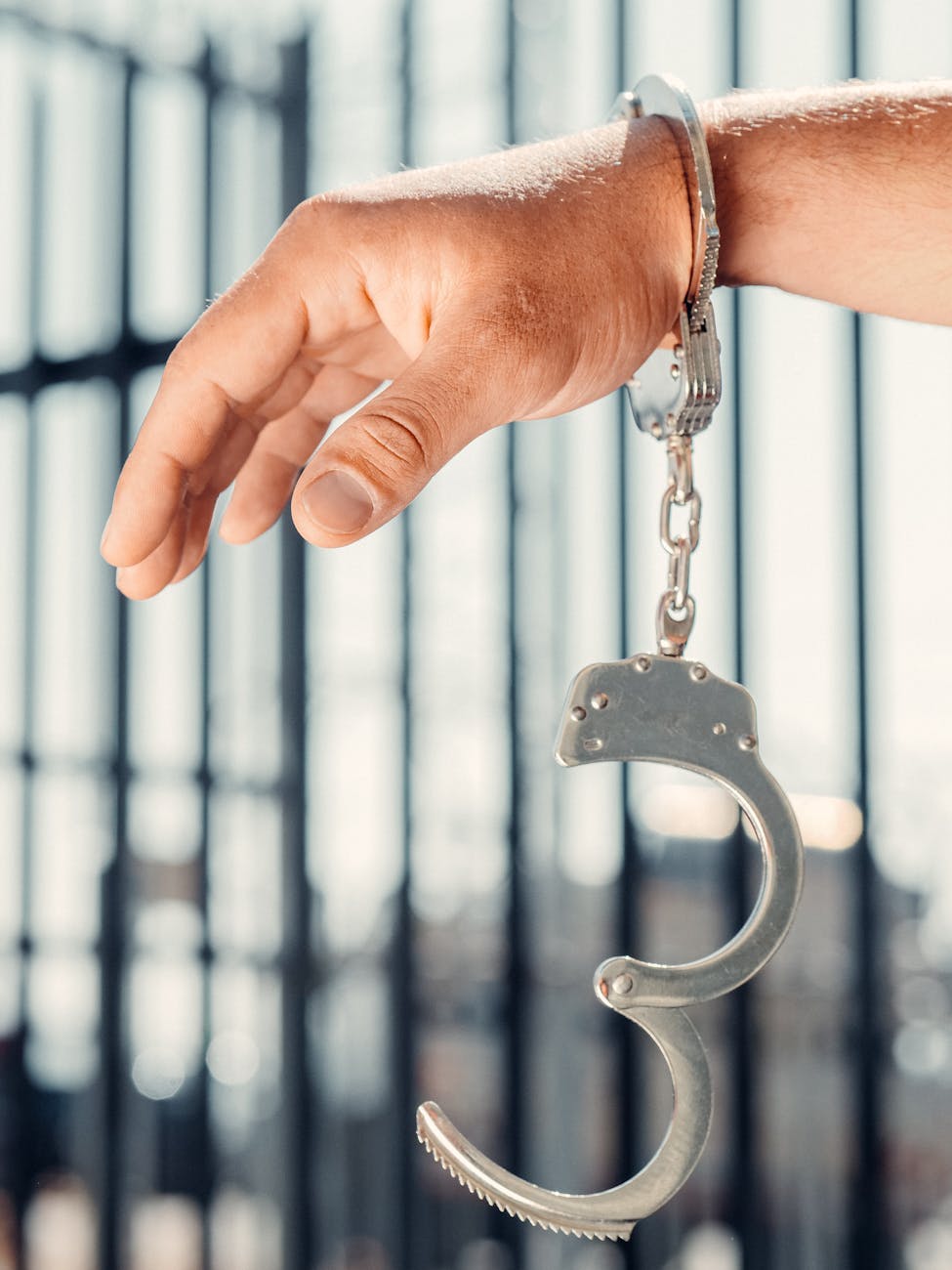
“A wrongful conviction doesn’t just imprison the innocent—it lets the truth walk free, unanswered and unseen.”
“I Am Innocent” vs. “I Claim I Am Innocent”: Words That Matter in Justice
In the world of criminal justice, language holds weight—especially when it comes to the difference between “I am innocent” and “I claim I am innocent.” These phrases may sound similar, but they carry profoundly different implications.
When someone says, “I am innocent,” they are making a definitive statement of fact about their lack of involvement in a crime. It asserts that they did not commit the act they are accused of—full stop. It’s a bold declaration of truth, usually backed by evidence, alibis, or a demand for justice.
On the other hand, “I claim I am innocent” introduces a layer of doubt. The word “claim” implies an allegation rather than a confirmed fact. It creates distance between the speaker and the truth, suggesting the statement is still subject to investigation, proof, or skepticism.
In wrongful conviction cases, this difference can be life-changing. Advocates argue that many truly innocent people remain behind bars because their innocence is still seen as a “claim,” rather than a proven reality.
Understanding this distinction is critical—not just legally, but morally. Because until the system treats “I am innocent” as more than just a claim, justice may remain out of reach for those who need it most.
He Maintains He Didn’t Commit the Crime — So Who Did?
In a courtroom, truth is often tangled in testimony, evidence, and the limits of human memory. When someone is convicted of a serious crime—especially one like murder or sexual assault—and they maintain they didn’t do it, it raises a chilling and often overlooked question: if not them, then who did?
This question isn’t just philosophical. It’s foundational. If someone behind bars is truly innocent, then the actual perpetrator is still free, unaccountable, and possibly a danger to the public. Justice isn’t just about punishing the guilty; it’s also about protecting the innocent—both the wrongfully convicted and future victims.
Take the case of Michael Clark, for example. The conviction was vacated, but he remains under a cloud of suspicion. He insists he didn’t commit the crime. If he’s telling the truth, someone else did. And that someone has escaped not only prosecution but also the weight of public scrutiny. Meanwhile, the justice system often moves on as if closure was achieved.
The same dynamic plays out in countless wrongful conviction cases. According to the National Registry of Exonerations, over 3,400 people in the U.S. have been exonerated since 1989. In many of these cases, the real perpetrators were never found. Why? Because once a conviction is secured, the search usually stops.
Maintaining innocence is more than a legal defense—it’s a statement of truth that demands further inquiry. But unfortunately, in our current system, it’s easier to label someone a liar than to reopen an investigation. Pride, politics, and the desire for finality often outweigh the pursuit of actual justice.
So when someone says, “I didn’t do it,” the next question must be: “Then who did?” If the answer is silence, we should all be concerned—not just for the person imprisoned, but for the integrity of the justice system itself.
Because justice delayed or denied for one, is justice compromised for all.
Vacated But Not Cleared: Why Speaking Too Soon Could Jeopardize Justice for Others
On April 11, Boulder County District Judge Nancy Salomone vacated Michael Clark’s first-degree murder conviction after newly revealed information cast doubt on the DNA evidence that helped secure his original conviction. The DNA, once considered definitive, is now at the heart of a growing scandal involving former analyst Yvonne “Missy” Woods and the Colorado Bureau of Investigation.
While many see the court’s decision as a step toward justice, it’s important to make one thing absolutely clear: vacating a conviction is not the same as an exoneration. Clark’s charges have been set aside, but he remains a suspect. He is not a free man in the legal sense—at least not yet.
So why, then, appear in public interviews and news features before the scheduled hearing on June 6? Why speak as though the case is over?
These are serious questions, especially if such public exposure was encouraged by Clark’s attorney, Adam Frank. If this media strategy is part of his legal approach, it could backfire not only on Clark but on everyone else affected by the growing DNA scandal.
Premature public declarations can taint public perception, influence judicial proceedings, and potentially compromise future cases. If Clark is retried, this media attention could be used against him—and worse, it could undermine the credibility of other cases involving faulty DNA evidence processed by Woods. These include cases of men and women still sitting in prison, waiting for their own convictions to be reviewed.
Justice isn’t just about one man’s freedom. It’s about the system getting it right—for everyone. When a scandal of this magnitude emerges, every case tied to it must be handled with caution, clarity, and respect for due process.
The court has not yet ruled on Clark’s guilt or innocence in the broader sense. That’s what the upcoming hearing is for. Until then, public displays of vindication may not only be premature—they may also be damaging.
The pursuit of justice must be guided by restraint, not reaction. Anything less risks turning a moment of potential accountability into one of irreversible harm.
DNA Doubt, Vacated Conviction—Now What? The Cost of Possible Wrongful Conviction in the Clark Case
The magnitude of doubt surrounding the murder conviction of Michael Clark reached a critical point last year, prompting Boulder County District Attorney Michael Dougherty to take a rare step: he agreed to a retesting of the DNA evidence through an independent laboratory in Virginia. The results came back in March—and they changed everything.
According to the new findings, Clark can now be statistically excluded from the DNA profile found on a key piece of evidence: a Carmex lip balm recovered at the crime scene. This evidence was once used to help secure his conviction.
In a court filing last month, DA Dougherty stated that although his office still believes strong circumstantial evidenceexists against Clark, the “totality” of issues in the case—especially around the DNA evidence—was enough to justify setting aside the original conviction. Judge Nancy Salomone agreed, vacating the first-degree murder conviction on April 11.

But Now What?
Vacating the conviction doesn’t mean Clark has been exonerated. It simply means the legal process must be re-evaluated in light of new and serious concerns. But this development opens the door to another major question: What happens if this turns out to be a wrongful conviction?
If Michael Clark is eventually cleared and no retrial occurs—or if he’s found not guilty—a lawsuit for wrongful conviction and damages is not just likely, it’s expected. And that raises an uncomfortable truth: any financial compensation would almost certainly come from taxpayer dollars.
Under Colorado law, individuals who are exonerated after serving time for crimes they didn’t commit are eligible for substantial compensation, sometimes running into millions of dollars. On top of that, attorney fees, emotional damages, and civil suits can push payouts even higher.
And it won’t come from the district attorney’s office or the court—it will come from public funds.
A Bigger Issue Than One Man
This case isn’t happening in a vacuum. The flawed DNA analysis at the heart of Clark’s conviction ties back to former CBI analyst Yvonne “Missy” Woods, whose work has now been called into question across multiple cases. If other convictions linked to her analysis are overturned, Clark could be just the first of many seeking justice—and compensation.
So where does this leave the community?
It leaves us in a place where hard conversations must happen—about forensic accountability, prosecutorial discretion, and how we treat the fallibility of the justice system. Because while we all want closure, we also want truth. And sometimes, that comes at a cost.
Michael Clark Awaits His Fate—A Community Still Searching for Truth
Michael Clark, once convicted of the 2011 murder of Marty Grisham, is on a $100,000 bond, but he is far from free in the eyes of the law. Officially, Clark remains in pre-trial status, facing the same murder charge that followed his arrest back in 2012. In many ways, it’s as if time has reset. Almost.
A recent court ruling to vacate Clark’s conviction—following concerns about contaminated or unreliable DNA evidence—has placed the entire case back under scrutiny. While Clark’s defense attorney is now pressing for a full dismissal, Boulder County District Attorney Michael Dougherty has stated that a final decision could be made at the upcoming June 6 court hearing.
What comes next remains uncertain: a new trial, a plea deal with credit for time served, or a complete dismissal of the case. Any of these outcomes would carry major implications—not just for Clark, but for the broader integrity of the justice system in Boulder County.
A Community Divided
Chuck Heidel, the now-retired Boulder police detective who led the original investigation, told The Denver Gazette last fall that he remains confident in Clark’s guilt. His belief has not wavered despite the recent developments that cast doubt on the forensics used in the original trial.
The Grisham family, on the other hand, has remained publicly silent. The district attorney’s office confirmed they have no comment at this time—a silence that has only fueled speculation and divided public opinion further.
Some community members have voiced questions about that silence, wondering why the family has not advocated more openly for justice. Others have pointed to statements made by Clark’s wife, who has publicly suggested that members of the victim’s own family should have been investigated more thoroughly including Grisham’s daughters. Whether those suspicions have any basis remains unclear, but they add to an increasingly polarized narrative.
Even Clark’s own defense attorney, Adam Frank, was initially skeptical of his client’s innocence—a fact that has been noted in past court records. His eventual change of stance appears to have been driven by newly revealed flaws in the DNA evidence tied to the now-disgraced analyst Yvonne “Missy” Woods.
Justice Must Be Done—For Everyone
What’s clear in this complex, high-stakes case is that justice must be done carefully and transparently. That means ensuring that if Clark is truly innocent, he is fully cleared and allowed to rebuild his life. But if he is guilty, the case must be re-prosecuted with reliable evidence.
This is not just about one man or one case. It’s about the public’s trust in a system that must distinguish between guilt and innocence—especially when freedom, family, and public safety are on the line.
As the June 6 hearing approaches, Boulder stands at a crossroads: revisit the past with greater clarity, or risk repeating its mistakes.
“I feel out and I feel perfectly confident that I am staying out,” Michael Clark said recently.
Hope is important—but without facts and truth, hope can become nothing more than a fragile illusion. Confidence alone does not determine the outcome of a legal case; evidence does. And if the evidence does not support your claim of innocence, that confidence may quickly collapse.
To Michael Clark: your statement is premature. Your future still lies in the hands of the legal system, and the decision of whether you walk free or face another trial is not yours to make. It belongs to the court, to the community, and ultimately, to the facts.
Proceed with caution—because this isn’t just about appearances or interviews. This is about justice.
Michael Clark: Free on Bond, but Still in Question
I had the opportunity to see Michael Clark in person at one of his evidentiary hearings—a brief court appearance that, in truth, felt more symbolic than substantial. He was brought in from the prison just long enough to sit before the judge. His demeanor was striking, but not in the way one might expect. There were no expressions—no tears, no smiles, no signs of emotion. We joked among ourselves afterward that he sat there like a baked potato, lifeless and unreadable. It’s become an unfortunate inside reference, but it reflects what many of us saw: a man without clarity or conviction.
Over time, I’ve spoken to multiple individuals who served time alongside Clark, including three who are still incarcerated. Not a single one said, “He didn’t do it.” In fact, I heard the opposite: they believe he is guilty. They describe Clark as arrogant, entitled, and disconnected from others—traits that seem to persist now that he’s out on bond. He may walk the streets, but legally, he is not a free man.
An Image Carefully Crafted
Since his release, Clark has adopted a public persona of resilience and wrongful victimhood. Articles continue to be published about him—particularly by one writer at The Denver Gazette—who, it seems, focuses almost exclusively on Clark’s story while ignoring the many others impacted by Colorado’s DNA scandal. That imbalance raises a fair question: why him? Is it because of connections? Funding? Or simply media bias?
Clark’s case has undeniably benefited from exposure. But for someone still charged with murder, his media presence feels disturbingly premature. It begs the question—where is the humility? Why speak to the press at all before your fate is decided in court?
If I were his attorney, I would advise him to stay quiet until after the June 6th hearing. His current behavior suggests he believes the system owes him something. But what about the others—men like David, a 61-year-old serving 16 years for a crime he didn’t commit? Clark hasn’t mentioned him. In fact, there’s been no public support or acknowledgment of the hundreds affected by the same systemic failures he claims to fight against.
Behind the Curtain
There’s a side of Clark that many in the public don’t know. Inside prison, he had his own office. He had no cellmate. He called himself the “Director of Education” within DOC. These privileges—rare and unusual—only fed into his ego, according to those who served time with him.
He also spent significant time around individuals convicted of sex offenses, reportedly advocating for them. There’s nothing inherently wrong with calling for justice reform, but it’s worth noting that Clark himself still faces a heinous accusation. Despite the vacated conviction, he remains a suspect in the murder of Marty Grisham. The case has not been dismissed. It is not over.
Michael Clark wants us to believe he’s been wronged by the system. That may be true. But the way he’s handled his public reentry tells a more complicated story. This isn’t just about freedom—it’s about character. If he truly wants to lead a movement or represent the wrongfully convicted, he must do more than advocate for himself.
Real change demands more than polished interviews and hopeful headlines. It requires acknowledging others, sharing the platform, and facing scrutiny—not avoiding it.
Until then, we are left wondering: is this about justice, or just about Michael Clark?
Adam Frank: Champion of Justice or Just Chasing the Check?
I’m not a big fan of attorney Adam Frank—and I’ve said that before.
There’s something about his courtroom presence that feels more like a performance than a pursuit of justice. He’s loud, flamboyant, eccentric. It’s as if he forgot to take his ADHD medication before addressing the court. While confidence can be a valuable asset for any attorney, Frank’s brand of confidence often reads more as narcissism—a characteristic that, ironically, mirrors the public persona of his most high-profile client, Michael Clark.
I had a personal interaction with Frank after Clark asked me to speak with him regarding another case involving David Hehn case. That conversation was one of the most bizarre, self-important exchanges I’ve ever had. Frank came across as someone entitled to my time, my story, and my validation—with very little interest in dialogue. After that, I knew: this was not someone I ever wanted to deal with again.
The Integrity Question
Here’s what really bothers me. Frank proudly claims to fight for the wrongfully convicted. He touts his Innocence Project internship like a badge of honor. But let’s look closer. Visit his website—it’s not about the cases or the people. It’s about the payoffs. Settlement amounts. Legal victories. “$2 million here,” “$1.4 million there.” It reads more like a stock portfolio than a legal résumé.
So here’s the million-dollar question—literally: Is Adam Frank truly motivated by justice, or just the money? Is his fight for the wrongly convicted based on principle, or is it a pipeline to lucrative settlements that feed the brand?
In 2018, when Clark’s family scraped together $100,000 to hire Frank—money raised by selling real estate—they were betting on someone who initially didn’t even believe in Clark’s innocence. Frank admitted he wasn’t looking to prove Clark was innocent; he was hunting for legal errors. That belief only came later, after time, money, and investigation changed his mind. That’s not conviction—that’s calculation.
A Case Built on Resources, Not Faith
Let’s be real: $100,000 is a fortune for most families. Legal bills pile up fast—$100 here, $200 there, and soon it’s gone. Clark’s legal team hired experts, a private investigator, and even tracked down jurors to uncover misconduct. The work paid off. Frank was later appointed to represent Clark as an indigent client, once the family’s funds were depleted.
But now, Frank is in a position of immense influence. He may still represent Clark, but he also owes something to the people who scraped together six figures to get him involved in the first place. I sincerely hope Clark’s family isn’t still footing the bill.
And if Frank is genuinely passionate about justice, he should make that clear by prioritizing clients and causes—not payouts.
What This Really Says About Justice
This case, and Adam Frank’s role in it, exposes a painful truth about the justice system: getting the right outcome often depends on who you can afford, not what actually happened. Would Clark be where he is today without that $100,000? Probably not.
And that’s where my concern deepens. While Clark receives media attention, expert testimony, and DNA retesting, hundreds of other men and women affected by Colorado’s DNA scandal remain unseen and unheard. You don’t hear Frank mentioning them. You don’t see them on his website. Because there’s no payout tied to those names—no headlines, no check.
If Adam Frank wants to wear the mantle of justice reformer, he must go beyond courtroom bravado and cash settlements. He must fight for the cases that don’t come with a hefty retainer or a media spotlight. Until then, many will wonder—myself included—whether he’s truly a warrior for the wrongly convicted, or simply another lawyer cashing in on injustice.
“A new trial would be annoying,” agreed his wife. “But you live your life, and you build up and keep going.”
Message to Mrs. Clark: If you want someone to be free, you must understand that freedom comes through a process—nothing is given for free, not even to those who have already been exonerated. Every exoneree has had to endure a long, painful, and emotionally exhausting journey through the justice system to clear their name.
So what makes you think your situation is any different? Calling a new trial “annoying” minimizes the reality of what justice truly requires. And in reading the entire article where you and Michael Clark speak at length—not once is the victim mentioned. Not once is there acknowledgment of Marty Grisham or the loss suffered by his family. The narrative centers entirely on Clarke’s supposed wrongful conviction, as if that alone removes any responsibility or need for reflection.
Let’s not forget: your husband did not have a clean record. At age 19, he was forging checks. He had a financial motive—$4,000 was a substantial amount at the time. He admitted to having a gun, one that conveniently could not be found. There are too many unanswered questions. He also reportedly confessed in jail that “they’ll never find the gun.” You dismissed that as jailhouse snitch testimony—but it was still a confession.
And while you focus on the burden of facing another trial, consider those still behind prison walls, many of whom would be grateful—not annoyed—to have the chance to prove their innocence in court. You, on the other hand, seem entitled to skip that step, as if it’s beneath you.
So yes, I’m going to rain on your parade, Mrs. Clark—because my role is to seek the truth, not comfort the convenient narrative. And from what I see, neither you nor your husband appear fully committed to that truth.
Jenny Dean and the Denver Gazette’s One-Sided Reporting on Michael Clark
Over the past several months, I’ve read numerous articles in The Denver Gazette centered around Michael Clark. There’s a consistent trend in these stories—and it’s not the content, but the byline. Jenny Dean’s name appears on every single one of them. While continuity in reporting can signal commitment, in this case, it raises serious questions about bias, exclusivity, and journalistic integrity.
Let’s be blunt: Is Jenny Dean reporting—or running Michael Clark’s PR campaign?
Clark has become the centerpiece in a broader story involving a DNA scandal connected to analyst Yvonne “Missy” Woods. Yet while Clark enjoys exclusive interviews, full-length features, and unrestricted access to documents from the CBI and Jefferson County, many others who were impacted by the same scandal remain voiceless. They are overlooked, ignored, and seemingly invisible in the Gazette’s coverage.
I’ve spoken directly with former inmates who served time alongside Clark. Their accounts of his behavior and character present a stark contrast to the polished image presented in Dean’s articles. These perspectives are not difficult to find—but they are completely absent from Dean’s work. That’s not oversight; that’s editorial exclusion.
True journalism demands balance. It requires lifting the full weight of a story, not just the parts that fit a preferred narrative. Unfortunately, Dean’s coverage seems to have locked its lens onto one subject—while countless others affected by the same scandal remain silenced.
To those still behind bars because of this broken system:
“If other inmates wish to speak with me, I would be more than willing to have those conversations. So far, most defense attorneys have discouraged such communication, or the impacted inmates themselves have chosen not to speak—at least not with me.”
This statement is a direct appeal: You are not forgotten, and your voices matter. You deserve to be heard just as much as anyone else.
Let’s also address what’s becoming increasingly clear: criminal defense attorney Adam Frank appears to be shaping Dean’s reporting. He insists on being mentioned, arranged exclusives for Clark, and provided sensitive documentation to the press. While Clark’s story is regularly front and center, its substance is questionable—and the motives behind its promotion even more so.
When Jenny Dean and I crossed paths in Boulder, she avoided any dialogue with me. That silence was telling. I had previously called out her selective coverage, and she clearly wanted no part in a conversation that might challenge her narrative. I remained at the courthouse after the hearing to observe one thing: her interaction with Adam Frank. When he called out twice—“Jenny, wait…”—it became obvious there was a personal relationship in play. I don’t care about private affiliations. But if you claim to be a journalist, act like one. If you’re just publishing filtered content on someone else’s behalf, don’t call it reporting.
On June 6th, I’ll be present in court. And I intend to speak—publicly and directly. I will not hesitate to call out this one-sided journalism in front of the media. The truth deserves space. The silenced deserve representation. And readers deserve reporting that goes beyond favorites and friends.
June 6th, 2025, is just around the corner. On that day, we will either witness truth and justice prevail—or be reminded, once again, that sometimes justice is blind. The outcome will not only shape Michael Clarke’s future, but it will also speak volumes about how our system confronts doubt, accountability, and the lingering weight of unanswered questions.
Source for this publication: "'I Felt This Sense of Peace': Amid CBI Lab Scandal, Colorado Man Speaks Out After Prison Release" – An interview following the release of a wrongfully convicted individual, in light of former CBI DNA analyst Yvonne "Missy" Woods facing over 100 criminal charges. Reported by Jenny Deam. Justice Unlocked.
Leave a comment