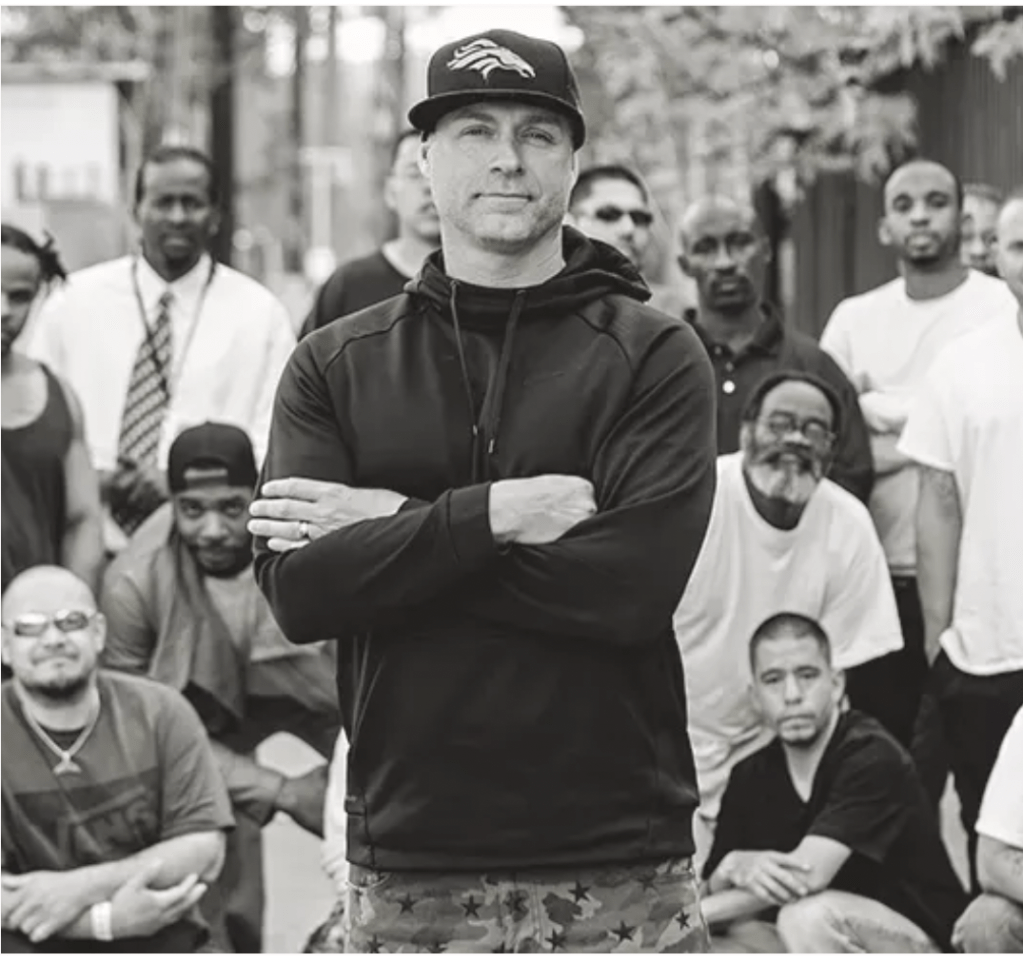
“Forgiveness isn’t about forgetting the past — it’s about believing in someone’s future. Second chances don’t erase mistakes; they give people the room to write a better story.”
It’s Time for a Real Change in Reentry Services—Because People Deserve Better
It’s been a while since I published anything—not because of a lack of time, but because research takes time. Lately, I’ve been focused on several cases, digging into situations that aren’t easy to look at. But one issue keeps coming up: corruption, entitlement, and failure in reentry services for people coming out of prison, probation, or community corrections in Denver County.
The more I look, the more I see how these services—ones meant to help those starting over—aren’t really about the people at all. They’re about politics. They’re about money. They’re about the same old names and organizations benefiting while those actually in need are left with nothing.
What’s even more frustrating? I can’t name a single nonprofit organization in Denver County right now that I truly believe is doing it right. I mean the basics: helping someone with a phone so they can call parole, giving them a ride, making sure they have deodorant, clean underwear, or even a shirt. These may seem like small things until you’re the one standing there with nothing.
Instead of support, there’s entitlement. Instead of help, there’s hustle. Sober living houses pop up like mushrooms after a hard rain—not as sanctuaries, but as businesses. Becoming a peer recovery coach now takes just a few hours of training and a willingness to play the game. The meaning behind the work seems lost.
And too often, faith-based organizations hide behind church walls or nonprofit status to dodge taxes or look good on paper. Meanwhile, the people they claim to serve—men and women just out of prison—are left to struggle on their own.
Let’s be honest: it doesn’t matter what someone’s charge is. It doesn’t matter how many times they’ve been inside. When someone is released, they deserve a fair chance. They deserve dignity. And sometimes, all it takes is a stranger with $20 in their wallet and the heart to spend it on deodorant or a ride to a parole appointment.
That’s why I’ve made a decision. Since I can’t write honestly about an organization that truly does things the right way, I’m going to create one myself. Something this city hasn’t seen yet. Something built not on politics or profit, but on simple human decency. A place where no one gets taken advantage of because they’re struggling with addiction, mental health, or just the bad luck of coming home from prison with nothing but a garbage bag of clothes.
It’s time for a real change. Not speeches. Not fundraising dinners. Actual, personal, hands-on help.
If no one else is doing it, I will.
When Belief Turns into Disappointment: My Change of Heart About Denver Dream Center
For years, I never once questioned the Denver Dream Center. I believed in their mission. I pointed people their way—people coming out of prison, people struggling with reentry, the ones who just needed the basics: hygiene supplies, a bus pass, clothing, maybe even a cell phone. Things that are not luxuries but absolute necessities when you’re starting over after years behind prison walls.
I even wrote about them before. I published articles highlighting their work—covering their Christmas events, celebrating their anniversary. I saw them as one of the few organizations really making a difference in Denver. But after recent research, I have to change my tune.
I really tried to hold on to that belief. I wanted to think their agenda was what I thought it was: helping people. Unfortunately, I’ve found myself asking questions I can’t ignore anymore.
Denver Dream Center has a prime downtown location. Running an organization of that size takes serious money. Private donations can only go so far—you also need grants and public funding. Yet I’ve never quite understood how the people in charge of the Dream Center, some of them formerly incarcerated themselves, are managing financially. How they’re getting paid. How the bills get covered. And whether the focus is still truly on the people they claim to help.
I know organizations need staff. I know people can’t work for free. But what worries me is what’s happening behind the scenes.
The deeper I looked, the more I realized: I’m back at square one. What I’m seeing feels too familiar—like what happened with Second Chance Center. Like what happened with WAGEES. Like what happened with Servicios de La Raza.
The same patterns. The same disappointments.
But what strikes me most—what really sits heavy—is how organizations like Denver Dream Center have the audacity to hide behind church walls and bring God into the mix. To stand up in front of the community, holding Bibles, talking about faith, while behind the curtain it looks a lot like politics, self-interest, and money.
I say this not because I enjoy criticizing anyone trying to help. I say it because the people coming out of prison deserve real support—not window dressing. Not a faith-based cover story. Not another dead end.
I believed in them. I promoted them. But now, I can’t keep pretending I don’t see what’s there.
It’s time to demand real accountability—from Denver Dream Center and from every organization claiming to stand for second chances
A Denver Center with a California Therapist: Questions Surround Denver Dream Center’s Use of Mental Health Funds
The Denver Dream Center, a church-based nonprofit known for providing food and clothing to unhoused people from a downtown warehouse, now finds itself under scrutiny over how it used public mental health funding. The center, led by Bryan “Pastor B” Sederwall, was awarded $693,039 across two grant cycles by the Caring for Denver Foundation to launch counseling services and hire a behavioral health clinical director.
According to Denver Dream Center program director Jen Sanders, the organization hired “Dr. Tray McVay” as clinical director during the first year of the grant. Sanders praised McVay, saying, “He’s incredible. He met with everybody. Did all the clinicians, all, like you know, the classes, and reviews and whatever.” However, Sanders was unable to provide clear details on what McVay’s role actually involved.
CPR News could only find a Trayvonne McVay licensed as a psychological associate in California. No Colorado license under that name exists, and McVay did not respond to requests for comment. When pressed for clarification, neither Sederwall nor Sanders responded to follow-up questions.
Caring for Denver, the foundation that provided the funding, acknowledged McVay’s limited role. In a statement, they said he provided only “peer supports, navigation, and he developed an interdepartmental referral process for youth to be connected to care,” not formal clinical services.
Later, the Dream Center contracted with Harvest Therapeutic Services to deliver mental health counseling. However, CPR News was unable to verify that relationship. The owner of Harvest Therapeutic Services hung up when asked about their work with Denver Dream Center.
When asked during an interview how many people the grant had served, Sederwall and his staff said they would provide the numbers by email. They never followed up.
State Rep. Leslie Herod, a leading voice behind the Caring for Denver initiative, told CPR News she is aware of concerns regarding grantees like the Dream Center. “There are some issues that have been raised that are concerning,” Herod said. “And I have asked questions about them and we will continue to ask those questions.”
Herod said she has personally seen the Dream Center’s therapeutic teams in action and met people who received services, but she also acknowledged gaps in accountability, including the fact that Caring for Denver does not have a process for recovering funds from organizations that fail to meet their grant obligations. “We are not a clawback organization. I don’t even know that we can legally do that,” Herod said. “But there is accountability. They may not get grants in the future.”
Meanwhile, the Denver Dream Center has not filed public tax disclosures typically required of nonprofits, claiming exemption as a church. Sederwall has stated he intends to file such disclosures in the coming year.
Caring for Denver Foundation included the Dream Center in its most recent annual report and promoted local news coverage of its work. But in response to CPR News’ reporting, Caring for Denver Executive Director Lorez Meinhold said the organization “has struggled during the period of our grant, and we have been disappointed in the results to date.” She added that a third round of grant funding for the Dream Center is unlikely.
The questions surrounding the Denver Dream Center reflect broader concerns about transparency and accountability in nonprofit services funded by public mental health dollars—particularly when religious organizations, community reputations, and vulnerable populations are involved.
When Purpose Gets Lost: My Experience Volunteering at Denver Dream Center
I’ve spent time volunteering with the Denver Dream Center on many occasions. I’ve seen some truly good people there—people who show up every day, unpaid or underpaid, simply because they want to help. They hand out food, clothes, and support without expecting anything back. For a long time, I never questioned the organization’s integrity or its role in the community.
But over time, things started not to add up.
From the outside, Denver Dream Center looks like a large, well-established nonprofit helping Denver’s most vulnerable. But behind the scenes, things aren’t as simple as they seem. I was once approached by a staff member asking if I could write a grant for the organization. I said no. I’m not an employee. I wasn’t going to help bring in funding when there are other, smaller nonprofits in Denver that desperately need that money and attention.
It made me wonder: Why does an organization of this size not already have a professional grant writer? Why are employees—already stretched thin and underpaid—expected to cover things like this?
The answer seems to come down to leadership. While there are good people involved with Denver Dream Center, I believe the core problem is that it’s not really about serving the community anymore. At least not for the person in charge.
Is Pastor B really about giving back, or is he about receiving?
That question matters because there’s a big difference between running a community program and running what amounts to a personal enterprise under the cover of faith. Denver Dream Center is technically a church, which means it doesn’t have to file public tax documents like other nonprofits do. But are they truly operating as a church—or is that simply a convenient status that allows them to collect donations, grants, and public funding without transparent accountability?
I’ve watched as the organization received significant grants, including mental health funding. I’ve watched as stories surfaced about questionable hires and unverified services. And I’ve watched as public trust has been quietly eroded.
It’s hard to say this because I’ve seen firsthand the positive things Denver Dream Center does. But those good acts don’t erase the larger problem: the purpose seems lost. What started as a mission to help those coming home from prison, those struggling with poverty or addiction, now feels like it’s tangled in what I can only describe as shenanigans.
When money is involved—grant money, donation money—there has to be responsibility. It can’t just disappear into vague programs or undocumented services. It can’t be used without clear oversight simply because an organization claims to be a church.
And I’ll be honest: If anyone can open a church in their backyard, collect donations, and skip paying taxes, then we have to ask ourselves: is that really service to the community, or is it just a loophole?
Denver Dream Center still has a strong foundation. There are still good people in the building doing the work because their hearts are in the right place. But as things stand, the leadership needs to ask itself—and the public needs to ask—what is this really about?
Is it about giving? Or is it about receiving?
Until that question is answered with transparency and accountability, my faith in the organization will remain cautious.
Who Is Pastor B — And Where Is the Transparency Behind Denver Dream Center’s Money?
Bryan “Pastor B” Sederwall is known across Denver as the face of Denver Dream Center, a church-based nonprofit claiming to serve more than 40,000 people annually through re-entry programs, youth services, and community outreach. With over 25 years in volunteer management and ministry, he presents himself as deeply embedded in city leadership — working alongside former Mayor Michael Hancock, former Police Chief Paul Pazen, and Department of Corrections leaders like Dean Williams and Greg Mauro.
That’s the public version. But the real question is: Who is Pastor B behind the curtain?
Over the years, Denver Dream Center has received significant financial support, including two grant cycles from Caring for Denver totaling nearly $700,000. The stated purpose: to fund mental health services, hire clinical staff, and provide re-entry support for people coming out of prison.
Yet Pastor B has never filed public tax disclosures (Form 990) for Denver Dream Center, claiming exemption as a church. Legally, churches do not have to file. But ethically, when an organization accepts large public grants — public money — basic transparency should be non-negotiable.
Why won’t Pastor B open the books? Some insiders suggest the reason might be as simple as not wanting anyone to see where the money actually goes. Fishing trips, for example, or personal lifestyle choices that wouldn’t look good next to a line item showing mental health counseling that never quite materialized.
According to several volunteers and former associates, Denver Dream Center operates less like a community nonprofit and more like a closed system built around Pastor B himself. One volunteer put it this way: “You can work there, pitch new ideas, build programs, but Pastor B gets the credit. You’ll stay on if you’re creative enough to be useful — but don’t expect recognition.”
Take the term “Hope Dealer,” for example — a phrase now plastered on Dream Center shirts and banners. Who really came up with it? It’s hard to say, but one thing is clear: Pastor B knows how to take someone else’s work and make it part of his brand.
Many of the people working under him — including those formerly incarcerated — turn to Pastor B for guidance, jobs, or support. But how much help do they actually receive? How many are truly paid a fair wage versus simply “volunteering” or working off parole requirements? Those answers remain as vague as the financial records the Dream Center never files.
It’s also worth noting: Denver Dream Center is registered under a friend of Pastor B’s attorney. That might not be illegal, but it adds another layer of tight control, making it harder for outsiders to see what’s really going on.
At its core, this story isn’t about one man’s charisma or even about one organization. It’s about public trust. When you run a nonprofit claiming to serve tens of thousands, when you partner with city leaders, when you take public funds — people deserve to know where that money goes. They deserve transparency, not just good branding and catchy slogans.
Pastor B says prison reform and re-entry programs are his life’s calling. If that’s true, it’s time for him to prove it — not just with Instagram posts and community events, but with clear, public accountability.
Because serving the community should never come at the expense of hiding from it.
Denver Dream Center: Significant Grants, Unanswered Questions
The Denver Dream Center, a faith-based nonprofit known for its reentry and community outreach programs, has quietly amassed significant funding from a variety of public and private sources over the past year. According to publicly filed Form 990s from multiple grantmaking organizations, Denver Dream Center secured at least $652,844 in grants between July 2024 and January 2025 alone.
Here’s a breakdown of verified grant amounts:
- January 14, 2025:
- $40,000 from The Denver Foundation (2023-12 Form 990)
- $22,500 from Trailhead Institute (2023-12 Form 990)
- $19,105 from Thrivent Charitable Impact and Investing (2023-12 Form 990)
- November 26, 2024:
- $50,000 from The Martin Family Foundation (2023-12 Form 990)
- $4,000 from Tyl Foundation (2023-11 Form 990)
- July 12, 2024:
- $447,239 from Caring for Denver (2023-12 Form 990)
- $40,000 from The Martin Family Foundation (2022-12 Form 990)
- $30,000 from Colorado Rockies Baseball Club Foundation (2023-12 Form 990)
That’s nearly $653,000 in less than 12 months, reported by independent grant sources through official financial disclosures.
Yet, for all this documented funding, there are ongoing transparency concerns surrounding Denver Dream Center and its financial practices.
The organization, led by Bryan “Pastor B” Sederwall, claims church status and has yet to file a public Form 990 tax disclosure. While churches are legally exempt from filing, public expectations around transparency increase when substantial grant funding—particularly public funds from entities like Caring for Denver—is involved.
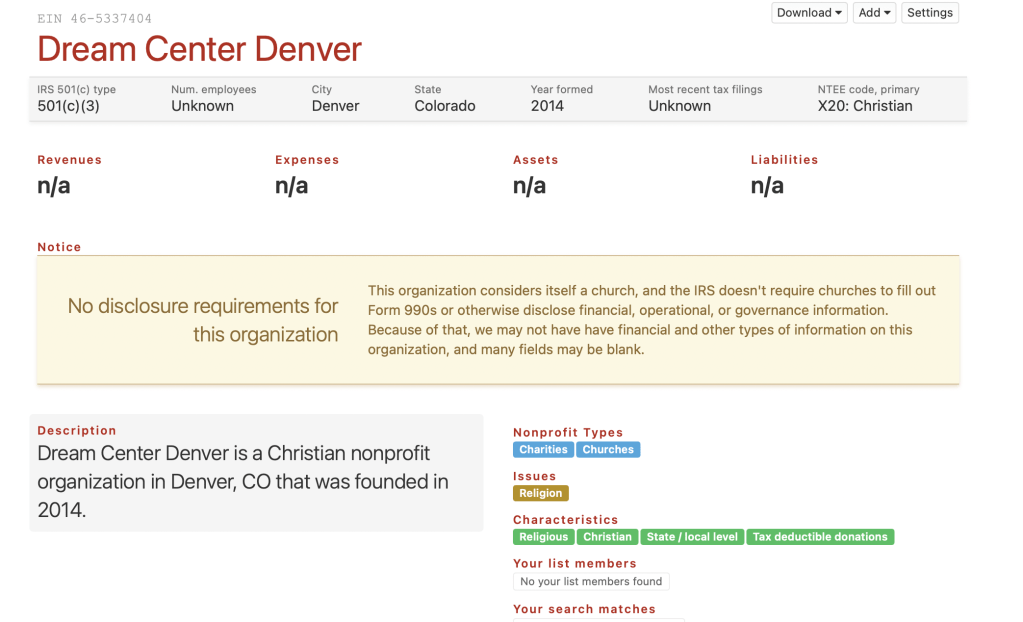
Denver Dream Center’s lack of publicly available financial reports has raised questions among both donors and volunteers. Among the key concerns:
- How exactly is the grant money being spent?
- What percentage goes to direct services like housing support, mental health counseling, or transportation for formerly incarcerated individuals?
- How much is allocated to administrative costs or salaries?
This issue was highlighted last year when Caring for Denver acknowledged disappointment with Denver Dream Center’s outcomes during the grant period, suggesting funding may not be renewed in the future. Despite this, the organization continues to attract sizable donations from private foundations.
The Denver Dream Center promotes itself as serving over 40,000 people annually with wrap-around services aimed at breaking cycles of incarceration, addiction, and homelessness. Those claims, however, have been difficult to independently verify. Requests for service data, counseling records, and financial breakdowns have often gone unanswered.
At the center of this debate is Pastor B himself—a public figure in Denver’s nonprofit scene, well-connected with city leadership, yet operating in a financial gray area.
While the work being done by volunteers and staff at Denver Dream Center is undeniably important, public accountability matters. Nonprofits receiving major grants, even those with faith-based exemptions, owe their community basic transparency—especially when working with vulnerable populations who depend on their services.
The question remains: Will Denver Dream Center step forward and provide clear financial reporting? Or will the funding continue to flow into an organization that operates largely out of public view?
Until those answers come, donors, grant makers, and community members may want to keep asking.
Denver Dream Center: A Question of Priorities and Accountability
Some of you might wonder why I’m writing this. This isn’t about bashing Denver Dream Center. It’s about holding them accountable for what they say they stand for: helping people coming out of incarceration, those struggling with reentry, and those facing homelessness.
Let me share a recent experience that speaks louder than any mission statement or fundraising event.
Many of you who follow my work know I spend my time helping men and women involved with the justice system. I don’t care what kind of help someone needs—whether it’s simple or complex, I try to figure it out.
That brings me to someone I knew from Denver Dream Center—a man who worked for them years ago. He wasn’t just another face in the crowd. He had served serious time, had real reentry experience, and became a valuable part of the organization. He worked with parole, local businesses, and he helped those struggling because he understood what it felt like.
But reentry is fragile. Even for the strongest, things can go sideways. That’s what happened to him. He fell back into old habits, lost his footing, and ended up back in DOC custody.
Here’s what matters: Denver Dream Center knew this man. He was once part of their tight inner circle. You would think a place that preaches forgiveness, redemption, and second chances would stand by him. Instead, I heard stories—judgmental ones. His name was crossed off as if he never existed.
That didn’t sit right with me.
I tracked him down, spoke with him. He had a plan. He wasn’t looking for pity—just a real shot this time. He was accepted into community corrections to finish his sentence, which meant he’d get out with nothing. No clothes. No shoes. No hygiene supplies. No cell phone.
So, I did what anyone would do: I reached out directly to Denver Dream Center. I emailed Pastor B himself, asking for help. Specifically: a pair of pants, shoes, socks, hygiene basics. Simple things—things you’d expect an organization with over $600,000 in grants to have on hand for situations exactly like this.
It took Pastor B almost three days to respond. The excuses came first: he was out of town, no phone access. In 2025? That’s hard to believe. Everyone carries their phone these days.
When the answer finally came, it was a soft but clear no. No, they couldn’t help.
That’s when I really started asking myself: what exactly does Denver Dream Center do with all the money they receive?
I had already spent over $200 of my own money buying clothes and supplies for this man. I figured maybe, just maybe, they could at least cover $80 to turn his phone back on. Again: no. I got another excuse-filled email.
It’s not about one person. It’s about priorities.
I’ve seen people walk into Dream Center holiday events and walk out with gifts—jackets, shoes, bags of items they didn’t really need. I’ve watched people pretend they had nothing just to get something for free. But when someone truly needs help—someone with nothing but the clothes on his back—the answer is no?
What makes it worse: around the same time, I came across a picture of Pastor B fishing in Florida. While I was being told there wasn’t money for a cell phone bill, there he was, out on the water.

Maybe it was his personal money. Maybe it wasn’t. That’s the thing: we don’t know because Denver Dream Center doesn’t file public financial disclosures. They claim church status, which legally allows them to avoid it—but ethically? It raises real questions.
This isn’t just about one man getting out of prison. It’s about every person Denver Dream Center claims to serve.
If you can’t help someone with the bare basics, what are you really doing?
Until there’s transparency—until people can see where the money is going and who it’s really helping—I have to ask: is this truly about community service, or is it about serving a brand and a lifestyle?
That’s up to readers like you to decide.
Denver Dream Center: Why Transparency Should Matter More Than Image
As a final thought in sharing my experience and observations about Denver Dream Center, I’m not writing this to tear down organizations doing honest work in our community. I’m writing it as a reminder: before donating your time, energy, or money, do your research.
Just because a nonprofit has existed for 10 or 12 years doesn’t automatically mean it’s doing things the right way. Longevity doesn’t equal integrity. And in the case of Denver Dream Center, there are serious questions no one seems to be answering.
To this day, there’s been no public tax return filing. No financial disclosures. No breakdown showing where large grant money actually goes. For all anyone knows, they could receive $10 million in public or private funding, spend a large portion on fishing trips and conference appearances, and no one would ever know. Meanwhile, the people they claim to help — those coming out of prison, those struggling with homelessness or addiction — get placed on the back burner.
At the center of all this is Pastor B. Whatever he may have started out as, whatever good intentions he once had, today he functions more like a politician than a nonprofit leader. He’s focused on being the face of Denver Dream Center, speaking at conferences, building a personal brand.
But here’s the uncomfortable truth: When Pastor B stands up on a stage, telling stories that make Denver Dream Center sound like a flawless success, I can’t help but wonder whose story he’s telling. From my experience, those stories aren’t always his. They’re borrowed from the very people Denver Dream Center is supposed to help.
That’s not leadership. That’s salesmanship.
Pastor B has publicly stated he plans to file tax documents to show transparency. I’m still waiting for that. And I believe the community deserves to see those numbers.
It’s 2025. Transparency shouldn’t be optional — it should be required, especially for organizations receiving public and private grants. Real people are struggling. Families are facing impossible situations. Reentry after incarceration is hard enough without having to wonder if the organization you turn to for help is really using its resources to help you, or just to promote its image.
Denver Dream Center should be showing up for the people they claim to serve. That means more than organizing basketball games, golf outings, or giving away free shoes once a year. It means showing up when someone relapses. It means not passing judgment. It means standing by people even when they fall.
After all, if you claim to be a church, forgiveness and support shouldn’t just be words — they should be practice.
Before you donate, before you volunteer, ask yourself: Is this organization really doing what they say they are? Or are they just building a brand at the community’s expense?
That’s a question Denver Dream Center — and Pastor B — still need to answer.
- Cash for Caring: Unlicensed, inexperienced providers take on mental health and drug addiction in Denver. CPR. Ben Markus. 02.02.2024
Disclaimer: The content of this publication is based on personal observations, professional experiences, and publicly available information. All opinions expressed are solely those of the author and do not reflect the views of any affiliated institutions or organizations. This publication is intended for informational and educational purposes only and does not constitute legal advice. Any statements regarding individuals, agencies, or events are made in good faith and are supported by factual evidence or personal witness accounts. The author has taken reasonable steps to ensure accuracy, but makes no guarantees regarding completeness or future developments. Any resemblance to persons or situations beyond what is expressly stated is purely coincidental. If any party believes that any content is inaccurate or misrepresented, they are encouraged to contact the author for clarification or discussion.
 Justice Unlocked.
Leave a comment