by Justyna Madenska
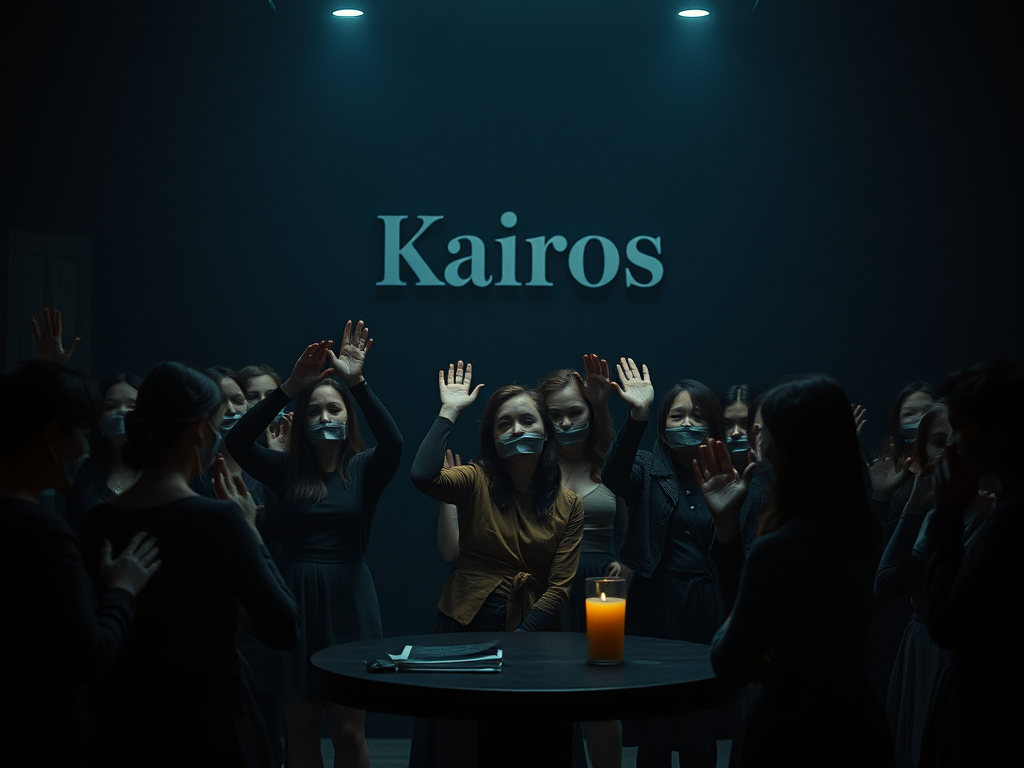
I was recently invited to attend a Kairos retreat for women in Colorado, and from the moment I accepted, I was filled with anticipation. From my conversations with others who had been to this retreat, it seemed like a gathering for women who share one critical bond: the experience of having loved ones in prison, or perhaps, having gone through the prison system themselves. It promised to be a place of support, free from judgment, where we could connect with others who understood the complex emotions that come with being affected by the justice system. The retreat took place in the stunning mountains just outside Estes Park, Colorado. The drive itself felt like a journey toward something greater—a chance to leave behind the pain and frustrations of the past. As we climbed higher, winding through the mountain roads, the air felt fresher, the sun warmer, and the wind like a soothing whisper of hope. With each mile, I could feel a sense of redemption stirring in me, as if the mountains were promising peace and understanding.
I wasn’t alone on this journey. Part of my role that weekend was to pick up two other women, strangers at the time, but women who shared this common thread of connection to the prison system. As we drove together, we shared our stories, each of us nervous but hopeful about what awaited us at the retreat. None of us knew exactly what to expect—we had simply been told by those who had gone before, “Just go. You’ll see. It’s a weekend that will build you up.” When we arrived, we were greeted by a beautiful retreat center nestled among the towering mountains, with the smell of fresh pine in the air and the comforting presence of nature all around. It was a setting that invited healing. As I stepped out of the car, I felt a deep desire to walk out into the open, to shout my frustrations, fears, and pain to the mountains. There was something comforting in knowing that, no matter what I yelled into the vast expanse of nature, the mountains would hold my secrets—they would never judge or talk back.
The retreat was everything I had hoped for. It provided a space where judgment was left at the door and understanding flowed freely. These women, many of whom had been directly impacted by the unfairness of the justice system, shared their experiences, and in turn, I shared mine. There was no pretense, no shame—just a raw, collective acknowledgement of the pain we all carried.
On paper, it sounds ideal—a retreat full of compassion, healing, and sisterhood. But in reality, for some of us, it can feel isolating, overwhelming, and at times, alienating. My experience at Kairos Outside left me questioning whether I had truly found the supportive community I was hoping for or whether I had just stumbled into a space that was not meant for me.
“Kairos Outside is one of three ministry outreaches provided by Kairos Prison Ministry International, designed specifically for women—wives, mothers, sisters, daughters, and female relatives of incarcerated individuals. The goal is clear and meaningful: to provide support to women who are also affected by the incarceration of their loved ones, acknowledging that they, too, are “doing time” alongside them. The retreat creates a community that offers women a safe space to connect with others who are facing similar challenges, while also exploring their relationship with God. As described by the ministry, it’s a weekend of talks, music, prayer, fun activities, and pampering—an opportunity to build a connection with a Christian community that understands the unique struggles these women face.” Kairos Colorado.
I’ll admit, I’ve never been a religious person in the traditional sense. Though raised Catholic, my relationship with religion never truly took root. At the age of seven, my parents realized that dragging me to church wasn’t worth the battle. I was a free thinker, determined to figure things out on my own. My beliefs have never fit neatly into the mold of organized religion, and I’ve always felt deeply skeptical of people who attend church out of obligation or appearance rather than genuine conviction. My sister, on the other hand, is deeply religious, almost to the point of being too much, which often leaves me feeling like we live in completely different worlds. So, attending a retreat that centered on faith—specifically Christian faith—was already a bit outside my comfort zone. But the promise of community with other women who have been affected by incarceration was enough to make me give it a try. After all, I don’t go to church in the traditional sense; my “church” is a federal prison or state prison. It’s where I connect with people who, like me, have been affected by the justice system. We don’t need hymns or sermons to bond. We understand each other’s pain and struggles because we live them every day.
One of the most shocking moments came when I began hearing male voices downstairs on the first night. We were told during our Webex meeting before the retreat, and again upon arrival, that we were the only people in the building. Yet, here were unmistakable men’s voices, echoing from the lower floor. I didn’t think much of it at first, but as the hours went on, something didn’t sit right with me. Many of the women attending this retreat had been victims of not only the criminal justice system but also domestic violence and sexual assault. These experiences often leave deep emotional scars, and the presence of men—especially without warning—can be deeply triggering. I’ve seen firsthand how the presence of a man, especially in such an intimate and vulnerable setting, can stir up painful memories and trauma. Yet, none of us were told beforehand that men would be present. This alone felt like a serious breach of trust.
The following morning at breakfast, the situation became even stranger. The food was minimal. It felt like another layer of control, as if they were keeping us subdued through lack of basic nourishment. I remember thinking if I had known the food would be this bad, I would’ve brought my own. And then, I saw him. A man I knew well, someone I never expected to see in this space. No one had told us he would be here, or that any man would be part of the retreat. Suddenly, he’s in our group photo, which I’ll probably receive at some point, and I’ll have to see his face in that picture. I was deeply disturbed, and I wasn’t alone. Several women approached me, asking why this man was here. I told them I didn’t know; I wasn’t the organizer. But I agreed with them—it was wrong. It should have been disclosed from the start that a man would be present, especially given the sensitive nature of the discussions we were having. When I questioned this, I was met with explanations that “sometimes men can be healing.” I disagree. Healing cannot happen in an environment built on secrecy, especially when it involves a potential trigger for so many. Surprises like this can cause more harm than good. When I expressed my concerns, the few who had also questioned the retreat agreed with me.
You might be wondering about this man. Well, he’s an activist, some kind of advocate on issues related to sex offenders. He’s in his 80s now, but nothing about his presence here felt right. I’ve worked with this man before, and I know firsthand that he’s stuck in the past, trying to fight a system in ways that feel outdated and ineffective. While he’s busy complaining and stirring up controversy, nothing is actually getting accomplished. I’m focused on changing the system, not fighting it like it’s still 1970. We’re in 2024 now, and I’ve moved beyond these old tactics. I had separated myself from him and others like him long ago, for my own mental health and for the good of those I work with. They had been upset with me for not supporting their agenda, and I became the villain in their narrative. Seeing him again at this retreat felt like déjà vu, as if the universe had played some cruel joke, bringing me all the way to the mountains only to confront someone who represents everything I’ve worked to distance myself from. How did he even get here? Through another woman, apparently, someone who had attended the retreat before and whom I had been cordial with. She never mentioned he would be here, and that in itself was a betrayal.
This retreat was supposed to be about healing, about finding support among women who understand the complexities of being affected by the criminal justice system. Instead, it became a situation filled with secrets, control, and a disregard for the emotional safety of the participants. The presence of a man, especially one with such a controversial past, should have been disclosed from the start. There’s no healing in surprises like this—only trauma. This experience has left me with more questions than answers, and a lingering sense of betrayal. I came here seeking community and understanding, but what I found was the opposite: a disorganized retreat where secrecy and control overshadowed the opportunity for true connection.
“Women’s retreats often involve activities such as group discussions, workshops, meditations, outdoor experiences, and personal time for reflection. The goal is typically to create a safe and supportive environment where women can connect with each other, explore their personal challenges, and rejuvenate mentally, emotionally, or spiritually.”
As the retreat began, I quickly realized that I wasn’t among kindred spirits. The women around me were vulnerable—deeply so—and many of them seemed to rely on the structure and guidance of others to help them navigate their lives. I couldn’t relate to that. I’ve always walked my path alone, and I’ve never needed approval from anyone except the courts, the Bureau of Prisons, or the Department of Corrections. What I was looking for at Kairos Outside was a community of strong, independent women who, despite the challenges of incarceration, stood tall and faced life head-on. What I found, instead, was a group of women who seemed more like followers—people who needed the validation and direction of others to feel whole.
Attending the Kairos Outside retreat was an eye-opening experience, but not for the reasons I had expected. From the outside, it was pitched as a retreat designed to offer support, healing, and community for women affected by incarceration. However, once inside, I quickly realized it was something altogether different—a structure of chaos disguised as organization. What was meant to be an inclusive and supportive environment felt more like an oppressive and disorganized experience. The first thing I noticed was the complete lack of structure. There was no agenda, no clear schedule. People had no idea when to wake up, when meals were being served, or what to expect throughout the day. Everything was shrouded in secrecy, like we were supposed to be kept in the dark. For anyone who’s been through the prison system or has had a loved one incarcerated, you know that secrets and surprises are the last things you want in your life. The uncertainty, the lack of transparency—it’s unacceptable because it mirrors the unpredictability of prison life. It’s a form of control, not care.
Then there was this woman, probably in her 60s, who I can only describe as passive-aggressive and obnoxious. She walked around with a bell, ringing it endlessly like she was Santa Claus announcing something significant. But what she was really doing was forcing everyone to pay attention, to follow her lead, as if we were schoolchildren. The constant ringing felt like an alarm, a reminder of authority that demanded your attention. It reminded me of the authoritarian nature of prison, where every moment of your life is dictated by someone else. It was irritating and intrusive, yet no one said a word. One of the most glaring issues was the division between those who had been to the retreat before and the newcomers. Despite the idea that this was supposed to be a community without separation, there was an unspoken hierarchy. Those who had been before sat in positions of power, while the rest of us, the first-timers, were subtly reminded of our lower rank. At each table, they placed a “leader,” someone who had attended before, whose job seemed to be making sure the conversation stayed within the lines of the retreat’s agenda. We weren’t truly free to express ourselves or share our struggles in the way we had hoped. Instead, it felt like we were being monitored and evaluated. It reminded me of a courtroom setting, where the people in power sit up high, and at the end of the day, no matter what you say, they’re going to make decisions based on their agenda. They listen, but their minds are already made up. It was so far removed from the supportive, open community I had expected. Instead of encouraging personal expression and healing, they seemed more focused on maintaining control and reinforcing the power structure.
Another bizarre element was the forced singing. They handed out hymn books and told us we were going to sing. I’m not a singer, nor do I have any interest in singing songs about Jesus or God, especially in a setting where I didn’t feel welcomed or understood. If I were to sing about something, it would be about the injustices of the legal system, the brokenness of the prison-industrial complex, or the flawed Supreme Court cases that have shaped our lives. But being asked to sing religious songs I didn’t connect with, in a forced and controlled environment, felt ridiculous and insulting.
And then there was the bell again—always the bell. Ringing for everything. I can still hear it ringing in my ears as I write this. It was a symbol of the constant interruption, control, and manipulation that underpinned the entire retreat.
One of the most bizarre aspects of this retreat was the practice of raising your hand. Now, in most settings, when you raise your hand, it’s a signal that you want to speak, ask a question, or be acknowledged. It’s a way of saying, “I have something to contribute.” But here, raising your hand meant the opposite. It was used as a signal to be silent. Every time a hand went up, it meant, “Stop talking and listen.” And while listening is an important part of any dialogue, this was different. It wasn’t about encouraging thoughtful reflection; it was about keeping us quiet.
In my world, I help people find their voices. Whether through my writing, my advocacy, or speaking in front of lawmakers, my goal is to give a platform to those who are often silenced. I work with individuals who have been affected by the criminal justice system, and I help bring their stories into the light. Silence isn’t an option for me or the people I support. So, to be in a space where I was repeatedly told to be quiet—by the simple raising of a hand—felt oxymoronic and, frankly, oppressive.
I quickly realized that this retreat was more about control than it was about healing. It wasn’t just the hand-raising that struck me as odd; it was the entire setup. From the constant ringing of a bell to mark every activity, to the unspoken hierarchy between those who had attended the retreat before and those who were new, everything felt carefully choreographed to maintain control rather than foster open dialogue. It was almost as if they were more interested in keeping us subdued than in encouraging us to express our thoughts and feelings freely.
What frustrated me the most was that they had gotten the wrong person if they thought I was going to stay quiet. I’m not someone who can sit silently when I see something wrong, and I certainly wasn’t going to start here. I voiced my opinion—loudly—that their method was not only ineffective but potentially harmful. It felt more like an exercise in obedience than a genuine effort to help women find their strength. In my work, I help people find the courage to speak out against injustice. I fight for those whose voices have been stifled by the legal system and by society. So, to be told to stay quiet in this retreat, where the goal should have been to empower women, was a complete contradiction. And the psychology behind it? It’s terrifying.
What kind of message are you sending when you ask women—many of whom have been silenced by trauma, by the criminal justice system, or by their personal circumstances—to stay quiet? What kind of healing are you offering when you demand silence instead of encouraging expression? This retreat could have been a powerful space for women to come together and speak their truths. But instead, it turned into an environment of suppression. The constant use of the hand-raising signal to enforce silence felt like a way to stifle dissent, to prevent anyone from questioning the narrative they were pushing. It’s ironic, really, that an organization supposedly dedicated to supporting women through their struggles would create an environment where women are discouraged from speaking up.
The retreat I attended was supposed to be about women who have been affected by incarceration, whether it was their own time behind bars or that of a loved one. It was advertised as a place to share our struggles, frustrations, and the harsh realities we face in dealing with the criminal justice system. We were promised an opportunity to connect, to be heard, and to support each other through the unique challenges of having someone in prison. But what unfolded was far from what I expected. I quickly learned that only a select few, the so-called “team leaders,” were allowed to speak. These leaders were women who had attended the retreat before, and they held all the power in the conversations. They set the tone, guided the discussions, and most importantly, shared their stories. At first, I thought this would be an opportunity to hear about their own struggles with the system—stories of fighting for justice, navigating the complexity of parole and probation, or dealing with the emotional and financial burden of incarceration. But what I heard left me deeply frustrated. Instead of sharing stories of redemption or personal battles with the system, they spoke of God, forgiveness, and personal journeys unrelated to incarceration. Every story was laced with religious overtones, and none of it addressed the very real, pressing issues we were facing. There was no discussion about the broken legal system, no mention of the struggles of paying for endless legal fees, and no talk of how difficult it is to keep a family together when one member is behind bars. I waited and waited for the conversation to turn to the topic we were all there for—incarceration—but it never did. I understand that faith can be a source of comfort for many people, but this retreat wasn’t supposed to be a religious seminar. I didn’t come to hear Bible verses or stories of forgiveness that had nothing to do with the harsh reality of incarceration. I wanted to hear about real-life struggles—about women like me, who are fighting against a system that seems designed to break us down. But instead, it felt like the leaders were deliberately avoiding those difficult conversations.
“Behind every inmate is a family that suffers.”
What made the situation even worse was the rule of confidentiality they imposed at the start. They told us that whatever was said in the group was to remain private, as if we were being let in on some sacred secret. But here’s the thing—I’m not bound by any client privilege or confidentiality agreement. I’m not a lawyer listening to a private confession. I’m someone who came to speak the truth and to hear the truth, and if the truth is that this retreat was nothing more than emotional manipulation, then I will not stay silent about it.
The stories shared during this retreat had nothing to do with incarceration. I didn’t hear women talking about their frustrations with the legal system or the struggles of having a loved one in prison. No one spoke about the isolation, the financial burden, or the emotional toll that comes with loving someone who is locked away. Instead, we were subjected to personal stories of faith and forgiveness that had no relevance to the topic at hand. And while those stories might be important to the people telling them, they didn’t belong at a retreat that was supposed to be about incarceration. The most disheartening part was that the women attending this retreat were vulnerable. Many of them were emotionally exhausted, struggling to make sense of their lives while dealing with the realities of having a loved one in prison. They came to this retreat seeking support, hoping to find a community that understood their pain. But instead, they were fed a narrative that didn’t address their needs. It felt like emotional exploitation—using their vulnerability to push a message of faith and forgiveness that didn’t resonate with the struggles we were actually facing.
I sat there, wanting to shout, “Get to the point!” Talk about the issues we came here to discuss. Talk about the broken system that has put our loved ones behind bars. Talk about the endless court battles, the terrible lawyers, the unjust sentences, the children who are left without parents, and the financial strain of trying to survive. But none of that was mentioned. Instead, it was personal stories that had nothing to do with the reality of incarceration. And the worst part? The emotional weight of those stories. They didn’t belong to us, yet we were forced to carry them. I didn’t come here to hear about how many times someone had been pregnant or about their journey through personal faith. I came to talk about the very real, systemic issues we’re all dealing with. But that wasn’t what this retreat was about. Is it selfish to want to talk about the real issues? No. I don’t think so. If anything, it’s necessary. These women needed a space to speak about the actual struggles they’re facing. Instead, they got something that felt like an emotional bait-and-switch. And to me, that’s not just wrong—it’s dangerous.
Attending a retreat designed for women impacted by incarceration, I had hoped for an atmosphere of healing, solidarity, and mutual respect. What I encountered, however, felt like an elaborate exercise in control disguised as care. One of the most striking forms of this control was the arrangement of the accommodations. Each of the new attendees, or “invited guests” as we were called, was made to share a room with a team leader. The team leaders, who had attended previous retreats, were given the larger beds in the back of the room, symbolizing their authority. It was as if they were subtly asserting dominance, setting up a hierarchy even within our shared living spaces. This separation and display of control sent a clear message: the team leaders were in charge, and we, the guests, were to follow their lead. It created an invisible barrier, one that divided the group and stifled genuine connection. Rather than fostering an environment of equality and trust, it felt like we were being closely monitored, as if everything we said and did was under constant scrutiny. Throughout the retreat, you could sense the tension in the air. Conversations felt stilted, as though everyone was watching their words, afraid to say something that might be judged by the team leaders. There was little unity among the participants. Instead, people kept to themselves, wary of the consequences of speaking freely. The retreat’s intended message of healing and support was lost in the sea of judgmental glances and phony, forced smiles. The religious undertone of the retreat quickly morphed into something more disturbing, bordering on cult-like behavior. One glaring example was the practice of leaving small “gifts” in our rooms after each session. While on the surface, these tokens might have seemed like thoughtful gestures, they felt more like manipulative tactics to win favor. It was as if they were trying to groom us into submission, into believing that their superficial generosity equated to genuine care. But I couldn’t help but wonder: was this about truly supporting us, or was it simply about ensuring our attendance, securing donations, or pushing us toward their agenda? The atmosphere at the retreat was far from what I had anticipated. Instead of feeling empowered and heard, I felt isolated and controlled. I came to this retreat expecting to share stories of struggle and perseverance, to connect with other women who had walked similar paths, but instead, I found myself navigating a rigid and suffocating environment. The organizers were more interested in maintaining control than in fostering authentic healing. Their attempts to “shower us with love” felt hollow, as though their focus was more on promoting their organization than on truly supporting the women they claimed to care for. I left the retreat feeling more skeptical than ever about their intentions, wondering what the real agenda was.In the end, this experience left me questioning the very purpose of the retreat. Was it really about helping women affected by incarceration, or was it about something more self-serving for the organization? I can only hope that by sharing my experience, others will start to see through the façade and question the true intentions behind such retreats. Healing and support should come from a place of honesty and respect, not manipulation and control.
I’ll be honest: I debated staying. But my intuition screamed at me to leave—run, even—before the grip of this retreat completely drained me. And the more I stayed, the more I felt my energy slipping away, mentally exhausted to the point where I could barely stay awake. That was my breaking point. We were trapped in a stuffy room, filled with a stench of anger, control, and what I can only describe as propaganda. I grew up under communism, and this setting reminded me of those times. But this was supposed to be a women’s retreat—an escape, a place to heal and bond with others impacted by incarceration. Instead, it felt like a bizarre reenactment of a controlled society, and I was beginning to suffocate under its weight.
At my assigned roundtable, I met a diverse group of women. One, in particular, stood out. She was intelligent, sharp, and asked the same questions that were swirling in my mind: What are we doing here? What is the point of all this? But as soon as she spoke, the others at the table turned on her, questioning her every word, as if differing opinions were forbidden.
Then there was the young woman seated next to me, clearly struggling with her recovery from drug addiction. I asked if she was on Suboxone because she seemed to be having a hard time staying awake. I couldn’t help but feel disturbed that this vulnerable woman had been brought into such a toxic environment. She was fragile, and this retreat was taking advantage of that, making her yet another victim in a place that was supposed to offer healing.
Looking out the window, I could see the beautiful mountains—a stark contrast to the suffocating space we were trapped in. A hike through those mountains would have been the perfect release for our frustrations, a chance to leave behind the mental exhaustion. Instead, we were forced to sit inside, wasting away in the heat, listening to hollow speeches and ridiculous assignments that felt more like high school detention than a retreat for grown women.

Then came the moment that pushed me over the edge. One of the women at my table turned to me and, out of nowhere, told me to be quiet. I was having a light-hearted conversation with the intelligent woman who had been questioning the retreat’s purpose. We were joking about how absurd the assignments were when this woman leaned in and told me to stop talking. She tried to pass it off as a joke, but I could tell she meant every word. Let me be clear: there are consequences when you try to silence me. I told her straight up that she had no right to tell me to be quiet, no right to shut me down. I don’t drink the Kool-Aid, and I’m not about to let anyone mute my voice. Her weak apology meant nothing to me. What she had done was wrong, and I wasn’t going to let her off the hook for trying to silence me in a setting that was supposed to foster open dialogue. So I told her, in no uncertain terms, to leave me alone, and I walked away. I packed my bags, grabbed my stuff, and headed straight for the front door. I did leave out the back – it was an escape.
Outcome
As I drove down the mountain, I felt an overwhelming sense of relief, like I had escaped something insidious.
No one called, emailed, or checked on me after I left. Imagine that. They didn’t care whether I was safe or if I had simply disappeared into the wilderness. That silence spoke volumes about the type of people running this retreat. The moment I refused to conform, refused to buy into their agenda, I ceased to matter.
I hope that anyone reading this understands that this retreat wasn’t about giving women a voice. It was about keeping them quiet, steering them away from the real issues, and feeding them a narrative that had nothing to do with the harsh reality of incarceration. And that, to me, is the real injustice. I hope that by writing this article, those who run these retreats will understand the humongous mistake they’re making. Silence may be comfortable for those in power, but it’s not healing for those who have been silenced for too long. The psychology at play here is dangerous. It’s time for them to reverse their approach and start truly empowering the women they claim to support. Because one thing is for sure—they won’t keep me quiet.
To anyone considering attending this retreat, I have one piece of advice: don’t do it. You’ll regret it. They’ll preach about love and care, but the moment you step out of line, you’ll see how little they truly care. It’s all a show, a carefully crafted illusion to control and manipulate. Trust your instincts, and if they tell you to leave—run. Because no amount of small gifts or fake smiles can cover up the truth of what’s really happening at that retreat.
Looking back, I can’t help but think that this retreat was more of a cult-like experience than anything else. They preyed on vulnerable women, women who were in need of support but who couldn’t find the strength to challenge what was happening. They followed the rules, sang the songs, and accepted the structure because they didn’t feel they had the power to stand up for themselves. After every scripted moment, they would say “Amen,” as if that made everything acceptable. But to me, it was all just mindless repetition.
I walked away from Kairos Outside not feeling healed, but feeling more isolated and frustrated than when I arrived. It was supposed to be a retreat for women who have been affected by the system, but instead, it was a retreat that reinforced power, control, and submission. If you are someone who values independence, self-respect, and transparency, be wary of spaces like this. They may promise support, but what they deliver is something entirely different.
Disclaimer: This article is based on real scenarios and does not pertain to any particular individuals. It aims to highlight the importance of authenticity in Kairos Colorado narratives and the potential repercussions of fabricated stories


 Justice Unlocked.
Leave a reply to justyna madenska Cancel reply