
“Friendship knows no boundaries, not even those imposed by prison walls. It is a testament to the human spirit’s ability to connect, support, and endure despite separation.”
When someone goes to prison, the sentence doesn’t stop at the gates. The impact reverberates beyond the person wearing the uniform, affecting parents, children, friends, and entire communities. Behind every incarcerated individual is a network of people who, in their own way, serve time alongside them—bearing the emotional, financial, and social consequences of their absence.
I remember speaking to someone who had spent time in county jail. He told me something that has stuck with me: “One day you have a job, a car, a sense of routine, and the next, it’s all gone. The life you built disappears overnight, and everything you were familiar with—your home, your loved ones—is replaced by walls you don’t recognize.”
This loss doesn’t just affect the individual behind bars. Families are often left scrambling to pick up the pieces. Who pays the bills now? Who makes sure the kids get to school? Cars sit unused, clothes are left hanging, and life becomes a waiting game—for letters, calls, or any sign that their loved one is okay. And for those left behind, the waiting feels like its own kind of prison.
Families Doing Time
For families, incarceration means sacrifices. Parents miss their child’s milestones, spouses face the strain of single parenting, and children grow up with an empty chair at the dinner table. This isn’t just about missing moments; it’s about missing stability, safety, and the emotional foundation that holds families together.
When I worked in a reentry facility, I saw firsthand how deeply these connections mattered. Residents would light up at the sound of their family’s voice over the phone or cling to the letters that arrived sporadically. It was their tether to the outside world, the proof that someone still cared. But for families, those connections came with a price: the endless hours spent driving to visit, the financial strain of commissary and calls, and the emotional toll of seeing their loved one behind glass.
Shared Time, Shared Struggles
During my time working in corrections, I often felt like I was doing time alongside the residents. Every issue they faced—whether it was a problem with their case, a personal struggle, or a clash with the system—became my issue too. I couldn’t turn off the concern. Weekends were the worst; I’d leave on a Friday and worry about what might happen by Monday. Would they be okay? Would a fight break out? Would someone spiral deeper into despair?
It wasn’t until I left the facility that I realized just how deeply these experiences had affected me. I had built bonds with people society had written off—people whose stories revealed a system riddled with flaws and injustices. For every face in a mugshot, there was a story of broken promises, systemic failure, and, sometimes, redemption.
A System That Impacts Everyone
Criminal justice reform often focuses on those behind bars or the wrongful convictions that highlight systemic failures. But we also need to talk about the families and communities left behind. They too bear the brunt of a system that prioritizes punishment over rehabilitation.
We forget that incarceration isn’t just about serving time; it’s about the ripple effects. Loved ones are forced to make hard choices: take on extra work to make ends meet, explain the absence to a child, or navigate the stigma that comes with being connected to someone in prison.
These sacrifices aren’t just temporary. Over time, they change people. Families adapt, but the scars remain. Relationships are strained, finances are stretched, and emotional wounds linger. And yet, amidst the pain, there’s often resilience—a determination to hold on, to keep fighting for the person they love, even if the system has deemed them unworthy.
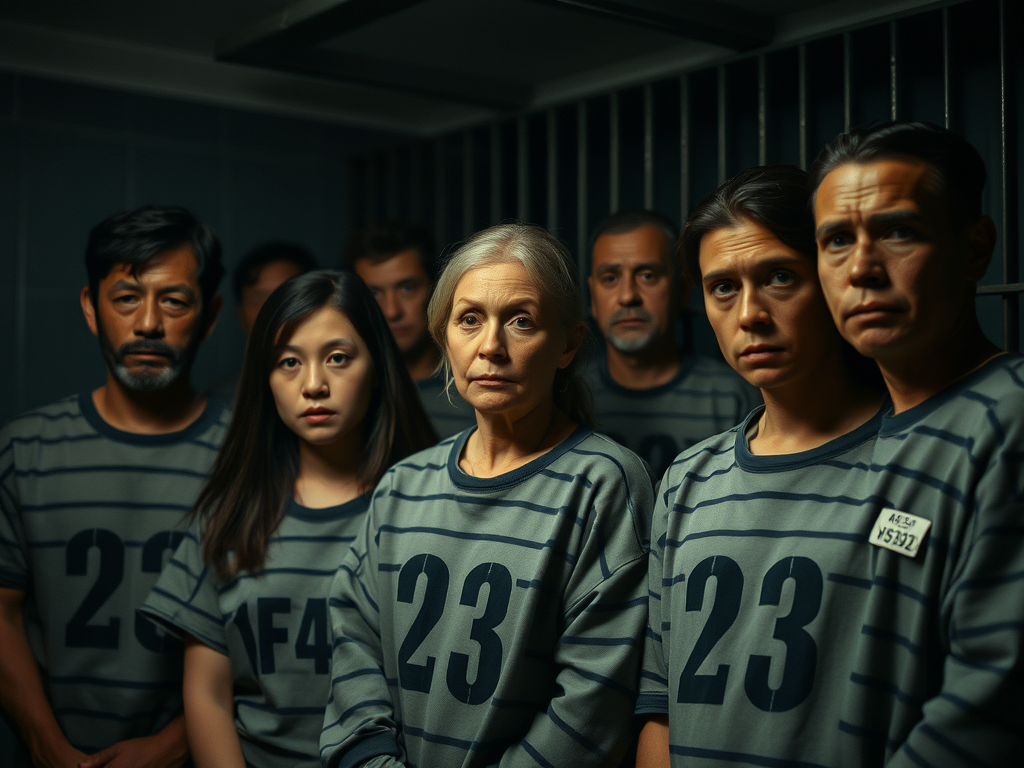
The Humanity Behind the Numbers
When I think back to my time working in corrections, I remember the connections I made. Some of my closest friendships today are with people who, on paper, would have seemed like unlikely allies. But when you look past the charges and see the person—their story, their struggles, their humanity—you realize that change is possible, even within a broken system.
Behind every DOC or BOP number is a human being, and behind every human being is a network of people who suffer in silence. The sacrifices might look different, but the pain is shared. If we’re serious about reform, we need to remember that incarceration isn’t an individual experience; it’s a collective one. And until we address the needs of those left behind, we’re only solving half the problem.
Because behind every wall, there’s a story waiting to be heard.

The Holidays: A Time to Reflect Beyond Our Own Front Doors
The holiday season is often portrayed as a time of joy, family, and togetherness. We see cheerful Christmas cards, glowing trees, and picture-perfect families posing in matching outfits, sipping wine by the fire. But beneath this glittering facade lies a truth we often ignore: for many, the holidays are anything but joyful.
For those with loved ones in prison, jail, or under any form of correctional supervision, the season can be a stark reminder of absence, struggle, and isolation. The impact of the criminal justice system doesn’t end at the gates; it seeps into homes, into the lives of families, neighbors, and communities. And yet, in the hustle and bustle of our own lives, it’s all too easy to overlook those who are quietly carrying this burden.
A Reminder to Look Around
How often do we stop to think about the neighbor next door? The family member we haven’t spoken to in months? The person we pass by at the grocery store who might be spending their holidays alone because their loved one is behind bars?
We’ve become so consumed with curating our lives—perfect photos for social media, polished appearances for the outside world—that we often forget to connect authentically. I’m guilty of this too. It’s easy to get wrapped up in the demands of life, but the holidays should be a time to step back and extend kindness to those around us.
A simple hello or a genuine conversation could mean the world to someone who feels invisible. Behind the walls of every prison and behind the doors of every struggling household, there are stories of resilience, heartbreak, and humanity waiting to be acknowledged.
The False Facade of Perfection
The holidays amplify the pressure to present an idealized version of ourselves. The family photos, the glittering decorations, and the perfect Instagram captions are all part of a collective charade. But let’s be honest: life isn’t a Hallmark movie.
I have friends who post those glossy, staged Christmas cards every year. On the surface, their lives seem idyllic: happy children, beautiful homes, and a festive glass of wine in hand. But I know their reality—struggles they wouldn’t dare show online.
One friend admitted that her family’s picture-perfect holiday cards were a facade. “It’s just something we do because everyone else does it,” she said. But behind the scenes, her family was grappling with deep issues, ones no filter could mask.
The Importance of Checking In
This brings me to Michelle, a friend I’ve known for years. We met through CrossFit and social events, but our connection transcended casual encounters. For months, I had no idea she was going through a crisis. Her husband was facing serious legal trouble, and her family was struggling under the weight of mounting legal bills and a failing defense strategy.
Michelle never posted anything about her struggles online. Her social media remained polished and cheerful, giving no indication of the turmoil beneath. It wasn’t until she reached out to me directly that I realized what she was going through. Her message shocked me and reminded me of something essential: check on your friends.
Don’t rely on social media to tell you the full story. Behind the smiling photos and holiday greetings, people may be dealing with unimaginable challenges.
Authenticity Over Aesthetics
This holiday season, let’s put aside the phony perfection. Instead of sending yet another generic holiday card or scrolling through someone’s highlight reel on social media, take the time to connect authentically.
- Call a friend: Not a text or a comment on their post—an actual phone call to ask how they’re really doing.
- Reach out to neighbors: You might be surprised by the connections you make.
- Offer support: Whether it’s a listening ear, a meal, or simply your presence, small gestures can make a big difference.
For families with loved ones in prison, the holidays are particularly painful. They’re reminded of the empty seat at the table, the voice missing from the laughter, and the uncertainty of when—or if—their family will be whole again. By extending compassion and understanding, we can help ease some of that burden.
A Season of Humanity
The holidays should be about more than appearances. They should be a time to reflect on our shared humanity, to step outside of our own bubble and offer kindness to those who need it most.
So this year, let’s skip the staged perfection. Instead, let’s focus on what truly matters: authentic connections, empathy, and the willingness to see beyond our own lives. Because while the holidays can be a difficult time for many, they also offer an opportunity to show that no one has to face their struggles alone.
When Life Changes in an Instant: The Knock at the Door
Life’s fragility often remains unnoticed until it shatters before your eyes—a sudden knock at the door, a sheriff with a warrant, and everything familiar is gone. In a moment, the life you knew is replaced by an uncertain reality, and nothing will ever be the same.
This isn’t just the story of the person being arrested; it’s the story of their family, friends, and everyone connected to them. The criminal justice system doesn’t just ensnare individuals—it entangles entire communities. Yet, for those who haven’t experienced its reach, understanding this upheaval is nearly impossible.
The Complex Reality of the Justice System
The criminal justice system is a labyrinth of rules, judgments, and stigma. Most people remain oblivious to its realities until they’re thrust into its depths, and when that moment arrives, the awakening is harsh.
Everything changes—your job, your home, your social circle. Friends you once trusted may disappear, while family members who seemed unwavering might distance themselves or falter in their support. Even social media connections fade into silence, leaving you to face this new reality alone.
Yet, amidst the loss, unexpected bonds form. You find solidarity with others in the same waiting rooms, on the same buses, and in the same visitation lines. Strangers become allies, connected through shared pain and resilience.
The Weight of Judgment and Isolation
Perhaps the hardest part of this journey is the judgment. It comes from everywhere—neighbors, coworkers, even loved ones. People forget how easily one mistake, one false accusation, or one stroke of bad luck could place them in the same position.
Isolation compounds this burden. While the world moves on, you remain stuck in a life you never imagined. Invitations stop coming, conversations grow shallow, and others hesitate to ask how you’re really doing—unsure how to respond to honesty.

A New Kind of Community
In the void left by old relationships, a surprising community emerges. In the least expected places, you find others who understand without explanation. These connections, forged in struggle, become a lifeline. They offer the acceptance and understanding you can’t find elsewhere, forming a second family rooted in shared humanity.
But guess what? You start making new friends—people who share a common experience with you. It’s strange, almost surreal, but you bond with others who have been through the same things: dealing with the prison system, judges, attorneys, bad lawyers, or public defenders. It’s a new chapter in your life, and sometimes that chapter lasts a few months, a few years, or even the rest of your life.
You become friends with people you meet in the visitation room—total strangers at first, but your shared experiences bring you together. You find yourselves riding the same bus to the same visitation rooms, meeting the same faces on weekends, and over time, those strangers become like a second family. On that bus, there’s no judgment, no pretense. The silence is filled with an unspoken understanding: you all have loved ones behind bars.
This reality is something a regular person might never understand. I’m talking about those people who send out perfect Christmas cards that look like they came straight out of a Nordstrom catalog. They believe their children are perfect, almost untouchable, and they’re completely blindsided by the idea that their kids could ever end up in the system. But here’s the truth: every child is at risk. It doesn’t matter how great your family is—you could be born with a silver spoon and still find yourself in the system before you know it.
And guess what? You might end up sitting on the same bus as the rest of us, alongside people who were once judged, labeled, and ridiculed. I’ve been called names myself. I’ve even had a Jewish friend tell me she’s embarrassed by me because no one could ever say anything bad about her “perfect family.” To that, I say: let’s see how long that perfection lasts. Because judgment? It spares no one.
The Fragility of Perfection
Judgment’s cruel irony is its universality—it can touch anyone. I’ve seen families who seem untouchable, their lives picture-perfect, blindsided when their world collapses. No one is immune. Whether wealthy or struggling, the system spares no one from its devastation.
Once you’re in its grasp, the lens of judgment shifts. You realize how quickly assumptions fade when the roles are reversed, and you’re the one under scrutiny.
Choosing Compassion
This isn’t a plea for pity—it’s a call for understanding. The next time you see someone struggling, whether they have a loved one in the system or are simply fighting to stay afloat, resist the urge to judge. Instead, extend kindness, a listening ear, or a helping hand.
We all face a choice: to turn away from another’s pain or to lean in with compassion. Let’s choose compassion. Because the truth is, life can change in an instant for any of us. And when it does, we’ll hope for someone who understands.
Ground Zero: Finding Friendship and Understanding Behind the Walls
Michelle reminds me of what it means to know who your real friends are. She brought me back to my Ground Zero—the moment my loved ones were sentenced to prison. That moment when everything changed, and I found myself navigating a world I had never truly understood before. It’s a place where judgment is inevitable, and trust becomes a rare and precious commodity. I remember having to carefully choose who I could confide in and who I had to shield from the truth.
Michelle’s experience mirrors my own in many ways. She reminds me how fragile life can be and how, in a single moment, anyone can find themselves in this situation. One day, everything seems fine, and the next, the unimaginable becomes reality. She shared how cautious she was about telling others. “I don’t want to be judged,” she said. “People just don’t understand—they’ll look at me differently.”
Her words resonated deeply. Those of us with loved ones in the system become fiercely protective. We shield them—and ourselves—from a world that can be harsh and unforgiving. We learn to prioritize differently. Material things fade into the background as we worry about whether our loved ones have enough money on their books for basic necessities. We ask ourselves if they have hot water, decent food, or access to medical care. We brace ourselves for the phone call that says they’ve been transferred to a new facility, throwing us into a scramble to adjust routes and routines, wondering, Is this a good prison or a bad one?
Michelle reminded me of the importance of reevaluating everything at Ground Zero. It’s a chance to strip away the noise of the outside world and focus on what truly matters—love, connection, and survival.
For me, this journey was particularly jarring. My legal background as a prosecutor and defense attorney gave me an intimate knowledge of the justice system. I had worked alongside judges and believed I understood how the system worked. But the world behind the walls was something entirely different.
I had to learn quickly—about the language, the unspoken rules, and the nuances of survival. My phone calls were recorded. My privacy disappeared. I stopped using my professional credentials to visit. Instead, I became just another visitor, lining up with everyone else, presenting my ID, going through searches, downloading forms, and following the strict schedules.
It was humbling and eye-opening. But it was also unifying. Behind those walls, judgment fades. In the visitors’ rooms, on the buses to the facilities, we become a community. We find kinship with strangers who share our struggles.
Michelle reminded me of all of this—the way our priorities shift, the way we redefine friendship and loyalty. We don’t judge each other. We don’t chase after superficial things. We share a bond forged in love for someone behind bars, a bond many will never understand.
The truth is, life can change in an instant. No one is immune. Those who think their lives are perfect, their families untouchable, are often the most blindsided when reality hits. Michelle’s story, and my own, serve as a reminder: compassion and understanding go a long way. And sometimes, it takes hitting Ground Zero to truly see what matters.
The Bond We Share: Navigating Love and Judgment Behind Bars
In the hidden corners of Facebook and Twitter, there exists a unique network of individuals—women and men whose partners are incarcerated. These online spaces are like private sanctuaries where people can openly share their struggles, their hopes, and their fears, without the judgment of the outside world. It’s a world where we might not know each other in person, but we know each other so well that it’s almost uncanny.
We share a common experience—having loved ones in prison. This is not a Disney world with Mickey Mouse and Donald Duck; it’s a harsh, unforgiving place that few outside this community can truly understand. When we visit, we’re not focused on the superficial comforts; we’re worried about the essentials—whether there’s enough food in the vending machine, if our loved ones are getting enough medical attention, if they’re safe.
And yet, in these visitor rooms, there’s a strange form of humanity. Correctional officers roam, checking on everyone, and there’s a click of keys and the shuffle of uniforms. It’s easy to feel alone in these moments, but there’s a connection with those around you. Even if you don’t know their names or their stories, there’s a shared understanding—a bond forged in the struggles and challenges of loving someone behind bars.
You make friends in these spaces, even with the guards. The bus driver who takes you to the prison becomes part of your family too. It’s a strange family—one that regular people don’t understand—but it’s real. For many of us, the bonds we form here are the strongest we’ll ever know.
What makes this community even more unique is the way we physically express our experiences. Many women get tattoos in honor of their loved ones. It’s not universal, but it’s common. Inside the prison, some inmates get tattoos too, each one telling a story. I have a butterfly tattoo—a symbol of freedom and transformation—that reminds me of Shannon, who’s in BOP custody. I look at my husband’s tattoos sometimes, and he talks about covering them up, but I always tell him that they’re part of his journey.
Society judges those with tattoos, especially those on their faces or necks or hands. They don’t know the stories behind those inks, the pain, the love, the struggle. And again, we’re judged, viewed as outsiders. But in this special community, we’re more than that. We may not always be seen, but we’re here—supporting each other, sharing our stories, and offering empathy.
Online, we don’t judge. We ask questions, offer support, and listen. It’s a place where we don’t have to explain ourselves to people who don’t understand. When someone’s struggling, the community steps in, offering a virtual hand to hold. There’s no judgment here, only understanding.
The bonds we form in this community are unlike anything you’ll find anywhere else. They’re born out of pain and love, formed in the visitor rooms and online forums, and strengthened by shared experiences. We may never meet in person, but we share a unique bond that can’t be broken. This is a family, a support system, a place where we can be ourselves, and know that we’re not alone. In a world that often judges, we are the ones who truly understand each other.
The Silent Judgment: Navigating Stigma and Support for Loved Ones Behind Bars
In the quiet corners of our private online groups and in the visitor’s rooms of correctional facilities, there’s an undercurrent of judgment—sometimes silent, sometimes not. This judgment doesn’t always come from outside, but rather from within our own community, particularly when it comes to those whose loved ones are incarcerated for sex offenses.
When people hear about a sex offense, there’s an immediate, often unspoken, assumption: “Oh, your husband is a child molester, a pedophile.” These stereotypes are pervasive, and they create a stigma that can be suffocating for families dealing with these situations. I’ve seen it firsthand from my work with families of those who are incarcerated for sex offenses. The visitor’s rooms are filled with uneasy glances and hushed whispers when the offense is revealed. You can almost feel the barrier go up—the silent judgment that separates you from the people around you.
This stigma doesn’t just stay within the walls of the prison or the confines of a visitor’s room; it follows families into their daily lives. Their social circles shrink; friendships fade, and sometimes even immediate family members withdraw. The fear of association with someone convicted of a sex offense can be overwhelming. It’s a double punishment—the legal one for the offense and the social one for the stigma that comes with it.
But the reality is that not all sex offenses are what they seem. They can range from aiding and abetting to a case like Romeo and Juliet where the lines between consensual relationships and illegal acts become blurred. Sometimes the offense is the result of being in the wrong place at the wrong time, or it could be a matter of manipulation by another. Yet, these nuanced stories are rarely heard. Instead, they are overshadowed by sensationalist headlines and the media’s portrayal of these individuals as the “worst of the worst.” This not only distorts public perception but also shapes the judgment within our own community.
As families, especially those with loved ones on sex offenses, we carry the weight of this judgment. We’re told not to associate with others in similar situations because it might affect our own standing. We hear stories of family members withdrawing, fearful of being labeled themselves. This isn’t just wrong; it’s harmful. Our job isn’t to judge but to support each other.
In my role, I constantly remind myself and others that we are all on the same bus—literally, the same bus to the same facility, whether it’s for drug offenses, murder, or sex offenses. No one offense is worse than another in terms of the humanity of those involved. We are all dealing with the same broken system, the same frustrations, and the same fears for our loved ones’ futures. Yet, we aren’t here to judge; we are here to support, to listen, and to help each other navigate this harsh reality.
The media doesn’t help. They often tell only one side of the story, focusing on the sensational aspects rather than the human ones. I’ve even had to reach out to journalists and ask them to retract their articles when they get it wrong—when they only tell one side without seeking out the truth. These portrayals can devastate families, creating a further wedge between them and the support they desperately need.
What we need is understanding—not judgment. We should take the time to listen to each other’s stories, to understand the nuances of these situations. Everyone’s circumstances are different. Some families are managing relatively well, while others are dealing with bankruptcy, depression, and the constant strain of trying to keep their loved ones away from prison. These challenges are not something anyone would wish on their worst enemy.
We can do better. We need to create a community where no one feels judged for their circumstances. A community where people can openly talk about their fears, their losses, and their struggles without the fear of being labeled. Instead of silence and stigma, we should offer compassion and support. Let’s focus on understanding the stories behind the faces and the offenses—on understanding what they need, how they’re coping, and how we can help.
In the end, our shared humanity should be what binds us together—not the judgments that divide us. Let’s build a community where we lift each other up, not tear each other down. Because everyone deserves to be seen and heard without fear of judgment.

Building Strength and Connection: The Special Bond of Those with Loved Ones Behind Bars
The moral of this article is that we are special people with a unique bond. No one can take this away from us. We are different, and our differences are shaped by the challenges we face. We have built walls around our castle not only to protect our loved ones in prison but also to shield ourselves and our families from the world’s judgments and misconceptions. We are cautious about whom we talk to, and there’s a reason for that—trust isn’t easily given when it comes to sharing the raw truths of our lives.
I’m not just an average person; my journey includes over 30 years working in the criminal justice system. I’ve seen it all—the harsh realities of life in prison, the injustices faced by those behind bars, and the systemic flaws that perpetuate suffering. I once sentenced a man to death row as a prosecutor, only to realize the profound moral mistake I had made. The next day, I quit my job, filed his appeal on my own, and we won. Although he remains incarcerated for life without parole, I’ve come to understand that my role in the justice system wasn’t about punitive measures but about finding and fighting for the truth.
These experiences have shaped me into who I am today—a person who deeply values the bond we share with each other, regardless of our loved ones’ offenses. Inside our private online communities, on Facebook, and through phone calls, letters, and texts, we have built a support network that no one can take away. We are there for each other during the hardest times—especially during the holidays—when many of us are reminded of the absence of our loved ones. Even if we can’t change their circumstances, we can offer comfort, understanding, and a shoulder to lean on.
The relationships within our community are unique. Sometimes, they’re built on connections formed through our husbands’ or sons’ friendships with others inside the prison. These connections can be difficult to understand from the outside, especially when misunderstandings or conflicts arise. But in the end, it’s our shared experience that binds us. We don’t judge each other for the offenses—no matter how serious they may be—because we all share a common bond: loving someone who is behind bars.
This holiday season, let’s remember to check in on each other. A simple gesture can make all the difference—a phone call, a text, a quick visit to someone who may be feeling isolated. We might not be the richest people in the world, but even a small act of kindness—like a little gift or just spending a few minutes listening—can mean the world to someone who is struggling.
Our journey isn’t easy, but it’s ours. We have found strength in each other, a strength born from shared pain, resilience, and the desire for a better future for those we love. No one can take this away from us. Our bond is special because it is born from the challenges we face—challenges that don’t define us but shape us. Let’s continue to support each other, to knock on the door for those who may need us, and to remember that we are stronger together.


 Justice Unlocked.
Leave a reply to All alone Cancel reply