
“To fight for those wrongly convicted, give them more than sympathy—give them your voice, your resources, and your relentless pursuit of truth. Justice delayed is not justice denied when we refuse to stand down.”
You Are Not Forgotten: A Voice Against Injustice
I dedicate this article to everyone who has been affected by criminal injustice, social injustice, or any form of injustice.
If you are one of them, I want you to know this: you are not forgotten.
There are people out here fighting for you — not for fame, not for profit, but because it’s the right thing to do. They may not have big names or fancy offices. They may not have million-dollar donors or public recognition. But what they do have is integrity, honesty, and respect — and that’s worth more than any headline or sponsorship.
This piece is also for those who have been mistreated, silenced, or rejected by the very systems that promised justice. And it’s especially dedicated to those who have been further harmed by organizations that claim to stand for truth — yet act otherwise.
Let’s talk about the Innocence Project, particularly the Korey Wise Innocence Project.
This article will not be gentle. It will not spare words or soften the truth.
We live in 2025 — an era of advanced technology, instant communication, and limitless potential for connection. Yet the Innocence Project still operates as if it’s 1970. Every year, the New York branch alone receives over $100 million in funding. That’s an enormous amount of money — and for what results?
We constantly hear the same excuses:
- “The system is slow.”
- “The DNA testing takes too long.”
- “There are too many cases.”
But here’s the reality: if there are too many cases, hire more people. Expand your team. Use that funding for the purpose it was meant for — to help those trapped in injustice.
Instead, what we see too often is selective attention. They focus on a few high-profile cases a year — cases that will bring in more donors, more publicity, more money. Meanwhile, thousands of letters, pleas, and cries for help go unanswered.
This is not justice.
This is public relations.
The deeper issue isn’t being addressed — why wrongful convictions continue to happen, why innocent people are still sitting behind bars, why the same system keeps producing the same failures. The Innocence Project doesn’t tackle the roots of injustice; it merely celebrates when it manages to dig one tree out of the poisoned soil.
It’s time to stop glorifying organizations that profit from pain while claiming to heal it.
Real justice doesn’t need billboards, cameras, or celebrity endorsements. It needs people — ordinary people — who are willing to fight with heart, with truth, and with no price tag attached.
So, to everyone who has been wrongfully convicted, to every family who has lost years waiting for justice that never came — remember: you are not forgotten. There are those of us still fighting, even without the spotlight.
Because justice should never depend on how much money you raise — but on how much courage you have to stand up and tell the truth.
The Truth Behind the Walls: The Story of David Hehn and the Illusion of Justice
This article is based on a true story — the story of David Hehn, one of the most gentle souls I have ever met in my life. Despite his kind heart and quiet strength, David has spent years behind prison walls for a crime he did not commit.
Through it all, his son Patrick has never lost faith. Patrick has carried the weight of hope, fighting endlessly for his father’s freedom. His friend Rosemary has stood beside him every step of the way — determined, unyielding, never giving up.
And then there’s me — the loud one. The one who refuses to be silent, who asks the hard questions, who demands answers, and who makes sure that even behind bars, David knows he is not forgotten. There’s no such thing as comfort inside prison walls, but there is dignity — and that’s something worth fighting for.
But this is only the beginning. The real fight starts with the so-called “Korey Wise Innocence Project” in Boulder, Colorado.
And this is where the story takes a turn.
Why, I still ask, does it need to carry one man’s name? Why not call it the Innocence Project of the Rockies or Innocence Project of Colorado? Why does it have to be branded with the name of Korey Wise — as if justice itself needs a celebrity label to matter?
Wise, once wrongfully convicted himself, seems to have forgotten the pain, the isolation, and the injustice that others like David now endure. His name may be on the door, but what happens behind it no longer reflects the spirit of true justice.
For two long years, the Korey Wise Innocence Project worked on David’s case. Letters were exchanged. Hope flickered. Promises were made. And then — a cold, heartbreaking letter arrived.
They were rejecting the case.
Their reason? “Not strong enough.”
Not strong enough — even though the case was connected to one of the biggest DNA scandals in recent U.S. history, involving Yvonne Woods, whose mishandling of evidence has tainted countless lives. Not strong enough — even though the facts screamed for review, even though an innocent man continues to lose years of his life behind bars.
Two years of waiting. Two years of hope. Two years wasted.
If an organization meant to fight injustice can look at a case like David’s and say “not good enough,” then what exactly are they fighting for?
The truth is harsh: the Korey Wise Innocence Project has become a brand, not a beacon. Its culture has turned toxic — self-promoting, self-serving, and disturbingly interconnected with groups like the Second Chance Center and the CCJRC, where awards are exchanged like favors and everyone praises everyone else.
It’s a system feeding itself — a soup of partnerships and performances — and no matter how you stir it, it still tastes rotten.
Let’s stop pretending this is about justice. Let’s stop pretending that fancy offices and photo ops equal progress.
Justice isn’t about names. It isn’t about donors or public image. It’s about human lives — like David’s — that are being destroyed by indifference and bureaucracy disguised as compassion.
The Korey Wise Innocence Project needs to be dismantled and rebuilt — by people who truly understand what it means to fight for the wrongfully convicted. People who are not motivated by attention, but by integrity.
One case. One person. One truth at a time — that’s what real justice looks like.
Until then, we’ll keep fighting. Loudly, relentlessly, and without apology. Because silence has never freed anyone.
Starting from the End: The Truth About Korey Wise and His Colorado Legacy
I came across an article in The Colorado Sun about the Korey Wise Innocence Project — but I want to tell this story differently.
Not from the beginning, not from the fame or the Netflix documentaries, but from the end.
Because the ending tells us more than the beginning ever will.
When Korey Wise left New York, some called it a new chapter. I call it an escape.
He didn’t move to Colorado because of opportunity or inspiration — he moved because he was no longer welcome in New York.
Let’s be honest about history. In the late 1980s, Donald Trump — then a loud and powerful voice in New York — called for the death penalty for Wise and the four other teenagers in what became known as the Central Park Fivecase. They were accused of a brutal assault on a woman jogging in Central Park.
All five were young, Black or Latino, and came from poor families. None had the resources to fight the system that had already decided they were guilty.
Years later, DNA evidence proved their innocence. But the damage was already done. Korey Wise spent over a decade behind bars for a crime he didn’t commit.
When he was finally free, freedom still didn’t feel like freedom. He returned to Harlem, where the same police officers who once locked him up continued to harass him — stopping him for riding a bike on the sidewalk, targeting him for minor things.
“They don’t want to help you,” Wise once said. “You are forever their enemy.”
He struggled to adjust to life outside prison walls. “Eighteen years later it is still difficult,” he admitted.
And yet, with fame and money came a strange transformation. Wise received more than $13 million in compensation— a figure most wrongfully convicted people will never see in their lifetime. Many others who have suffered decades in prison for crimes they didn’t commit are still waiting for any form of justice or recognition.
So why Boulder, Colorado?
Why create the Korey Wise Innocence Project there — in one of the least diverse places in the state, a community built largely on privilege and trust funds, not survival or struggle?
There’s something deeply uncomfortable about this picture.
In a city where the African American population barely registers, the idea of a man who once represented the pain of racial injustice now building a brand of innocence among Colorado’s elite feels disconnected — even performative.
Yes, Wise has donated to other causes, including in Harlem, but his largest gift went to the University of Colorado — the same university that built his name into the very title of its Innocence Project. That was no accident. That was marketing.
Because here’s the truth: Korey Wise isn’t being celebrated in New York.
There, he’s just another name in a painful story the city would rather forget. But in Colorado — where he’s surrounded by admiration, attention, and uncritical praise — he’s a symbol. A success story. A redemption arc.
Except redemption means nothing if it doesn’t lift others up with it.
The Korey Wise Innocence Project in Boulder has become less about saving the wrongfully convicted and more about preserving an image. The brand shines brighter than the work. For an organization named after a survivor of injustice, it’s disturbingly out of touch with the communities it claims to defend.
If we want justice, real justice, we have to ask harder questions.
We have to look past the headlines, the donations, and the celebrity glow — and ask whether the mission matches the message.
Because from where I stand, starting from the end, it doesn’t.
When Justice Becomes a Brand: The Price of the Korey Wise Innocence Project
In 2015, after spending thirteen years behind bars for one of America’s most infamous wrongful convictions, Korey Wise made headlines again — this time not as a victim, but as a donor.
His $190,000 contribution to the University of Colorado Law School’s Innocence Project transformed the program overnight. What was once a small, professor-led initiative became a fully staffed organization with a paid director, new tools, and access to interactive databases. For the first time, the Innocence Project had both structure and funding.
But it also had something else: a new name.
The project became the Korey Wise Innocence Project.
And here lies the question that no one seems to ask: what exactly did Colorado sell in exchange for that donation?
If I were to contribute $1 million — more than five times what Wise originally donated — and request to remove his name from the project, would they?
Would the University of Colorado honor that kind of offer? Would they strip away the personal branding, the celebrity association, and return the focus to the mission — freeing the innocent and reforming the system?
Or would that be unacceptable, because the name itself has become more valuable than the work being done?
Wise received an estimated $13 million settlement after his wrongful conviction — an amount that no one can deny he earned through unimaginable suffering. His case was tragic, historic, and deeply unjust. But it’s also worth asking: does surviving injustice automatically make someone the face of justice?
Before Wise’s involvement, the project in Boulder was simply called the Colorado Innocence Project — like others around the country: Innocence Project of Kentucky, Innocence Project of Texas.
Each was defined by its location, its mission, and its teamwork, not by the name of one man.
So why did Colorado decide to center one person’s name on its banner?
Let’s be honest — this wasn’t about legal advocacy. It was about image.
It was about turning a story of suffering into a brand, a symbol that could attract attention, media, and donors. It became less about justice and more about prestige.
Wise, now a public figure, attends galas and fundraisers — some held at the Four Seasons, one of the most luxurious hotel chains in the world. And while there’s nothing inherently wrong with holding charity events in upscale venues, it raises an important question: why must justice be performed on a red carpet?
If the goal is to fight for those who can’t afford attorneys, can’t afford appeals, and can’t even afford phone calls from prison — shouldn’t the movement reflect their reality, not the lifestyle of the rich and famous?
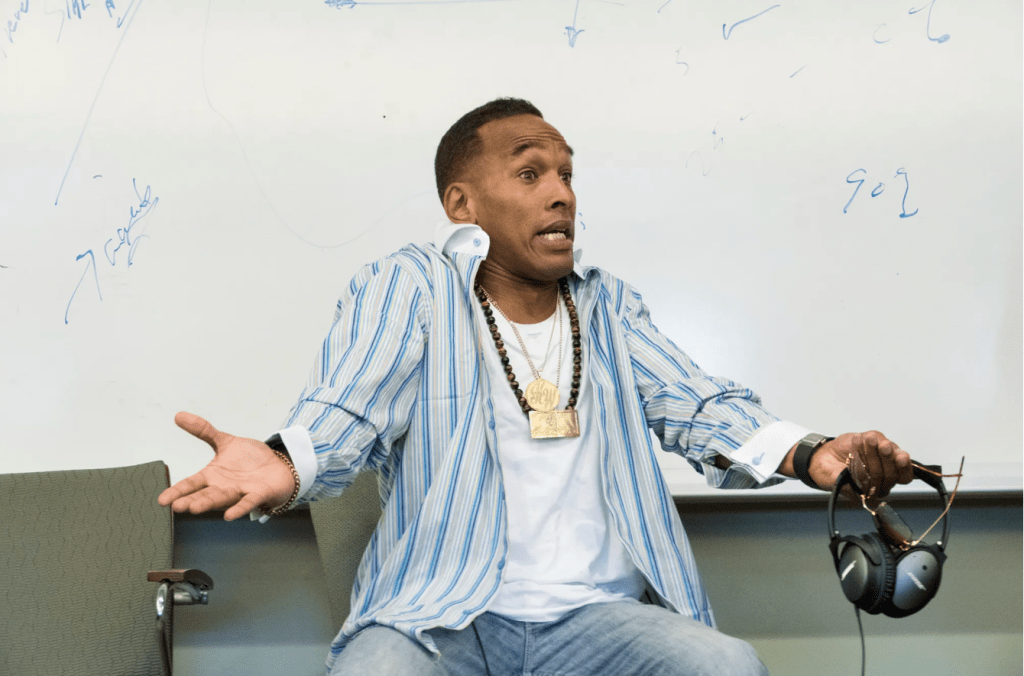
The message has become muddled. The same man who once stood as a symbol of survival now sends mixed signals — part activist, part celebrity. His golden chains and designer watches might symbolize success to some, but to others, they represent how easily justice gets commercialized when suffering turns into spectacle.
What should have been a story of redemption has turned into a lesson about ego and ownership. The Innocence Project was never meant to be about personal glory — it was meant to be about human freedom.
If Korey Wise truly believes in that mission, he should remember what it felt like to be powerless — and ensure that no one else’s fight for justice depends on whose name is on the door.
The Wise Illusion: Anatomy of Financial Secrecy and Regulatory Evasion in Colorado’s Nonprofit Advocacy Sector
An Investigative Report on the Korey Wise Innocence Project at the University of Colorado Law School
I. Prologue: The Shadow of Two Names and the Manufactured Narrative
The organization operating under the name Korey Wise Innocence Project (KWIP) at the University of Colorado Law School presents a compelling case study in structural financial opacity within higher-education–affiliated nonprofits.
A surface-level examination suggests an ordinary legal advocacy program — one focused on correcting wrongful convictions in Colorado. Yet a closer look reveals a financial and administrative structure that shields the organization from meaningful public oversight while exploiting university resources and student labor to sustain operations far beyond its apparent means.
Adding to the confusion is the similarity between Korey Wise — a wrongfully convicted man turned philanthropist — and Corey Wise, the former Douglas County School District Superintendent. The near-identical names have created an unintended (and, some argue, beneficial) public conflation between two vastly different figures: one a symbol of exoneration and justice reform, the other the center of a political and financial controversy involving an $832,000 taxpayer-funded settlement.
This name confusion, whether accidental or convenient, has blurred the line between legitimate innocence advocacy and public-sector scandal, drawing attention — and potential credibility — toward the Korey Wise Innocence Project at a time when scrutiny of nonprofit transparency is mounting statewide.
II. Origins: From Student Initiative to Sponsored Program
The Innocence Project at CU Law was originally founded in 2001 by the Colorado Lawyers Committee as a student-led legal aid initiative. It became a CU Law School project in 2010, functioning primarily as an educational clearinghouse where law students screened and reviewed applications from inmates claiming wrongful conviction.
For its first decade, the project had no attorney on staff and relied almost entirely on volunteer faculty supervision. That changed in 2015, when Korey Wise, one of the five men exonerated in the Central Park Jogger case, donated $190,000to the University of Colorado to support the program.
This single donation was transformative: it funded the project’s first full-time attorney, then-Director Anne-Marie Moyes, and allowed the organization to formalize its operations. CU Law subsequently renamed the project in Wise’s honor — a symbolic act linking the national Innocence Project movement with Colorado’s growing criminal-justice reform sector.
Yet Wise’s contribution also marked the beginning of a shift: from a transparent educational clinic into a semi-autonomous, fiscally sheltered entity operating under the protective umbrella of the University of Colorado Foundation.
III. The Financial Firewall: CU Law’s Fiscal Sponsorship Model
Unlike independent nonprofit organizations, the Korey Wise Innocence Project is not a standalone 501(c)(3). It is legally and financially nested within CU Law and the University of Colorado Foundation.
This fiscal sponsorship arrangement has several key consequences:
- All operating expenses — from office rent to utilities to salaries — are absorbed into the University’s consolidated accounts.
- All donations and grants are processed through the CU Foundation, meaning they do not appear on any public 990 filings under KWIP’s name.
- The Project itself does not publish independent financial reports, budgets, or audits.
This structure effectively functions as a financial firewall, shielding KWIP from public transparency requirements typically imposed on charitable organizations. While perfectly legal, it also makes it impossible for the public or oversight bodies to determine how much money the Project raises or spends annually, or how its resources are allocated.
IV. Skeleton Crew, Heavy Mission: The Hidden Costs of Minimalism
Despite handling complex, high-stakes legal cases, the Korey Wise Innocence Project operates with only one full-time paid staff member — the Director — supported by 20 to 25 law students who rotate each academic year.
The model is deceptively efficient. By outsourcing nearly all investigative work to unpaid or underpaid students, the Project eliminates one of the largest cost centers in innocence litigation: professional investigation. These students review trial transcripts, assess evidence, and occasionally interface with inmates — tasks that, in other innocence organizations, are reserved for trained attorneys and investigators.
This academic-labor dependency allows KWIP to maintain a minuscule public budget — reportedly under $150,000 per year as of 2019 — while handling nearly 300 active case applications. In practice, the program’s apparent frugality conceals a large in-kind subsidy from CU Law and its students, whose tuition effectively bankrolls the Project’s operational capacity.
Critics argue that this arrangement externalizes costs, obscures true resource use, and risks inconsistent case quality in matters involving potential wrongful imprisonment.
V. Partners in Obscurity: Private Law Firms and the Invisible Budget
KWIP also maintains active partnerships with private commercial litigation firms that contribute pro bono services to assist with case review and litigation.
While these collaborations are crucial for capacity, they also create another layer of financial invisibility. Pro bono contributions — often amounting to hundreds of thousands of dollars in billable hours — never appear on KWIP’s books.
Thus, the organization’s official financial profile appears small and resource-starved, while its true operational footprint — when university subsidies, student labor, and private legal support are considered — is many times larger.
This strategic decentralization of costs prevents external auditors and the public from assessing how much money and labor the Project actually commands, or how efficiently it converts these resources into exonerations.
VI. The Black Hole of the Balance Sheet: IRS Filings and Financial Discrepancies
A review of KWIP’s IRS Form 990 filings underscores the extent of its financial opacity. For multiple fiscal years, including 2020 and 2021, the organization reported:
- $0 Revenue
- $0 Expenses
- $0 Net Assets
This is a statistical impossibility. During those years, KWIP remained fully operational and received at least one major grant from the Fred & Jean Allegretti Foundation for the renovation of its CU Law office space.
By claiming zero activity while executing funded operations, KWIP technically satisfies the minimum legal filing requirement while concealing its real financial movements under CU Foundation accounts.
The same filings list executive directors — including Richard Vermazen and James Harnsberger — with $0 compensation, a red flag for any functioning legal entity. This likely reflects that their salaries are paid through university payroll rather than KWIP directly — an accounting maneuver that removes them from the organization’s public compensation disclosures.
VII. Structural Dependence, Strategic Obscurity
In effect, the Korey Wise Innocence Project functions as a ghost nonprofit — a real and active organization that appears financially inert on paper. Its survival depends on the university’s administrative infrastructure, donor management through the CU Foundation, and unpaid academic labor.
This arrangement insulates the Project from financial scrutiny and shields university leadership from liability for operational or ethical lapses. It also allows KWIP to leverage the moral authority of the Innocence Project brand while avoiding the transparency standards that independent chapters uphold.
VIII. Broader Implications: A Model of Unaccountable Advocacy
The Korey Wise Innocence Project’s fiscal and operational structure exemplifies a growing phenomenon in the U.S. nonprofit sector — advocacy programs embedded within universities that perform public-interest work without the public oversight traditionally expected of 501(c)(3) entities.
While the results of KWIP’s work are laudable — providing hope and potential justice to the wrongfully convicted — the financial invisibility of its model raises serious policy concerns. When advocacy organizations operate within tax-exempt institutions but outside transparent financial reporting, the public loses its ability to measure impact, efficiency, and accountability.
In the long term, this structural opacity may undermine public trust not only in innocence advocacy but in the broader integrity of university-based nonprofit partnerships.
IX. Conclusion: Transparency as the Price of Legitimacy
The Korey Wise Innocence Project occupies a paradoxical position in Colorado’s social-justice landscape — simultaneously a symbol of compassion and a case study in opacity.
Its mission to correct wrongful convictions remains morally powerful. But its financial structure — hidden within the layers of university bureaucracy — raises pressing questions about how nonprofit entities use fiscal sponsorship to shield operations from public scrutiny.
As Colorado’s nonprofit sector faces increasing demands for accountability, KWIP’s model invites a larger conversation:
Can institutions dedicated to justice afford to operate in the shadows?
The Truth Behind the Corey Wise Innocence Project: Beyond the Illusion of Justice
This is just one of the many stories surfacing about the Corey Wise Innocence Project—and it’s only the tip of the iceberg. Much remains hidden beneath the surface, waiting to be uncovered and brought to the public’s attention. While many believe they are donating to a noble cause, it’s time to take a closer look at where the money is really going—and whether it’s truly helping the people it claims to serve.
Instead of donating blindly to organizations, people should consider identifying a specific individual who has been wrongfully convicted and donating directly to them. That money could help them hire a competent, compassionate attorney—one who values integrity over recognition, and whose true mission is to secure justice, not publicity.
Unfortunately, the Corey Wise Innocence Project has shown more signs of bureaucracy and corruption than meaningful results. In recent years, they’ve had only one significant release, and their impact since then has been minimal. Despite their promises, progress has stalled, and transparency is lacking.
Even more troubling is the organization’s increasing involvement inside prison walls—introducing questionable programs that involve inmates in legislative discussions. While rehabilitation and education are essential, allowing incarcerated individuals to influence legislation raises serious ethical and practical concerns. This is not reform—it’s confusion. It’s a waste of taxpayer money and public trust.
Corey Wise’s public appearances—such as his presence at the Democratic National Convention with Kamala Harris—add another layer of political theater to the situation. The Innocence Project’s ties to political figures and state officials, including Colorado’s governor’s office, raise legitimate concerns about political favoritism and hidden alliances.
For example, individuals like David Coleman, associated with the Second Chance Center, appear frequently within the same network of “clemency success stories.” These interconnected relationships suggest a system driven more by political loyalty and insider connections than genuine justice.
Adding to this growing frustration, the Corey Wise Innocence Project Gala scheduled for October 17, 2025, is being presented as a celebration of justice. In reality, it feels like a display of hypocrisy and self-promotion. Many plan to attend not to support it—but to expose it.
It is deeply disappointing to see respected attorneys like Gail Johnson participating in such events. Those who truly fight for the wrongfully convicted should not align themselves with what increasingly resembles a political showcase rather than a justice initiative.
The Innocence Project was built on the promise of truth, fairness, and reform. But today, the Corey Wise Innocence Project appears to have lost its way—serving power and image instead of the innocent people it once vowed to defend.
If we truly want justice, it starts with accountability—not galas, not photo ops, and certainly not politics.
Disclaimer: The content of this publication is based on personal observations, professional experiences, and publicly available information. All opinions expressed are solely those of the author and do not reflect the views of any affiliated institutions or organizations. This publication is intended for informational and educational purposes only and does not constitute legal advice. Any statements regarding individuals, agencies, or events are made in good faith and are supported by factual evidence or personal witness accounts. The author has taken reasonable steps to ensure accuracy, but makes no guarantees regarding completeness or future developments. Any resemblance to persons or situations beyond what is expressly stated is purely coincidental. If any party believes that any content is inaccurate or misrepresented, they are encouraged to contact the author for clarification or discussion.

 Justice Unlocked.
Leave a reply to All alone Cancel reply