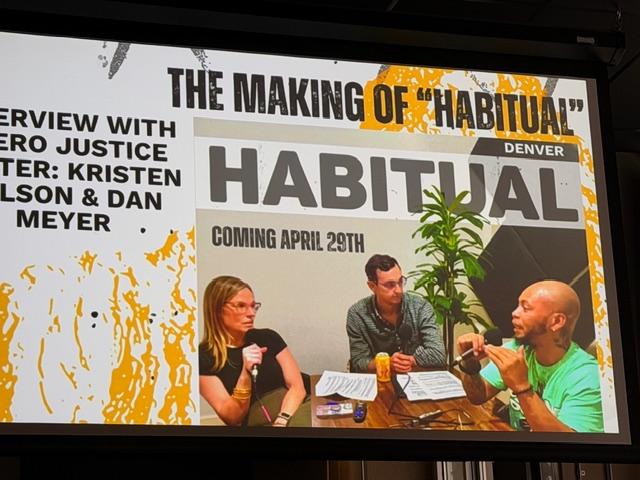
- About 150 people were sentenced as habitual offenders over a 3-year period (2014–2016) in Colorado DOC admissions
On April 26, 2026, I had the opportunity to attend a very interesting and important event created by truly gifted individuals with lived experience in the criminal justice system. They are the creators of the very important community platform Colorado Radio for Justice. Their work continues to educate not only people directly impacted by the system, but the broader community as well.
What makes their work important is their willingness to bring difficult conversations into public spaces. Sometimes, however, the guests they invite can be questionable because some individuals involved in advocacy are not always honest about their own history or intentions. Some people confuse activism with advocacy, and there is a fine line between the two.
For example, representatives connected with Colorado Criminal Justice Reform Coalition, commonly known as CCJRC, often present themselves as reform advocates while promoting political agendas that many in the community may not fully understand. Individuals such as Kyle speak about change and issues like voting rights for people in custody, but important questions remain about transparency and accountability within certain advocacy circles. What exactly is CCJRC today? That may be a discussion for another publication.
The event itself was held at the well-known Sie FilmCenter in Denver and focused on the release of the podcast Habitual. This podcast tackles one of the most sensitive and controversial subjects in criminal justice: habitual offender laws.
I am thankful that Colorado Radio for Justice chose to bring this issue into the public conversation. It is long overdue. Communities, advocates, and leaders need to seriously examine how habitual offender laws have impacted sentencing in Colorado and across the country. Too many individuals are receiving extremely harsh punishments and decades-long prison sentences under habitual offender statutes, often resulting in triple-digit sentencing structures that raise important questions about fairness, rehabilitation, and proportional justice.
Whether people agree or disagree on reform, conversations like these are necessary. Public education and honest dialogue are critical if communities truly want to understand the long-term consequences of criminal justice policies and sentencing laws.
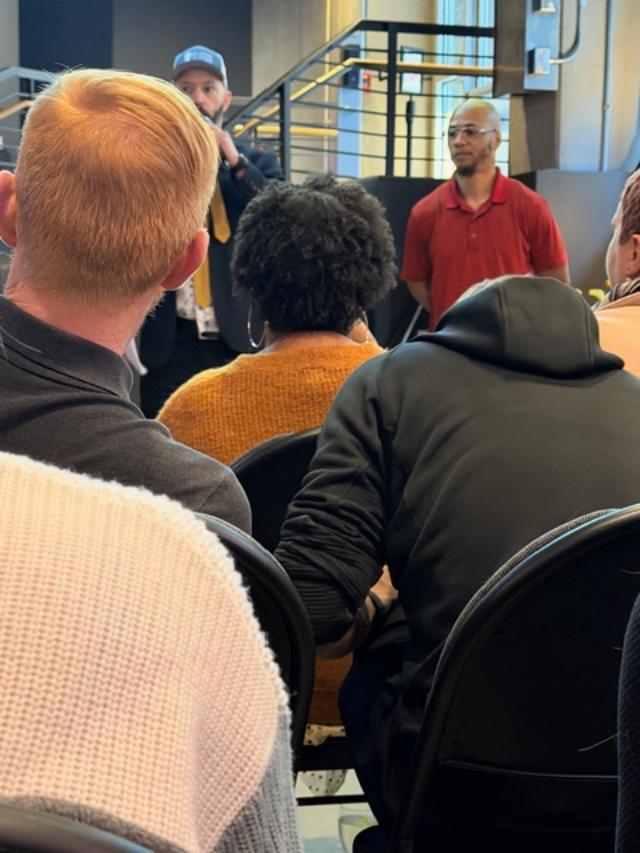
Upon my arrival at what I believed would be a very important and serious event, I immediately noticed many familiar faces from Colorado’s criminal justice community. Some of these individuals I have disagreements with regarding advocacy and reform work, but thankfully this was not the place for confrontations or exchanging hostile words. Most people kept their distance, and the focus remained on the event itself.
What surprised me the most, however, was the crowd. I did not recognize at least 70% of the people who attended. The audience was overwhelmingly young — mostly Gen Z and even younger generations. Personally, I often struggle to connect with that generation because many seem directionless and lacking strong work ethic or understanding of the issues they claim to support.
Another thing that immediately stood out to me was the atmosphere and how some people presented themselves. Women were arriving in booty shorts and cropped tops as if they were attending a nightclub rather than an event centered on one of the most serious subjects in criminal justice. I found this confusing and, frankly, disappointing. The topic of the gathering was habitual offender laws — laws that have destroyed lives, separated families, and resulted in extreme prison sentences. In my opinion, the subject deserved a certain level of respect and seriousness.
There was also food, drinks, and a social atmosphere that at times felt disconnected from the gravity of the discussion. While I understand that public events often try to create a welcoming environment, I could not help but feel that the deeper purpose of the evening was being overshadowed.
Once the podcast presentation began, it became obvious that nearly 90% of the audience had little understanding of habitual offender laws in Colorado. Many had no idea how lengthy sentencing works or how destructive “three strikes” style laws can be for individuals and families. Some people seemed shocked to learn that individuals can receive decades — sometimes effectively life sentences — because of sentence enhancements and repeat offender statutes.
As I sat there observing the room, I felt like I was living in the Twilight Zone — surrounded by people who wanted to appear socially aware, yet many seemed disconnected from the actual realities of the criminal justice system. Some appeared more interested in being part of a trend or social scene than understanding the real suffering caused by these laws.
Habitual Offender Sentencing in Colorado: Punishment, Parole, and Public Perception
Once again, I think the podcast was done very well and the conversation was very educational. It is something everyone should listen to, especially people inside the Colorado General Assembly and the Colorado Supreme Court. Too often, judges and lawmakers make decisions and write opinions about habitual offender laws without fully understanding how these sentences actually work in practice.
Many judges and prosecutors continue to believe that habitual offenders deserve to remain in prison for life simply because they repeatedly broke the law. The public also often hears the phrase “habitual criminal” and immediately assumes the offender received a true life sentence. But cases like Herbert Benjamin Alexander show that the reality is far more complicated.
Alexander, who was once described by police as armed and dangerous, became widely known after receiving a 64-year prison sentence in Colorado Springs for bank robbery under Colorado’s habitual criminal statute. His case has been discussed heavily by advocates, media outlets, and criminal justice reform supporters as an example of what they consider extreme sentencing for repeat offenders.
On paper, however, Alexander appeared to fit the profile prosecutors often use when seeking enhanced penalties. He had prior criminal history, was considered a high-risk offender, and had repeated involvement with law enforcement. From the state’s perspective, the sentence was intended not only as punishment but also as protection of the public from someone viewed as having a high likelihood of reoffending.
Still, there is an important distinction many people fail to recognize: a 64-year sentence in Colorado is not automatically the same as a sentence of life without parole or a triple-digit sentence. A 64-year sentence may seem minor compared to triple-digit sentences.
Under Colorado law, inmates serving lengthy sentences may become eligible for parole after serving a substantial portion of their term. In Alexander’s situation, a 64-year sentence could potentially result in parole eligibility after approximately 32 years. With maximum earned time credits and good behavior within the Colorado Department of Corrections, that timeframe could possibly be reduced further to roughly 24 years served.
That reality changes the public narrative surrounding habitual offender sentencing. Critics often describe these cases as “death by incarceration,” while supporters argue the parole structure already provides a second chance for offenders willing to rehabilitate themselves.
Alexander himself argued that his sentence was unfairly harsh. Reform advocates frequently point to his case as evidence that Colorado’s habitual criminal statute is broken. But others see the matter differently. They ask whether the system truly failed him, or whether he became an example of someone unwilling to separate himself from criminal behavior despite repeated opportunities.
This is where the debate becomes difficult.
Supporters of reform believe habitual offender laws can produce excessive punishments that ignore rehabilitation and human growth. Opponents argue that repeat violent or dangerous offenders create fear in communities and repeatedly prove they cannot follow the law.
The truth likely exists somewhere in the middle. A person should not be defined forever by the worst mistakes of their past, but society also has a legitimate interest in protecting the public from chronic and dangerous offenders.
What cases like Alexander’s demonstrate most clearly is how emotional and politically charged the habitual offender debate has become in Colorado. Some view these sentences as necessary accountability. Others see them as symbolic examples of a punitive justice system that values punishment over rehabilitation.
Either way, the conversation should be based on facts rather than slogans. A lengthy sentence with parole eligibility is not technically the same as life without parole. At the same time, spending decades in prison is still a severe punishment that permanently alters a person’s life.
Colorado Habitual Offender Sentences: When “Life” Becomes Triple Digits
When Alexander called a habitual offender sentence “a bitch,” many people understood exactly what he meant. There is no softer way to describe decades behind bars, especially when a person feels buried alive by the system. Alexander succeeded in bringing attention to his case through podcasts, media exposure, and public discussion. His 64-year sentence shocked many people ?
But there is another side to this conversation that rarely gets attention — the people serving triple-digit sentences who remain invisible to the public.
One of those names is Shawn Mullinex.
Shawn is serving roughly 360 years in prison. Nearly 100 of those years reportedly came from escaping a minimum-security facility operated by the Colorado Department of Corrections. He has already spent more than 20 years inside CDOC.
According to accounts of the case, Shawn escaped while heavily addicted to drugs alongside another inmate. The two spent days wandering in harsh desert conditions without proper food or water. Eventually, desperate and dehydrated, they encountered an older couple in a remote area. Prosecutors described the incident as a robbery attempt. Supporters of Shawn argue the men were primarily searching for food, water, and transportation to continue moving.
The case became even more intense because the older couple’s son worked in local law enforcement. Many believe the county wanted to send a strong message about prison escapes, and the punishment reflected that.
None of this excuses criminal behavior. Victims matter. Public safety matters. Escaping custody is serious. But the larger question remains: at what point does punishment stop being justice and become permanent human disposal?
Supporters of habitual offender laws argue they protect communities from repeat offenders. Critics argue the laws often ignore addiction, trauma, poverty, and rehabilitation. In Shawn’s case, supporters point to a childhood surrounded by drugs and addiction. They say his criminal history was tied largely to substance abuse and low-level offenses rather than extreme violence.
For years, Shawn has continued filing appeals and legal motions while struggling through what supporters describe as ineffective legal representation. Meanwhile, his sentence remains effectively impossible to complete within a human lifetime.
That is why some people feel frustrated when media attention focuses only on sentences like 64 years while dozens of Colorado prisoners quietly serve 100-, 200-, or even 300-year terms.
As of today, Colorado reportedly has around 50 individuals serving triple-digit prison sentences. Habitual offenders make up roughly 3.5% to 4% of the overall Colorado Department of Corrections population, representing approximately 700 to 800 inmates statewide.
Those numbers raise difficult questions:
- Does a 300-year sentence serve justice, or symbolism?
- Can rehabilitation exist when release is mathematically impossible?
- Should addiction-driven crimes receive the same lifetime punishment as serial violence?
- And why do some cases gain national attention while others remain completely unknown?
What will Alexander say to Shawn, given that he was sentenced to 64 years compared to Shawn’s 360-year sentence? It raises the question of how Alexander will approach Shawn’s case—whether the conversation will focus on meaningful understanding and real discussion of the realities of extreme sentencing, or whether it will center more on his own experience and perspective.
Because behind every triple-digit sentence is still a human being, a victim, a community, and a justice system forced to answer one uncomfortable question:
How much punishment is enough?
From Reform Advocate to Political Opportunist? Questions Around Senator Julie Gonzalez and Colorado’s Habitual Offender Bill
The Habitual podcast and live events brought together many voices connected to criminal justice reform in Colorado. Among those invited was Julie Gonzalez, a Democratic state senator who has built much of her political identity around progressive criminal justice reform. Gonzalez, who now has ambitions beyond the Colorado Capitol and is reportedly seeking higher office in Washington, D.C., has become a recognizable figure in Colorado politics.
For some people impacted by Colorado’s prison system, however, admiration for Gonzalez has faded over time. Critics now argue that her policies and political style have become more performative than practical — heavy on headlines and symbolism, but lacking meaningful results for the people serving extreme sentences inside the Colorado Department of Corrections.
One example often raised is House Bill 23-1292, legislation sponsored by Gonzales that addressed habitual offender sentencing reform. The bill was promoted as an important step toward giving people serving long habitual criminal sentences an opportunity to petition the courts for sentence modification after serving 10 years.
At first glance, the proposal sounded groundbreaking. Supporters framed it as a pathway toward second chances and fairness for people serving decades — sometimes centuries — behind bars under Colorado’s harsh habitual offender laws.
But there was one major limitation that immediately frustrated many incarcerated people and their families: the bill was not retroactive.
The final version of HB23-1292 specifically applies only to offenses committed on or after July 1, 2023. That means people already serving habitual offender sentences before that date — including many who have already spent 10, 20, or even 30 years in prison — are excluded from relief.
Critics argue this made the legislation politically convenient while offering little immediate impact. In reality, because the law requires a person to serve 10 calendar years before petitioning the court, the very first eligible defendant under the new law will not even be able to file for relief until July 2033.So what Gonzalez did was pass a dead bill that allocates taxpayer money, but it may not be usable in the near future. Critics argue that Senator Gonzalez, as a Colorado representative, overlooked key language in the bill—specifically the word “prior”—which some believe would have allowed individuals serving triple-digit sentences to have a clearer opportunity to challenge their cases.
For many incarcerated individuals, that timeline makes the bill feel symbolic rather than transformative.
To them, it raises a difficult question: was the legislation truly designed to help people currently buried under habitual offender sentences, or was it crafted to generate positive political messaging without creating controversy around retroactive resentencing?
Some also point to Gonzalez’ involvement in prison-related hearings and reform panels over recent years. During legislative discussions involving prison policy and rehabilitation programs, critics felt that incarcerated individuals were sometimes used more as political talking points than as participants in meaningful change. Efforts involving feedback from incarcerated people on CDOC operations and budgeting were viewed by some prisoners as political theater rather than substantive reform.
Inside Colorado prisons, many say there is already enough politics influencing daily life. Hearing more political messaging from lawmakers at the Capitol only deepened skepticism among people who feel forgotten by the system.
Supporters of Gonzalez would argue that incremental reform is still progress, and that changing habitual offender laws in any form requires overcoming major political resistance. They would also note that HB23-1292 established a legal framework that future legislatures could potentially expand.
But opponents see a different picture. They view the bill as legislation that generated praise and media attention today while postponing any real measurable effect for at least a decade.
For people currently serving extreme habitual offender sentences, the frustration is understandable. Many are asking why lawmakers continue creating “future reform” while excluding the very population already living under the harshest sentences Colorado has imposed.
When the Conversation Became About Politics Instead of Prison Reform. Senator Julie Gonzalez.
I have been one of the biggest critics of Julie Gonzalez, and she knows it. Many people around the Colorado Capitol know it as well. Years ago, I respected her and believed she genuinely cared about criminal justice reform. But over time, that respect disappeared. In my view, she became another Colorado politician more focused on political image, ambition, and alliances than on delivering meaningful change for people actually living inside prisons.
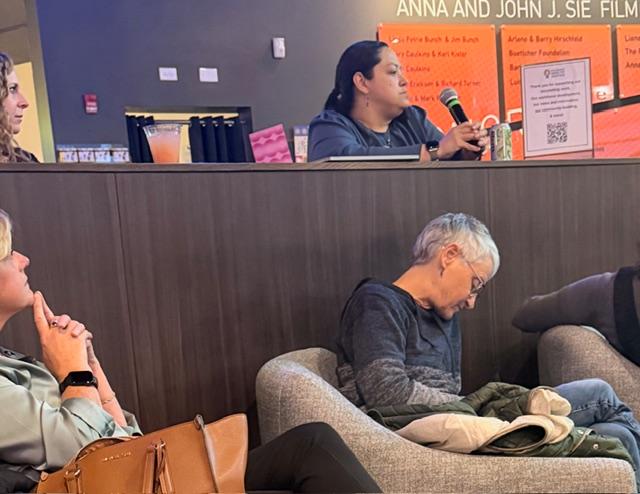
During the Habitual podcast panel event, Gonzalez had an opportunity to speak directly to people impacted by Colorado’s habitual offender laws — incarcerated individuals and their families who live with the consequences every single day.
One of the questions asked was simple: what is her position on habitual offender laws?
Instead of directly answering, Gonzalez responded with broad political language about healthcare, incarceration policies, solidarity, and building a different future. She said:
“For the folks inside I would just say that you’re not alone and there are folks here gathered tonight… who are in solidarity and who want to build a better and a different future.”
But for many people listening, that was not an answer to the question being asked. Families and prisoners were not looking for campaign-style messaging or motivational language. They wanted specifics. They wanted to hear whether she supported meaningful retroactive reform, sentence reductions, or changes to Colorado’s harsh habitual sentencing structure.
The second question focused on how Colorado could realistically change its habitual offender laws. Once again, Gonzalez delivered a long political explanation about bipartisan cooperation, redemption, judicial discretion, and legislative complexity.
Parts of her response touched on important ideas. She spoke about how people can change after 10, 15, or 20 years of incarceration and how judges should have more discretion instead of being forced to follow rigid sentencing statutes. Those are conversations worth having.
But once again, many listeners felt she never truly answered the core question.
Instead of offering a direct position or concrete proposal, the discussion turned into another political speech about systems, philosophies, and process. For people directly impacted by habitual sentences, that felt frustrating. The event was supposed to center the voices and experiences of incarcerated people and their families — not become another stage for politicians to promote themselves.
Gonzalez used the emotional weight of incarceration and prison reform as a platform for her own political image. Rather than confronting difficult realities directly, she leaned into polished language that sounded compassionate without committing to specific action.
That frustration becomes even larger when viewed alongside legislation like HB23-1292, which she sponsored. While the bill was presented publicly as habitual offender reform, it excluded the very people already serving long habitual sentences because it was not retroactive. For many prisoners, that made the reform feel symbolic instead of meaningful.
Once again, Gonzalez took a platform not designed for her, but one intended for those serving habitual offender sentences and their families. Gonzalez appears willing to take any opportunity to advance her path toward becoming a U.S. Representative. Critics argue that she does not seem concerned about her audience, but instead focuses on her own political ambitions as a Colorado senator. Gonzalez is lack of integrity.
Critics argue that politicians often speak about justice reform in ways designed to inspire audiences while avoiding the political risk of supporting aggressive retroactive sentencing relief. In that sense, the Habitual panel became another example of rhetoric replacing direct answers.
For families who have spent decades watching loved ones disappear into Colorado’s prison system, speeches about “solidarity” are not enough. They want lawmakers willing to answer hard questions directly, take political risks, and fight for people already buried under extreme sentences — not just future defendants who may benefit years from now.
By the end of the discussion, some attendees felt the focus of the night had shifted away from incarcerated people and toward the politician holding the microphone. Instead of the event belonging to the families, survivors, prisoners, and advocates living this reality, critics felt it once again became about Julie Gonzalez herself.
The Raw Truth Hidden Inside a Wife’s Tears
One of the most emotional moments during the Habitual event did not come from politicians, activists, or podcast hosts. It came from the wife of Alexander — and what she said may have revealed more truth about incarceration, trauma, and fear than anything else spoken that night.
When asked what the hardest part was about having her husband gone in prison for so many years, she did not give some polished inspirational answer. She did not pretend everything was beautiful, healed, and perfect.
She was raw. Honest. Exhausted.
She explained that for years she carried the family on her back. She answered the phone calls, put money on the books, handled responsibilities at home, and kept life together while her husband was incarcerated. She spoke openly about almost dying from lupus while carrying all that pressure and stress.
Then came the moment that changed the atmosphere in the room.
Her voice cracked. She started crying. And suddenly it no longer sounded like a wife celebrating a happy ending. It sounded like someone pleading for survival.
She said she hoped Alexander could stay out of trouble and continue on the right path because “it’s a lot.”
That sentence may have made some people uncomfortable because it shattered the fantasy many wanted to believe.
People in the audience may have expected a triumphant prison reform story — redemption, healing, applause, and inspirational speeches. But what they heard instead was fear. Real fear.
To someone who has worked around formerly incarcerated people and people cycling back into prison, her words sounded less like celebration and more like a warning. Almost like she was sending a message publicly while sitting right next to him.
Why was she so afraid?
Why did her emotions sound more like anxiety than relief?
Why did it feel like she was begging him — publicly — not to destroy their lives again?
Those are uncomfortable questions, but they matter.
The reality is that prison does not magically transform people. Time served is not the same thing as accountability, maturity, or rehabilitation. Some people truly change. Others learn how to say the right things while the chaos underneath never disappears.
Families often know the truth long before the public does.
A wife who stood beside someone for years through incarceration can usually sense whether stability is real or temporary. She knows the patterns, the anger, the impulsiveness, the destruction, the promises, and the disappointments. She knows what the public cannot see from a stage or a podcast interview.
That is why her tears carried so much weight.
Some listeners probably did not fully understand what she was communicating in that moment. But others did. Especially families who have lived through addiction, incarceration, violence, manipulation, or repeated prison cycles.
Her words sounded like the voice of someone who has spent years surviving damage and is terrified of going through it all over again.
That honesty may have been the realest moment of the entire event.
Not the politicians.
Not the slogans.
Not the applause.
A tired woman crying while quietly asking her husband not to destroy the family again.
That was the harsh truth people heard — whether they wanted to admit it or not.
After listening to Alexander’s wife speak, I started questioning what Alexander’s future in our community will look like, especially since even his own wife seems to struggle with the situation. She encouraged him to stay away from negative influences, focus on work, and support his family. In the end, Alexander will have to prove himself not only to the community, but also to his family and his son.
Habitual Offender Sentencing: What Message Are We Sending?
There is growing public debate around habitual offender laws and the long sentences that come with them. Podcasts, interviews, and public advocacy have started bringing attention to people serving extremely long prison terms, some of which raise serious questions about proportionality and fairness.
One of the voices recently discussed in this space is “Alexander,” who has shared his story on podcasts and in media interviews. His case, involving a 64-year sentence, has been used to highlight the harsh reality of habitual offender sentencing. At the same time, others point out that there are individuals inside the Colorado Department of Corrections serving far longer sentences—some reportedly in the hundreds of years.
One example often raised is a man named Shawn Mullinex, who, according to accounts shared publicly, is serving a sentence reportedly over 300 years. He has already spent more than two decades in custody. In discussions among incarcerated individuals and advocates, cases like his are used to question whether sentencing laws are consistent or proportionate across similar types of offenses.
This is where the conversation becomes difficult but important.
The Gap Between “Hope” and Reality
In public messaging, people often say things like “don’t lose hope” or “keep fighting for yourself.” While that message can be meaningful, many inside long-term incarceration argue it is not enough on its own.
When someone is facing a sentence that effectively means life inside prison, the idea of hope can feel abstract unless it is paired with real legal review, sentencing reform, or meaningful pathways to reconsideration.
Public platforms have become a space where incarcerated individuals share their stories in an effort to gain attention for sentencing reform. Alexander’s participation in these conversations has brought visibility to his case and others like it. Supporters see this as an attempt to bring awareness to how habitual offender laws operate in practice.
However, critics within the system sometimes question the motivation behind public storytelling, suggesting that media attention can blur the line between advocacy and personal validation. These concerns reflect broader tensions in criminal justice reform discussions, where storytelling, public opinion, and legal facts often collide.
Still, the central issue remains: sentencing disparity and whether habitual offender laws produce outcomes that match the intent of justice.
Efforts to reform habitual offender sentencing have been discussed at the state level, including legislative proposals associated with Julie Gonzales. These types of bills often aim to address sentencing structures, recidivism standards, and long-term incarceration policies.
Supporters of reform argue that the system should distinguish more clearly between levels of offense and allow greater judicial discretion. Opponents often focus on public safety concerns and repeat offending risks.
The Core Question: What Message Do We Send?
At the center of this debate is a difficult question:
What message does the justice system send to people serving extreme sentences under habitual offender laws?
Is the message purely punitive—focused on punishment regardless of time served—or is there room for rehabilitation, reassessment, and proportionality?
For individuals serving decades or centuries in prison, these questions are not theoretical. They shape how people think about their future, their motivation, and whether change inside the system is even possible.
The conversation around habitual offender sentencing is not just about one individual or one case. It is about whether the justice system is consistent, whether it allows room for rehabilitation, and whether sentences reflect the actual harm and context of offenses.
Public voices, podcasts, and advocacy are forcing these questions into the open. But real change—if it comes—will require more than storytelling. It will require legislative action, legal review, and a serious examination of whether extreme sentences achieve justice or simply extend punishment indefinitely.
Was Alexander’s story about his 64-year sentence really the right choice for the podcast?
 Justice Unlocked.
Leave a comment