
Being an advocate within prison walls does not mean agreeing with everything that happens in the criminal justice system. Advocacy is about speaking up when something does not seem right, especially when decisions impact public safety, fairness, or the integrity of sentencing.
If someone is released from prison and there are concerns about whether that decision was appropriate, raising questions is part of advocacy. It is not about attacking individuals—it is about ensuring transparency and accountability in a system that affects both victims and communities.
True advocacy requires consistency and integrity. It means being willing to speak up even when a decision is unpopular or uncomfortable. At the same time, it also requires fairness and responsibility—making sure that concerns are based on facts and not assumptions.
Being an advocate also means recognizing the difference between what feels right and what is right under the law. The criminal justice system is complex, and decisions about sentencing, rehabilitation, and release are not always simple.
Community involvement in these discussions is important. Healthy communities are built when people are willing to question processes, ask for clarity, and hold systems accountable while still respecting the importance of fairness and due process.
Ultimately, advocacy is about balance. It is about standing up for what is right, respecting the truth, and ensuring that justice is applied fairly for everyone involved.
Clemency in Colorado: Are Governor Polis’s Decisions Serving Justice or Putting Public Safety at Risk?
Executive clemency is one of the most significant powers granted to a governor. It allows a governor to pardon individuals, commute sentences, or grant reprieves when circumstances justify relief from a criminal sentence. Clemency is intended to serve as a safeguard within the justice system, recognizing that people can change, sentences can become excessive, and unique circumstances may warrant mercy.
When evaluating clemency applications, governors typically consider several factors:
• Rehabilitation and behavior while incarcerated
• Length of sentence already served
• Remorse and accountability for the crime
• Public safety concerns
• Support from victims, prosecutors, correctional staff, or community members
• Whether the sentence appears excessive compared to similar cases
The purpose of these considerations is to balance mercy with public safety. A governor must determine whether an individual has demonstrated genuine rehabilitation while also ensuring that releasing that person will not place communities at risk.
One way to evaluate the use of clemency is by comparing how governors exercise their authority.
Governor Gavin Newsom has been one of the most active users of executive clemency powers in the United States. As of April 2026, Newsom had granted:
• 276 pardons
• 169 commutations
• 43 reprieves
This represents a total of 488 clemency actions during his time in office.
By comparison, Governor Jared Polis has reportedly granted approximately 100 to 150 individual clemency actions during his tenure. While Colorado’s population and prison system are significantly smaller than California’s, critics argue that Governor Polis has not fully utilized the authority available to him.
This raises an important question: If clemency is intended to address excessive sentences, reward rehabilitation, and provide second chances, why has Colorado’s use of clemency remained relatively limited?
According to information reported from the governor’s office, approximately 1,400 clemency applications were awaiting review before the latest round of grants announced in May 2026.
For many applicants and their families, this process can take months or even years. Critics argue that if a governor believes clemency is an important tool of justice, applications should be reviewed more efficiently, and decisions should be made more quickly.
Others counter that clemency decisions require extensive investigation, including reviews of criminal records, prison conduct, victim statements, prosecutor recommendations, and public safety assessments. Such reviews take time and should not be rushed.
In May 2026, Governor Polis announced clemency actions affecting 44 individuals.
Through commutations and sentence reductions, these individuals became eligible for release by June 1, 2026.
While supporters viewed the decision as a recognition of rehabilitation and second chances, critics focused on the nature of the crimes committed by some recipients.
According to critics of the governor’s decision, approximately 15 of the 44 clemency recipients had been convicted of serious drug-related offenses.
This means roughly one-third of those receiving relief had convictions connected to significant drug crimes.
For opponents of the governor’s actions, this raises serious concerns.
Drug Crime and Recidivism Concerns
Drug trafficking and distribution offenses have long been viewed as particularly damaging crimes because they often affect entire communities rather than individual victims.
Illegal drug markets contribute to addiction, overdoses, gang activity, violence, property crime, and family instability. Communities struggling with drug activity often experience higher rates of crime and declining quality of life.
Critics point to recidivism statistics as a reason for caution. Some studies have found that individuals convicted of drug-related crimes reoffend at substantial rates after release.
If recidivism rates approach 68 percent in certain populations, as critics claim, the argument becomes straightforward: releasing offenders early may increase the likelihood that some will return to criminal activity.
Even if only one-third return to prison within three years, opponents argue that clemency decisions should place greater emphasis on protecting future victims.
Supporters of clemency disagree. They argue that recidivism statistics describe groups rather than individuals. A person who has completed treatment programs, maintained excellent prison conduct, obtained education, and demonstrated years of rehabilitation may present a much lower risk than broader statistics suggest.
Child Abuse Cases Raise Additional Questions
Among the most controversial concerns raised by critics are clemency recipients whose criminal histories included child abuse-related offenses.
Crimes involving children are often viewed differently because children are uniquely vulnerable and frequently unable to protect themselves.
Critics argue that child victims may suffer lifelong physical and emotional consequences from abuse. As a result, they question whether individuals with such convictions should receive clemency absent extraordinary circumstances.
This issue becomes even more controversial when compared with policies regarding sex offenders. Many governors are reluctant to grant clemency to individuals convicted of sexual offenses because of public safety concerns and the potential risk to future victims.
Critics therefore ask: If sex offenses are generally considered inappropriate for clemency, why should crimes involving child abuse receive more favorable treatment?
Supporters of clemency respond that every case is unique. They argue that the specific facts of an offense, the individual’s conduct in prison, and evidence of rehabilitation should all be considered rather than relying solely on offense categories.
Perhaps the most important question surrounding clemency is whether sufficient weight was given to public safety.
Every clemency decision involves risk. No governor can predict the future with complete certainty.
When granting clemency, a governor must determine whether an individual has changed enough to safely return to society. This assessment requires balancing compassion with caution.
Critics of Governor Polis argue that the release of individuals convicted of serious drug offenses and crimes involving child abuse suggests that public safety may not have been given enough consideration.
Supporters argue that the governor’s office carefully reviewed each application and concluded that these individuals had demonstrated rehabilitation sufficient to justify relief.
The public, however, often has limited access to the detailed reasoning behind clemency decisions. This lack of transparency can lead to questions about how decisions were reached and whether all relevant factors were adequately considered.
Clemency remains one of the most debated powers held by any governor. It represents the intersection of justice, mercy, accountability, and public safety.
Governor Gavin Newsom has used clemency extensively, granting 488 total clemency actions through April 2026. Governor Jared Polis has exercised the power far less frequently, with roughly 100 to 150 clemency actions during his time in office.
Yet for many critics, the larger issue is not the number of clemency grants but the individuals receiving them. The May 2026 decision affecting 44 inmates—approximately 15 of whom reportedly had serious drug-related convictions—has fueled concerns about recidivism, child abuse offenses, and public safety.
Whether one agrees or disagrees with Governor Polis’s decisions, the debate highlights a fundamental question facing every governor who exercises clemency power: How should society balance second chances with the responsibility to protect the public?
That question remains at the center of Colorado’s ongoing discussion about executive clemency.
Clemency, CrossFit, and the Case of Brandin Kreuzer: Questions the Public Deserves Answered
Supporters of clemency program frequently point to rehabilitation.
A person may spend years improving themselves, earning educational certificates, mentoring others, maintaining good conduct, and participating in positive programming. Those achievements should matter.
But rehabilitation is only one factor.
The public also expects decision makers to consider the severity of the original crimes, the impact on victims, and the risk posed to public safety.
In Kreuzer’s case, the list of convictions was extensive and included violent offenses, kidnapping, robbery, assault, burglary, and vehicular crimes involving bodily injury.
Critics question whether enough weight was given to the seriousness of those offenses when the limited commutation decision was made.
In 2008, Brandin E. Kreuzer, DOC Reg. No. 152217, was convicted of Second Degree Kidnapping, First Degree Assault, Aggravated Robbery, Second Degree Burglary, two counts of Aggravated Motor Vehicle Theft greater than $15,000, Criminal Mischief, First Degree Burglary, Theft greater than $500 but less than $15,000, Vehicular Eluding Causing Bodily Injury, and Menacing (2008CR 799). He was sentenced to the Department of Corrections for 50 years for these crimes.
His current estimated parole eligibility date is in 2038. Since he was granted , limited commutation his parole discharge date is now listed as 04/29/2031 according to the CDOC page—that’s less than 5 years.
How is it possible that someone who was called a “cop killer” is getting out of prison without serving even half of his sentence, especially when it appears he was found guilty of all charges alongside his co-defendant?
He was released from Sterling CDOC, which some people view as concerning because, according to public perception, there are limited programs available there. There are also claims about administrative issues within the facility, although these are not independently verified.
Did the governor really look into Kreuzer’s “perfect inmate” persona?
Kreuzer also claims that CrossFit changed his life or something along those lines—something we have heard before. He also stated that he played a major role in promoting CrossFit behind prison walls. However, I disagree with that narrative and do not believe it is accurate under these circumstances.
Kreuzer appears not to be presenting all the facts or giving credit to others who may deserve it, such as Damian Arguello, who is serving a life without parole sentence and is actively involved in the prison community.
However, critics question whether participation in CrossFit should carry significant weight in a clemency program decision involving such serious crimes.
Many inmates participate in educational, religious, vocational, and mentoring programs. Some spend decades helping others without receiving media attention.
That leads to another question: are some stories receiving more recognition because they are easier to market to the public?
It also seems that Nick Wells, who calls himself “El Presidente,” with CrossFit Redemption may have overlooked Damian but not “Trigger,” known as Taylor, who also served time in prison and now reportedly earns a significant income, drive 100K car and works as a peer recovery coach and goes into prisons. I am not sure who approved their involvement.
Recently, CrossFit had a short interview with Wells, which was well produced and portrayed him as a strong community leader. However, I do not believe that portrayal is accurate. It seems he seeks attention, influence, and recognition, and during his time in prison, he was not viewed in that way by everyone.
He also received limited commutation his sentence.
So here is my question: is this the second person to receive limited commutation connected to the CrossFit circle in the last couple of years? Should everyone be encouraged to join CrossFit inside prison?
Redemption Road Fitness Foundation: Rehabilitation, Fitness, and Questions About Accountability …
Is Redemption Road Fitness Foundation truly a positive organization for people inside and outside prison walls, or has it become more of a social gathering place for a select group of individuals?
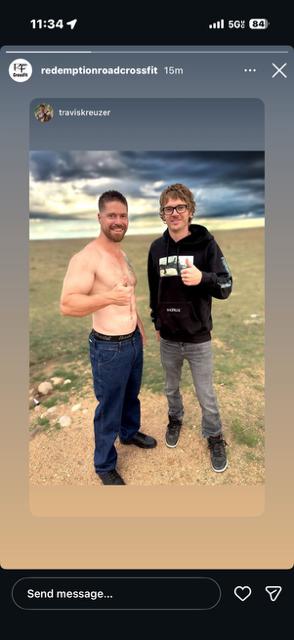
The organization posted numerous videos and photographs following Brandin Kreuzer’s release on June 1 of this year. Based on those public posts, some observers may question whether the organization fully recognizes the seriousness of the offenses that led to his incarceration. Critics may argue that the public messaging appears focused on celebration rather than accountability.
This raises an important question: should organizations like Redemption Road Fitness Foundation continue to play a role in prison programming if there are concerns about how they present individuals who have been convicted of serious crimes?
Another issue involves the cost of participation. Individuals seeking coaching certifications while incarcerated are often required to pay part of the expense themselves. According to information shared by participants, Redemption Road Fitness Foundation may cover only a portion of those costs.
Questions have also been raised regarding financial practices. Some former associates, including Michelle Apodaca, have expressed concerns about the organization’s operations. These concerns reportedly include the use of Cash App for certain transactions, questions about recordkeeping, and whether sufficient documentation exists for donations and expenses. However, these are allegations and concerns that would require independent verification.
Supporters of the organization would likely argue that Redemption Road Fitness Foundation provides valuable opportunities, mentorship, and fitness programming to incarcerated and formerly incarcerated individuals. Critics, however, contend that greater transparency regarding finances, governance, and program outcomes would help build public confidence.
Ultimately, the debate is not only about one individual or one organization. It is about accountability, transparency, and ensuring that programs operating within the correctional system maintain the trust of both participants and the public.

As someone who has done CrossFit for over 15 years, I feel the CrossFit community can be very toxic and judgmental, and there is not always a positive side to it.
CrossFit is a highly competitive training environment that emphasizes structure, discipline, and consistency. It requires participants to be punctual for workouts and maintain a high level of personal accountability, which can help reduce disorder and promote routine in daily life.
However, it is also a culture where physical appearance and performance can carry significant weight. There is often an unspoken expectation around physique standards, including visible muscle definition and low body fat levels. While not always openly acknowledged, some participants feel that judgment around body image can exist within the environment.
For example, Nick Wells has described himself as having entered prison with “fat kid body”, and some physical effects from that period remain visible today, his legs.
Within the CrossFit community, there are also different social and competitive groups. One group consists of highly competitive athletes focused on advancing toward elite levels, including aspirations for the CrossFit Games. This group is often seen as more exclusive and performance driven.
At the same time, there are others who participate primarily for fitness, structure, and general health maintenance. These individuals may not be part of the competitive circle but still engage regularly in training.
Violence, and Public Safety Questions Surrounding the Brandin Kreuzer Case
Kreuzer was not raised in Section A housing and did not experience a dysfunctional family at an early age. His father is a former Denver police officer, and it appears that his mother and brother are still involved in his life.
I cannot imagine what an embarrassment this must be for his father, considering his son was involved in an incident in Douglas County involving an attempt on law enforcement officers. One can only wonder whether he thought, “My career is over—do I have to choose between my son’s poor choices and my career as a police officer? How will other officers look at me?”
I have come across some troubling pictures from Kreuzer’s time in prison, and it appears that his father was visiting him regularly. I am very confused about the situation.
Kreuzer gave an interview to CBS Colorado. I did not realize he was considered important enough that media outlets were seeking him out for interviews as the so-called “cop killer.” This attitude already raised red flags for me as an advocate, as he is barely out of prison and already focused on making sure everyone knows about his case and that he deserves a second chance.
Does he deserve a second chance? A second chance is not given freely—it is earned. Did Kreuzer truly earn that second chance after barely serving 15 years, which is not even half of his original sentence?
Douglas County released a statement describing Kreuzer’s criminal spree:
“Between May 27 and June 28, 2008, Kreuzer and Moudy executed a sophisticated and escalating series of violent crimes across Castle Pines, Silver Heights, Perry Pines, and Christy Ridge. Operating under the code names ‘Pyro’ and ‘Spike,’ and equipped with tactical gear and headlamps, the duo committed armed robbery and kidnapping, numerous residential burglaries, vehicle thefts, thefts of firearms, electronics, cash, and luxury vehicles.
The crime spree reached a near-deadly climax on June 28, 2008, when Deputy Todd Tucker attempted to stop a stolen vehicle driven by Moudy. A high-speed pursuit ensued onto Highway 105. During the chase, Kreuzer leaned out of the vehicle and fired numerous rounds at pursuing law enforcement—first with a stolen rifle, then with a handgun. Deputy Tucker was struck in the arm, and multiple patrol vehicles sustained heavy bullet damage before the suspects abandoned the vehicle and fled on foot.
Following an intensive manhunt, both suspects were apprehended. Investigators ultimately received full confessions from both men. Kreuzer led detectives to hidden caches on his family’s property, where authorities recovered buried assault rifles used in the shooting, tactical vests, armor-piercing ammunition, and stolen property. The suspects were subsequently charged with and convicted of a series of violent crimes, including First-Degree Assault, Aggravated Robbery, Kidnapping, and multiple counts of Burglary and Vehicle Theft.”
Reading this statement from an established law enforcement agency such as the Douglas County Sheriff’s Office, it is clear these crimes were planned and executed as part of an organized violent spree involving Kreuzer and his co-defendant.
It is not surprising that law enforcement and the broader community are concerned about his release.
Kreuzer appeared in an interview wearing a suit, looking composed and put together, with no visible signs of incarceration. The question remains: has he truly changed, or is this simply a polished image?
Kreuzer also made statements in his interview suggesting he would welcome the opportunity to sit down with deputies involved in his case to express remorse and show who he is today.
However, if he truly understands the severity of his actions and their impact on law enforcement, one could argue that genuine remorse would not be centered on public interviews or personal visibility, but rather on accountability and respect for the victims and those affected.
Cases involving violence against police officers are often treated with heightened sensitivity due to the risks faced by law enforcement personnel.
For many in the public and law enforcement community, the question is not only whether rehabilitation is possible, but whether it has been sufficiently demonstrated in cases involving extreme violence.
Some critics argue that early release in such cases raises concerns about whether the severity of the original offense is being fully reflected in clemency program decisions.
Did Kreuzer’s release truly serve the interests of justice? Is this what justice is supposed to look like?
These are questions many people are asking following Governor Polis’s decision to grant clemency. Critics argue that the governor chose to reduce the sentence of an individual convicted of serious violent crimes while other cases deserving review continue to wait for attention.
Some have questioned why clemency resources were directed toward Kreuzer’s case instead of cases connected to the DNA scandal involving Yvonne Woods. For example, supporters of David Hehn argue that he has been an exemplary inmate and maintain that his conviction deserves closer scrutiny because of concerns surrounding Woods’ DNA testimony. Hehn has spent more than 16 years in prison, and advocates believe his case should receive serious consideration.
Others point to Shawn Mullinex, who received a 363-year sentence, as an example of a case that deserves review. Critics of habitual offender laws argue that some sentences can become excessive and disproportionate when compared to the underlying conduct.
These observers question why Governor Polis prioritized clemency in Kreuzer’s case instead of focusing on individuals whose convictions or sentences are the subject of ongoing controversy and debate.
Supporters of the governor’s decision would argue that every clemency application is reviewed individually and that rehabilitation, accountability, and public safety are considered before relief is granted. Critics remain unconvinced and continue to question whether the right priorities were applied.
Regardless of where people stand on the issue, Kreuzer’s release will likely continue to be closely watched by the public.
Disclaimer: The content of this publication is based on personal observations, professional experiences, and publicly available information. All opinions expressed are solely those of the author and do not reflect the views of any affiliated institutions or organizations. This publication is intended for informational and educational purposes only and does not constitute legal advice. Any statements regarding individuals, agencies, or events are made in good faith and are supported by factual evidence or personal witness accounts. The author has taken reasonable steps to ensure accuracy, but makes no guarantees regarding completeness or future developments. Any resemblance to persons or situations beyond what is expressly stated is purely coincidental. If any party believes that any content is inaccurate or misrepresented, they are encouraged to contact the author for clarification or discussion.


Leave a comment