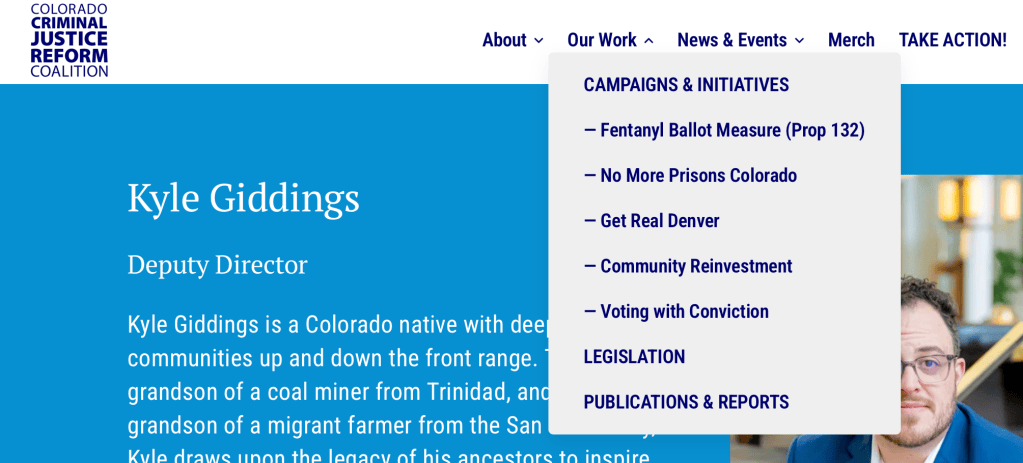
The Colorado Criminal Justice Reform Coalition (CCJRC) presents itself as an organization dedicated to reducing incarceration, improving public safety, and advancing community-based solutions. These are important goals. People returning from prison need meaningful opportunities, families need support, and public policy should be guided by evidence rather than political pressure.
But supporting criminal justice reform does not mean giving every organization that uses the language of reform a free pass. Organizations that influence legislation, receive substantial foundation funding, and claim to represent justice-involved people should be held to the same standards of accountability, consistency, and transparency that they demand from government.
CCJRC deserves serious scrutiny—not because it opposes a particular ballot measure, but because the public should be able to evaluate whether its priorities, spending, and advocacy strategies consistently serve the people it claims to represent.
Advocate or activist? The distinction matters.
There is a meaningful difference between providing direct support to justice-involved individuals and engaging primarily in campaigns designed to change public policy.
An advocate may help incarcerated individuals and their families navigate complicated systems, educate communities, promote rehabilitation, support reentry, and ensure that people affected by the criminal justice system have a voice. An activist may organize campaigns, mobilize voters, lobby lawmakers, and apply public pressure to change laws.
These roles can overlap. Activism is not inherently wrong, and advocacy can include legislative work. The real question is whether an organization is transparent about what it does, how it spends its resources, and which activities its funders intend to support.
CCJRC’s own website advertises campaigns focused on public policy, including opposition to Colorado Proposition 132. Its work therefore extends beyond what many people might understand as direct services or individual advocacy. https://www.ccjrc.org/
That raises a legitimate question: Does CCJRC adequately explain the relationship between its charitable mission, its political advocacy, and the outcomes it delivers for justice-involved people and their families?
The 501(c)(3) question: Transparency, not assumptions
CCJRC is listed as an organization eligible to receive tax-deductible charitable contributions. Public nonprofit records identify it as a social advocacy organization that files Form 990. https://www.causeiq.com/organizations/colorado-criminal-justice-reform-coalition%2C841449882/
Under federal law, a 501(c)(3) organization may engage in some lobbying, but lobbying cannot constitute a substantial part of its activities under the general rules. Such organizations are also prohibited from participating in political campaigns for or against candidates for public office. Ballot-measure advocacy and candidate-electioneering are not the same thing, and the applicable rules differ. https://www.irs.gov/charities-non-profits/lobbyinghttps://www.irs.gov/charities-non-profits/charitable-organizations/restriction-of-political-campaign-intervention-by-section-501c3-tax-exempt-organizations
Therefore, the mere fact that CCJRC campaigns against legislation does not establish that it is violating its tax-exempt status.
Nevertheless, the public has every right to ask questions. How much of the organization’s budget goes toward lobbying, communications, public campaigns, administration, and direct assistance? Are its grants restricted to particular projects? Does the organization clearly distinguish charitable education from legislative advocacy? Are its activities consistent with its tax filings and funding agreements?
These are reasonable accountability questions. They should be answered with financial records and documented activities, not assumptions.
Following the money: What do the public records tell us?
Public nonprofit reporting platforms have identified significant foundation grants associated with CCJRC, including a reported $320,000 grant from the Ford Foundation in April 2026 and a $25,000 grant from the Colorado Health Foundation in February 2026. A separate grant entry lists $300,000 from the Public Welfare Foundation in September 2025. These entries are reported grant information, not proof that the money was spent on any particular campaign. https://www.causeiq.com/organizations/colorado-criminal-justice-reform-coalition%2C841449882/
That distinction matters.
Receiving a large grant does not mean an organization has done anything wrong. Nor does a grant automatically mean the money is unrestricted or available for every activity the organization undertakes. Grant agreements, project budgets, financial statements, and the organization’s Form 990 are necessary to understand the full picture.
Still, when an organization receives substantial philanthropic support while conducting high-profile political campaigns, the public should be able to understand how those two responsibilities fit together.
How much funding supports research and education? How much supports public communications and campaign organizing? What measurable results have been achieved? And how does CCJRC demonstrate that its work benefits the communities it says it represents?
These are questions for the organization and its funders to answer openly.
Proposition 128: Where was the long-term strategy?
Colorado voters approved Proposition 128 in November 2024. The measure requires people convicted of certain violent crimes committed on or after January 1, 2025, to serve at least 85% of their sentences before becoming eligible for discretionary parole, with stricter provisions for certain repeat violent offenders. https://historicalelectiondata.coloradosos.gov/contest/26550
This law represents a major policy shift with long-term consequences for incarceration, prison operations, families, and public spending.
From the perspective of someone who works closely with incarcerated people and their families, it is reasonable to ask whether criminal justice reform organizations adequately anticipated the consequences of such changes and developed sustained strategies to address them.
In my conversations with CCJRC’s Deputy Director, Kyle, I questioned what the organization could realistically do to oppose Proposition 128 with a reported budget of approximately $20,000. I recall being told that the organization would go door to door to educate the public.
That conversation left me questioning the scale of the strategy, the resources available, and whether the organization had a broader plan to address the potential consequences of the measure.
The important question is not whether a particular campaign succeeded or failed. It is whether CCJRC can demonstrate that its policy priorities are consistent over time and that it learns from legislative outcomes.
If a law creates foreseeable challenges for people in prison and their families, what long-term response does the organization develop? How does it measure the results of its advocacy? And how does it communicate its plans to the people most affected?
Those questions deserve more than slogans.
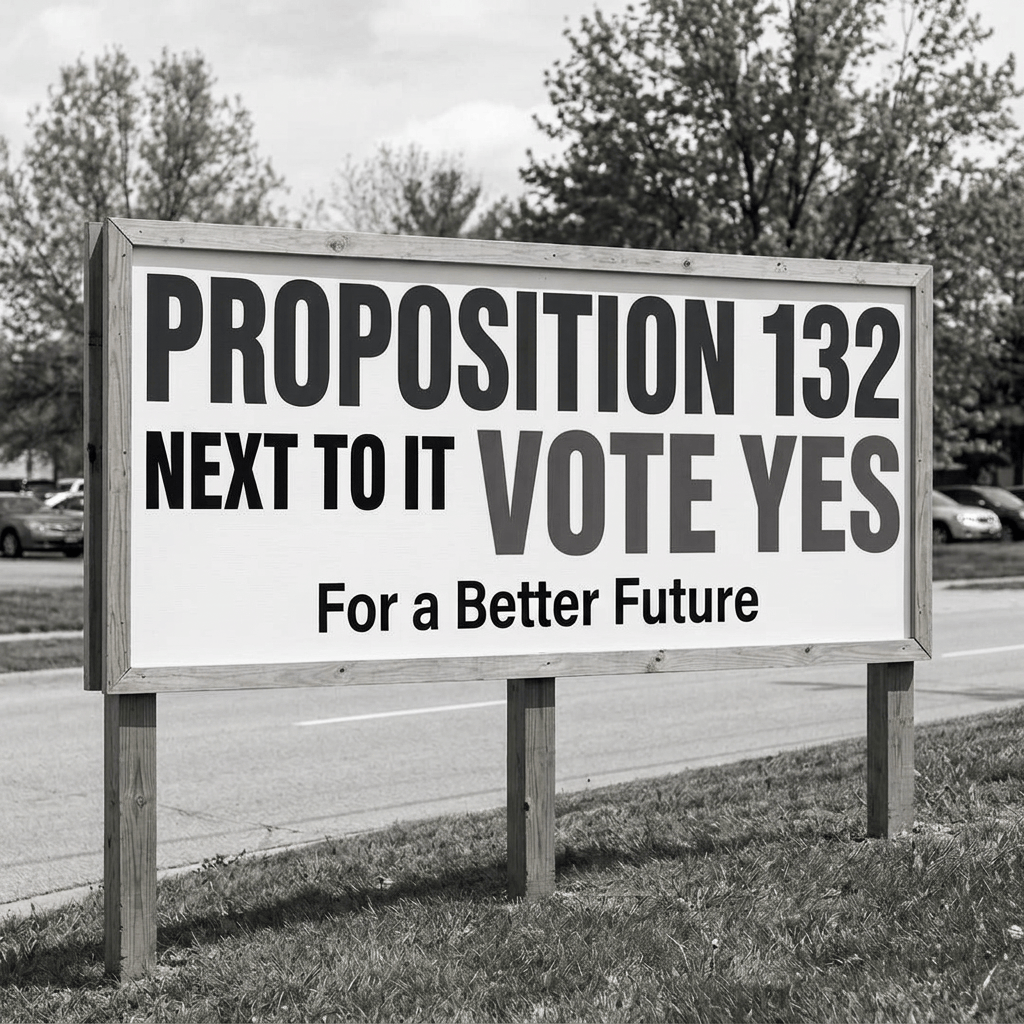
Proposition 132: Why is CCJRC investing so heavily in opposition?
Colorado’s 2026 Proposition 132 concerns increased criminal penalties for fentanyl possession and distribution. CCJRC is publicly campaigning against the measure, arguing that harsher penalties will increase incarceration and costs without effectively addressing substance-use disorders. https://coloradonewsline.com/voter-guides/ballot-measures/proposition-132/
This is a legitimate public-policy debate. The consequences of addiction, fentanyl overdoses, and incarceration are serious, and Coloradans deserve an honest discussion of what works.
The state’s 2026 ballot analysis estimates that Proposition 132 could increase state spending by approximately $68.2 million annually by the fifth year. It also describes changes to penalties and possible reductions in sentencing flexibility and treatment-related alternatives. https://content.leg.colorado.gov/sites/default/files/2026-blue-book-en-accessible.pdf
Those projected costs are relevant. So are the costs of addiction, preventable deaths, inadequate treatment access, and repeated involvement in the criminal justice system.
But CCJRC should be prepared to do more than oppose a measure. It should clearly explain what alternative it supports, how that alternative would be funded, how success would be measured, and what evidence demonstrates that its approach is likely to work.
The war on drugs has continued for decades, yet substance use and overdose deaths remain serious problems. That history should encourage thoughtful evaluation of criminal penalties, prevention, treatment, and recovery—not simplistic claims from either side.
I believe Colorado voters should seriously consider whether Proposition 132 will make communities safer or primarily increase punishment and public expense. My position is that voters should vote YES on Proposition 132 only after considering the full evidence and the likely consequences. However, supporting or opposing a ballot measure should never replace a careful discussion of what actually reduces harm.
The larger question for CCJRC is this: Why does its public strategy appear so heavily focused on defeating Proposition 132, and how does that campaign fit into a broader, measurable plan for public safety and recovery?
The public should be able to evaluate the organization’s reasoning, evidence, campaign spending, and proposed alternatives.
Leadership requires more than visibility at the Capitol
CCJRC’s leadership, including Executive Director Christie Donner and Deputy Director Kyle Giddings, occupies an influential position in Colorado’s criminal justice policy debate.
Their public roles naturally invite scrutiny. When organizational leaders lobby lawmakers, participate in hearings, organize public campaigns, and speak on behalf of affected communities, they should be prepared to explain their positions and answer difficult questions.
I have personally questioned the consistency of CCJRC’s approach to working with the Colorado Department of Corrections while also supporting testimony critical of the department during discussions connected to the SMART process.
There may be legitimate reasons for an organization to cooperate with a government agency on one issue while criticizing it on another. Cooperation does not require silence, and criticism does not automatically make cooperation dishonest.
Nevertheless, the organization should explain how it balances those relationships, how it verifies the claims made in testimony it supports, and what standards it uses to ensure that its public positions remain credible.
If CCJRC wants to influence policy, it should welcome serious questions about its methods. Public trust is earned through consistency, evidence, and accountability—not simply through access to lawmakers or a prominent presence at the Capitol.
Reform should be measured by results, not campaigns
Criminal justice reform is too important to become a competition over who has the loudest voice or the most visible political campaign.
People affected by incarceration need practical solutions: meaningful reentry opportunities, stable housing, access to treatment, employment, family support, and fair policies that recognize both public safety and the possibility of rehabilitation.
An organization should be able to show how its work contributes to those outcomes. It should explain which policies it supports, what evidence guides its positions, how its grants are used, and what happens when its strategies do not produce the results it expected.
For CCJRC, that means answering difficult questions about its policy priorities, funding, campaign expenditures, and measurable impact. It also means acknowledging that reasonable people can disagree about criminal justice policy without dismissing legitimate concerns about public safety or the people affected by the system.
Colorado deserves answers
CCJRC may sincerely believe that its approach to criminal justice reform is the right one. But good intentions do not eliminate the need for accountability.
The organization’s public campaigns, its relationships with lawmakers and government agencies, and its foundation funding should all withstand careful examination. That does not mean assuming wrongdoing. It means asking for evidence, clear explanations, and measurable results.
My concern is that criminal justice reform organizations can become so focused on political campaigns that the broader mission—supporting people, improving public safety, and producing sustainable solutions—gets lost in the noise.
If CCJRC wants Coloradans to trust its leadership, it should provide a clear account of its funding, explain how it evaluates competing policy approaches, and demonstrate how its work translates into real benefits for justice-involved people and their families.
Criminal justice reform deserves more than political messaging. It deserves integrity, consistency, transparency, and results. No organization should be exempt from those standards simply because its mission sounds worthy.


Leave a Reply